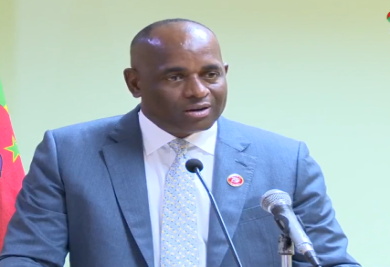
ROSEAU, Dominica – Prime Minister Roosevelt Skerrit has formally declared Dominica’s readiness to serve as a diplomatic intermediary in the escalating tensions between the United States and Venezuela. Speaking at a year-end press conference, Skerrit emphasized the Caribbean Community’s (CARICOM) collective stance that the region must remain a “zone of peace” and advocated for dialogue over military action.
Skerrit highlighted Dominica’s unique diplomatic position, stating, “As a nation that maintains strong friendships with both the United States and Venezuela, we are prepared to facilitate communication if requested by either party.” He expressed hope that conflict could be averted, appealing to U.S. President Donald Trump to leverage his experience in international negotiations to pursue a peaceful resolution.
The offer comes amid a significant U.S. military escalation in the Caribbean and Eastern Pacific. Since September, the Trump administration has conducted a series of airstrikes as part of an anti-narcotics operation, resulting in the deaths of over 80 individuals, including citizens of Trinidad and Tobago. U.S. authorities have labeled Venezuelan President Nicolás Maduro a “narco-terrorist,” with political analysts interpreting the military build-up as an overt attempt at regime change in Caracas.
This military campaign has drawn severe international criticism. The United Nations High Commissioner for Human Rights, Volker Türk, condemned the strikes as violations of international human rights law and demanded their immediate cessation. Similarly, the Inter-American Commission on Human Rights (IACHR) expressed deep concern, urging Washington to ensure its operations align with international obligations concerning the right to life and the use of force.
While CARICOM has collectively reaffirmed its commitment to regional peace, internal divisions have emerged. The government of Trinidad and Tobago notably declined to endorse the bloc’s statement, with its Prime Minister controversially advocating for the violent elimination of those involved in the drug trade.
Despite the tensions, Skerrit acknowledged the existing “excellent collaboration” between Dominica and the U.S. on regional security, citing American investments in infrastructure, including a recently installed radar system for maritime surveillance. He concluded by warning of the profound negative repercussions any armed conflict in the Caribbean would have on all nations in the region, reinforcing the critical need for diplomacy.