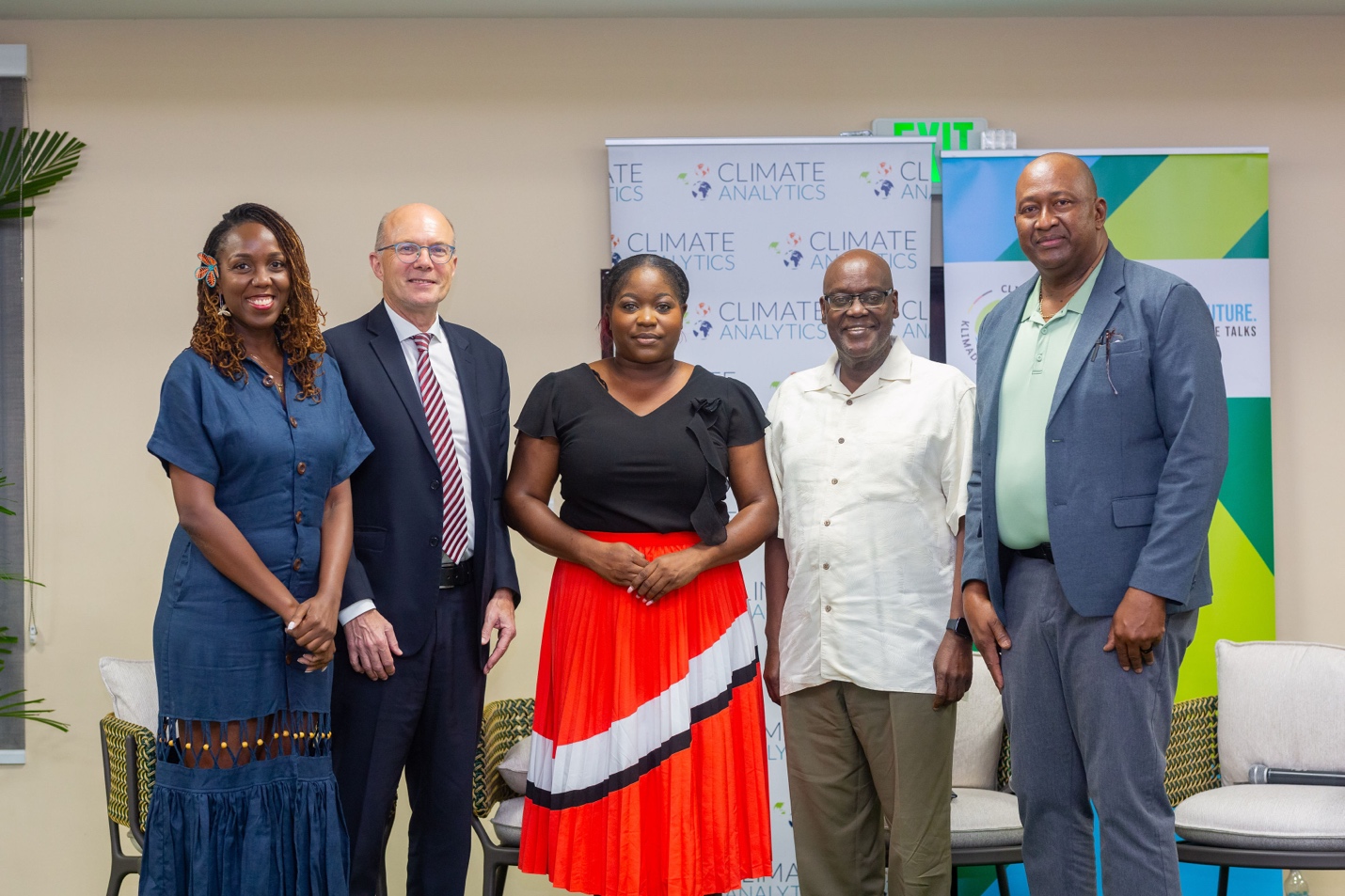
In a significant demonstration of international climate solidarity, senior diplomats, policy experts, and youth advocates assembled in Grenada on December 4th for the third German-Caribbean Climate Talks. This high-level dialogue, hosted at the Radisson Hotel in Grand Anse, served as a critical forum for evaluating outcomes from the recent COP30 summit and strategizing enhanced adaptation measures for vulnerable Caribbean nations.
The conference gained profound urgency as Grenada continues its recovery from the catastrophic impacts of Hurricane Beryl in 2024. His Excellency Dr. Christophe Eick, Germany’s Ambassador and Special Envoy for Caribbean Climate Issues, inaugurated the proceedings by acknowledging the indispensable moral leadership of Small Island Developing States (SIDS). “Germany stands firmly alongside the Caribbean in building resilience, advancing clean energy transitions, and confronting ongoing climate impacts,” Ambassador Eick declared.
Financial commitments took center stage as Germany announced new cooperation agreements exceeding €30 million with CARICOM. Ambassador Eick reaffirmed Germany’s position as the foremost contributor to the Adaptation Fund while issuing a stark warning: “Global efforts must accelerate dramatically, especially among major emitters, to preserve the attainable 1.5°C warming threshold.”
UNFCCC Executive Secretary Simon Stiell joined virtually, recognizing COP30’s achievements while emphasizing implementation gaps. “Ambition unsupported by action will inevitably falter,” Stiell observed, noting the particular urgency for regions rebuilding from consecutive hurricane disasters.
Rueanna Haynes of Climate Analytics Caribbean delivered a penetrating assessment of COP30 outcomes, noting critical advances including the tripling of adaptation finance by 2035, the Just Transition Work Programme mechanism, and the Global Implementation Accelerator. “The divide between scientific necessity and current action remains dangerously wide,” Haynes cautioned. “Implementation must advance at unprecedented velocity.”
Grenadian Ambassador Safiya Sawney emphasized regional unity as the Caribbean’s paramount advantage: “Our strength derives from speaking collectively. We must consolidate expertise, align strategies, and position CARICOM as an investment bloc to influence global decisions affecting our survival.”
Ambassador Dr. Spencer Thomas identified climate finance as the principal obstacle: “The policy architecture exists. What we require is a consistent, predictable financial framework that translates commitment into concrete action.”
Youth representative Abigail Ellis of the Caribbean Youth Environment Network issued a powerful call for intergenerational justice: “Young people possess the readiness and capability to lead, but we demand meaningful access, investment, and opportunities to shape economies that serve our future.”
The dialogue concluded with consensus that while COP30 represented progress, the global community must demonstrate radically heightened ambition. As Haynes summarized: “We possess the knowledge, evidence, and partnerships. Now we must summon the courage to act at the scale and speed this emergency demands.”