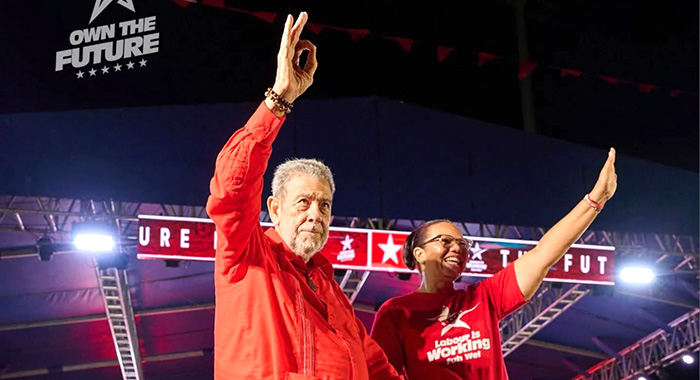
Following a seismic political shift in St. Vincent and the Grenadines, former Prime Minister Ralph Gonsalves has firmly declined to conduct any public analysis of his Unity Labour Party’s (ULP) catastrophic electoral performance on November 27th. The 79-year-old political veteran, who governed for an uninterrupted quarter-century, now finds himself leading an opposition reduced to a single parliamentary seat after the New Democratic Party (NDP) secured a stunning 14-1 victory.
At a press conference in Kingstown, Gonsalves outlined his opposition strategy without addressing the underlying causes of his party’s collapse. “The opposition will oppose matters that are not in the interest of the people,” he stated, committing to proposing alternatives, exposing governmental wrongdoing, and seeking constitutional and legal avenues to challenge the administration.
When pressed by journalists about his failure to anticipate the landslide defeat despite his reputation for political foresight, Gonsalves responded with philosophical detachment. “Sometimes, as the wheels of competitive politics turn, you win some, you lose some,” he remarked, acknowledging only that party officials are “analyzing our loss” privately.
The former leader pointedly refused to engage in what he termed “academic analysis or any analysis in the science of psephology” publicly, despite his background as a political scientist. Instead, he emphasized focusing on party renewal and strategic repositioning. “The proof of the pudding is in the eating,” Gonsalves asserted, suggesting that the party’s actions in coming years would demonstrate their recovery efforts more effectively than any immediate explanation.
Gonsalves drew historical parallels to contextualize his defeat, noting that the NDP itself had experienced significant electoral declines in previous decades. He suggested that similar patterns might emerge for the current governing party, stating that if the NDP follows historical trends, they could see their support diminish substantially by the next electoral cycle.
The veteran politician assured constituents and international observers that he remains fully equipped for his new role as opposition leader. “My head is very clear on all the issues, absolutely clear,” he affirmed, dismissing suggestions that he might become a merely transitional figure. He distinguished between ‘transitioning to a higher plane’ of political engagement and simply ‘marking time,’ asserting that his party intends to actively score political runs rather than merely occupy the parliamentary crease.