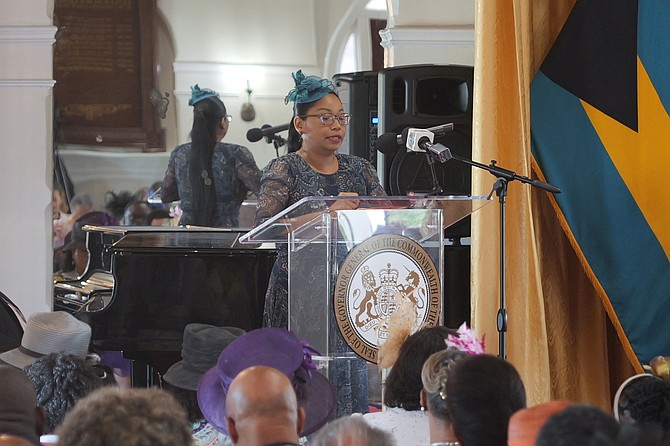
The Bahamas commemorated four decades of dedicated efforts against HIV/AIDS during a prestigious ceremony at Government House, where over 40 individuals were honored for their pivotal roles in shaping the nation’s public health response. The event brought together government officials, healthcare professionals, activists, and community leaders to recognize the transformative journey from initial fear and uncertainty to national resilience.
Dr. Nikkiah Forbes, Director of the National HIV/AIDS Programme, opened the ceremony by acknowledging honorees spanning multiple sectors including clinical care, nursing, laboratory science, social work, policy development, faith leadership, and civil society organizations. She emphasized that the country’s success stemmed from collective determination that moved the nation ‘from the darkness of crisis into the light of resilience.’
The symbolic choice of Government House as the venue underscored HIV’s dual status as both a medical challenge and a national priority that has profoundly affected families and communities across the archipelago.
Health Minister Dr. Michael Darville presented significant progress metrics, revealing a 31% reduction in new HIV diagnoses between 2015 and 2024, with cases dropping from 226 to 156 annually. AIDS-related fatalities have similarly declined, while treatment accessibility has dramatically expanded—over 2,900 people now receive free antiretroviral therapy through public and private channels, nearly triple the number from 2012.
A particularly notable achievement involves the near-elimination of mother-to-child transmission, with only one documented case in 2024. Minister Darville expressed confidence that formal certification of elimination would occur before the end of 2025.
The ceremony paid special tribute to the late Dr. Perry Gomez, who led the national HIV program for decades despite sacrificing a lucrative private practice. Attendees stood in recognition of his pioneering work, which established the foundation for current successes. Other early champions including Nurse Rose Mae Bain, Dr. Sonja Lunn, Dr. Herbert Olander, and Nurse Marva Jervis were similarly honored for their groundbreaking contributions.
Minister Darville highlighted critical success factors including research advancements, digital health platforms, community outreach initiatives, simplified treatment regimens, and expanded testing capabilities. He emphasized that eliminating AIDS as a public health threat remains an ongoing mission requiring sustained inter-ministerial collaboration, community engagement, and continuous public education.