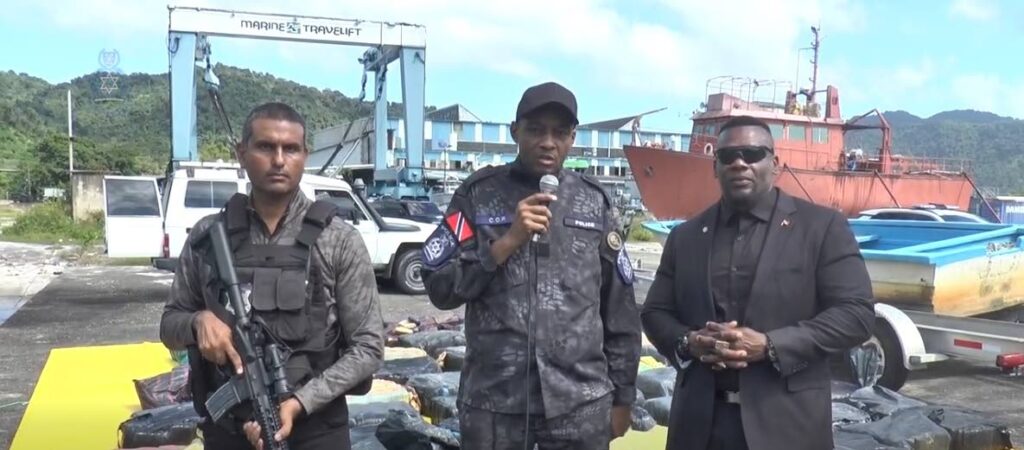
Police Commissioner Allister Guevarro has publicly addressed mounting criticism regarding the absence of arrests following two major drug interdictions that netted 2.2 tonnes of marijuana valued at $171 million. The operations, which occurred on December 11, targeted drug trafficking activities in the Caroni Swamp and along South Central Road.
Commissioner Guevarro justified the operational decisions during the inauguration of a Municipal Police Post in Port of Spain on December 12. He emphasized strategic resource allocation concerns, stating that exposing officers to extended surveillance in hazardous swamp conditions would constitute irresponsible leadership. “I would be very hard pressed to leave my officers in the bush to wait or in the swamp to wait for someone to come back and collect their 1.5 tonnes of marijuana,” Guevarro explained.
The police chief revealed that advanced surveillance technology played a crucial role in the operations. A recently installed US military-grade radar system in Tobago provided critical intelligence that enabled the successful intercepts. According to Guevarro, the conspicuous police presence during the operations effectively disrupted the criminal network, as traffickers would have detected police movements from considerable distances and abandoned their contraband.
Despite recovering massive drug quantities within 24 hours, Guevarro acknowledged the perception issues surrounding the lack of arrests. He maintained that the primary objective of removing dangerous drugs from circulation had been achieved, with the seized marijuana slated for destruction. The commissioner’s comments highlight the complex balance between law enforcement objectives and officer safety considerations in anti-narcotics operations.