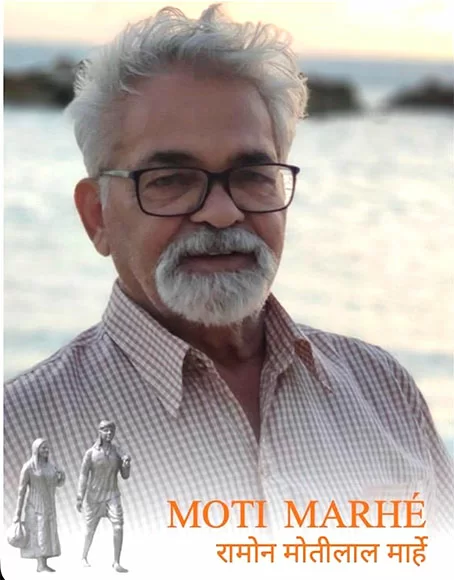
The cultural and linguistic landscape of Suriname has lost one of its most dedicated advocates with the passing of Ramon Motilall Marhé, affectionately known as Moti, who died on December 5, 2025, in The Hague at age 82. Marhé, whose honorary titles ‘Baba en Mai’ symbolized his commitment to cultural identity and heritage, emerged as the foremost champion for the Sarnámi language—much like linguist Hein Eersel was for Sranan—despite spending much of his life in the Netherlands.
Born in Suriname, Marhé began his career as a headteacher with qualifications in English and multiple Hindi diplomas before relocating to the Netherlands in 1969. There, he pursued studies in Dutch language and literature at Leiden University, with Hindi as a secondary subject. His academic journey took him to India in 1976 and 1978, where he conducted research to better understand the linguistic and cultural evolution of Surinamese Hindustanis. This work positioned him as a pioneering force in advocating for Sarnámi as a vehicle for social change.
Marhé’s advocacy extended beyond academia into public policy. He argued that the term ‘Surinamese’ should not be exclusive to one language or culture, insisting that all Surinamese languages be recognized as national languages with corresponding policy measures. He also advocated for the inclusion of these languages in geographic naming and government communications.
In 1985, he published ‘Sarnámi Byākaran,’ an elementary grammar of Sarnámi, marking his first major contribution to the language’s formal recognition. His dedication never waned, even as health challenges emerged in his later years. Despite a muscle disease that robbed him of the ability to write, Marhé continued to voice his ideas through collaborators, publishing articles on linguistic equality until shortly before his death.
His final public appearances included receiving an award at the Milan Festival in The Hague in summer 2023, celebrating 150 years of Hindustani immigration. Until the end, Marhé remained a critical voice urging the Surinamese government to implement the long-delayed Language Law based on recommendations from the Hein Eersel committee—a cause that now becomes part of his enduring legacy.