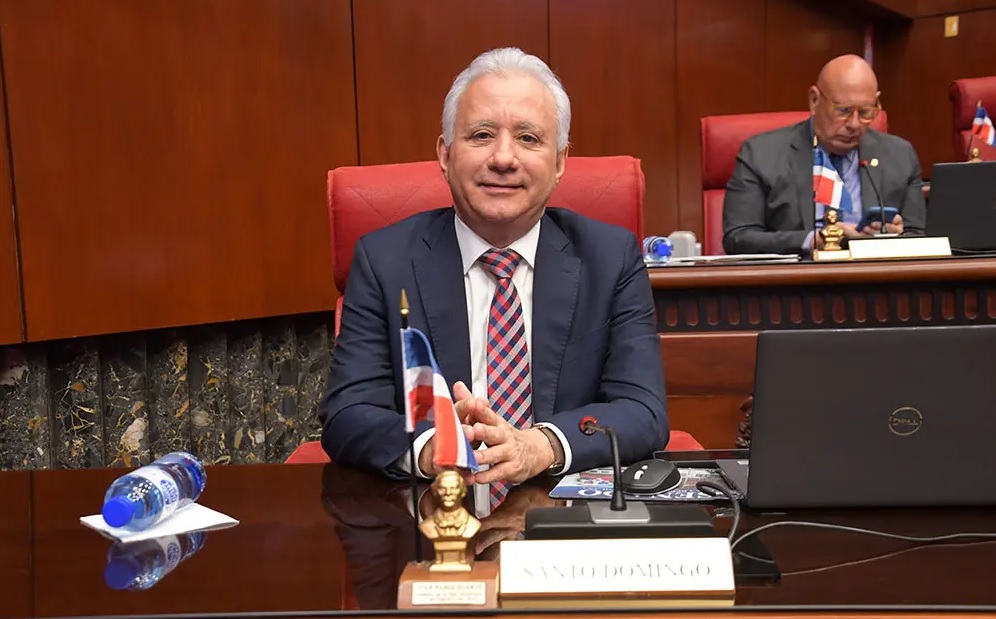
SANTO DOMINGO – In a bold legislative initiative, Senator Antonio Taveras Guzmán has put forward two groundbreaking bills designed to fortify the Dominican Republic’s political system against infiltration by organized crime elements. The senator expressed grave concerns about individuals implicated in drug trafficking, money laundering, and criminal associations increasingly penetrating political circles, a phenomenon he characterizes as transforming politics into a ‘criminal marketplace.’
The first legislative proposal would reclassify all political parties, movements, and groups officially recognized by the Central Electoral Board (JCE) as non-financial reporting entities. This reclassification would subject them to stringent anti-money laundering and counter-terrorism financing protocols as stipulated in Law 155-17. The complementary bill seeks to establish criminal liability for political organizations under the nation’s penal code (Law 74-25), making parties directly accountable for accepting illicit funding.
This legislative approach fundamentally elevates legal accountability for political institutions. Organizations that fail to prevent or report illegal financial contributions would face comprehensive investigations, substantial financial penalties, and potential criminal prosecutions—effectively eliminating traditional immunity for political entities.
Senator Taveras emphasizes that this initiative centers on preserving electoral integrity, stating, ‘The infiltration of illicit funds into politics constitutes nothing less than the prostitution of democracy.’ He contends that without these crucial legal protections, political parties risk becoming ‘conduits for criminal activity’ rather than vehicles for public service.
Should these measures become law, they would revolutionize political financing practices. Political organizations would be mandated to implement sophisticated compliance mechanisms, undergo regular financial audits, and maintain absolute transparency in campaign financing. Even the most prominent political campaigns would be subject to exhaustive forensic examination.
Beyond technical reforms, Taveras highlights the profound societal implications of this legislation. By explicitly criminalizing financial corruption within political structures, the Dominican Republic would demonstrate both domestic and international commitment to excluding criminal influence from democratic institutions. ‘This transcends mere punishment—it’s about revitalizing public trust in our democratic system,’ the senator concluded.