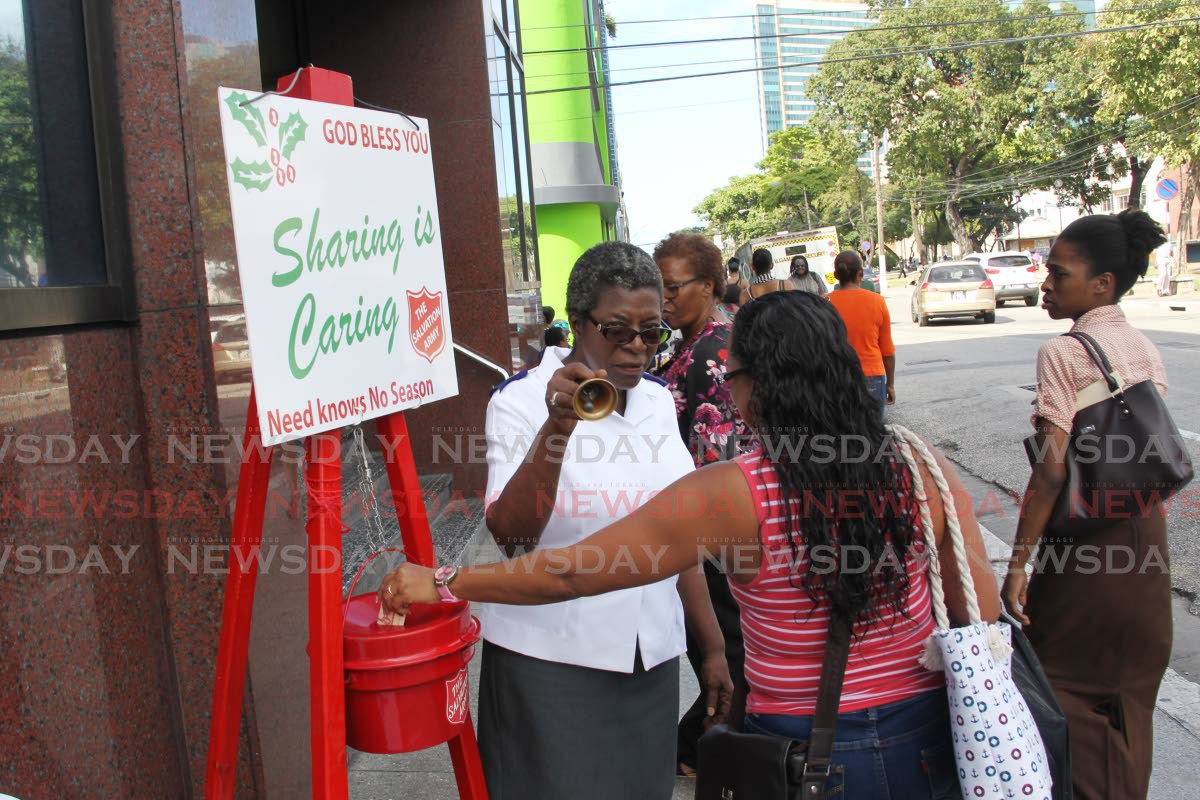
Across Trinidad and Tobago’s bustling shopping centers and public spaces, the familiar sight of bright red kettles and ringing bells heralds the arrival of the Christmas season—and a 124-year tradition of compassionate giving. The Salvation Army’s iconic fundraising campaign, launched locally in the early 1900s, continues to serve as a critical support system for vulnerable communities despite evolving challenges.
Major Chris Matthias, divisional commander overseeing operations in TT, St. Vincent, and Grenada, reveals this year’s ambitious target: $600,000 TT through the Christmas Kettle Appeal. The campaign, running from November 7 to December 31, deploys 28 collection points nationwide (26 in Trinidad, 2 in Tobago), though volunteer availability remains a persistent constraint.
The initiative’s origins trace back to 1891 San Francisco, where Salvation Army Captain Joseph McFee adapted a Scottish maritime charity tradition. Recalling Fishermen’s Wharf’s donation pot for families of lost sailors, McFee employed an iron crab pot to fund hot meals for the impoverished. This grassroots effort rapidly expanded across the Bay Area, evolving into the recognizable red-kettle phenomenon that eventually inspired the classic Christmas ballad Silver Bells.
In Trinidad and Tobago, where The Salvation Army formally incorporated in 1915, the kettle program serves multiple humanitarian functions. Funds enhance Christmas food hampers beyond regular distributions, support children’s holiday parties, and provide personal care packages during institutional visits to five major medical facilities—including the traditional Christmas morning visit to Port of Spain General Hospital.
Matthias emphasizes the program’s transformative impact, recounting how one recipient eventually secured employment and housing before returning to express gratitude. This exemplifies the organization’s philosophy of providing ‘hand-ups’ rather than mere handouts.
Despite maintaining robust transparency through independently audited reports mandated by the Street Collections (Control) Act, the organization faces growing challenges. Donor bases have contracted at both individual and corporate levels, while demand has surged—particularly among single-parent households affected by recent nationwide layoffs.
Safety protocols ensure volunteers receive training in public interaction, donation handling, and site security, with donors encouraged to place contributions directly into kettles. The organization continues seeking business partnerships similar to international models where corporations staff kettle locations as part of CSR initiatives—though such collaborations remain elusive locally.
Matthias concludes with a poignant reminder: Need knows no season. While kettle donations peak during holidays, public support through food contributions remains vital year-round. The ultimate gift, he reflects, extends beyond material assistance—offering hope, joy, and love through practical compassion that transforms lives during the festive season and beyond.