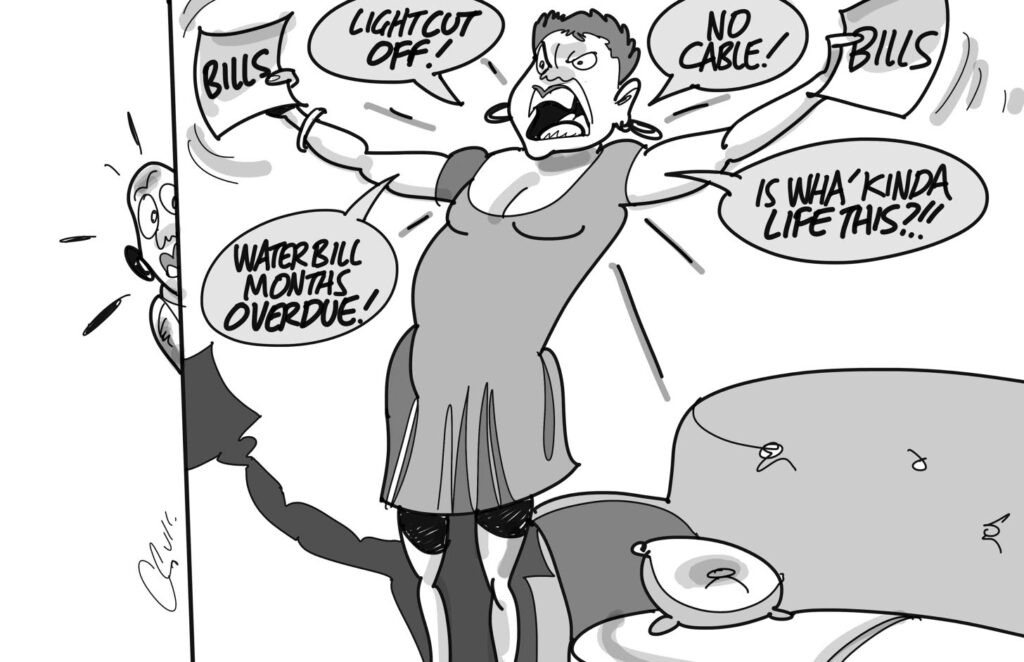
The romanticized concept of ‘struggle love’—relationships characterized by intense passion but severe financial hardship—is facing renewed scrutiny from counseling professionals and women sharing their lived experiences. This dynamic often sees one partner, typically the woman, making extreme sacrifices to sustain the relationship amidst poverty.
Counselor David Anderson challenges the popular notion that financial strife strengthens relationships. “While some believe true partnerships are forged through mutual building, this premise only holds when there’s little to no actual struggling involved,” Anderson explained. “The trauma associated with persistent poverty often undermines relationship foundations rather than strengthening them.”
Five women shared their powerful testimonies about the reality of struggle love relationships:
Kym, now 33, reflected on her teenage relationship where she became a live-in housekeeper for her boyfriend’s extended family of eleven. “At 19, I mistook attention for love,” she recalled. “It took three years to realize I had become an unpaid domestic servant to his entire household.”
Andrene, 27, described taking out a high-interest loan to finance her partner’s taxi business, only to find herself solely responsible for both household expenses and debt repayment. “He operated the taxi while I worked multiple jobs to cover our bills and the loan payments,” she revealed.
Terika, 30, supported her partner’s music career through extreme deprivation. “He praised my ability to ‘hold it down’ with minimal resources,” she said. “The reality was constant hunger and weight loss until his success led him to abandon me for groupies.”
Joette, 35, endured years of financial instability exacerbated by her partner’s gambling addiction. “We survived primarily through his mother’s support from England,” she shared. “After her passing, his immediate suggestion that I seek help from my parents revealed his perpetual dependency mindset.”
Nita, 29, a single mother, briefly entertained a mechanic’s promises of support before recognizing the pattern. “He expected me to fund our household while his earnings disappeared mysteriously,” she stated. “I chose purposeful single motherhood over subsidizing a partner’s irresponsibility.”
These accounts collectively demonstrate how struggle love frequently becomes a one-sided arrangement where women bear disproportionate financial and emotional burdens, often mistaking sacrifice for romantic commitment.