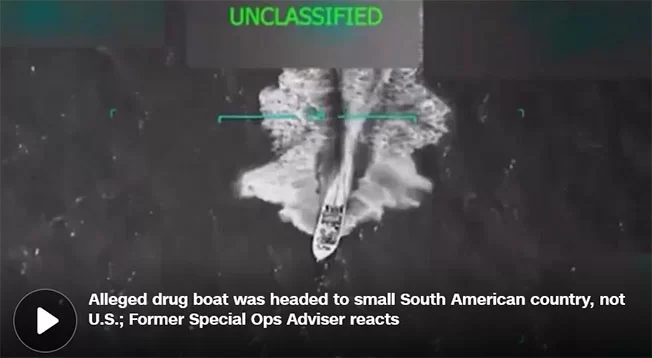
New disclosures have emerged regarding the controversial September 2nd maritime incident in the Caribbean Sea, revealing significant discrepancies in the official narrative provided by the Trump administration. According to Admiral Frank Bradley’s congressional briefing obtained by CNN from two well-placed sources, the small vessel targeted by U.S. military forces was actually en route to rendezvous with a larger ship destined for Suriname.
Surinamese Justice and Police Minister Harish Monorath informed Starnieuws that no official information has been received regarding this matter, though he has requested details from the Suriname Police Corps leadership.
The operation, justified by U.S. intelligence suggesting the boat was transferring narcotics to a second vessel ultimately bound for the United States, has drawn increased scrutiny following revelations about the engagement’s specifics. Admiral Bradley defended the attack by suggesting the cargo might eventually reach U.S. shores through Suriname, despite the vessel not heading toward American territory during the engagement.
Contradicting this assessment, U.S. drug enforcement officials told CNN that smuggling routes through Suriname primarily target European markets, while Pacific routes have dominated U.S.-bound trafficking in recent years.
The new information conflicts sharply with previous statements from Trump administration officials. Secretary of State Marco Rubio initially claimed the boat was “likely headed to Trinidad or another Caribbean nation,” while President Trump asserted on September 2nd that the occupants were “transporting narcotics to the United States.”
Bradley confirmed the vessel changed course after spotting an American aircraft, corroborating earlier CNN reporting that the boat had turned around before being struck.
Most disturbingly, the congressional briefing revealed the U.S. forces conducted four separate attacks on the vessel. The initial strike split the boat in two, leaving two survivors stranded on an overturned section. Subsequent attacks proved fatal and sank the wreckage entirely.
Sources indicate the survivors were seen waving at something in the air, though it remains unclear whether they were attempting to surrender or seek assistance. Under international law of armed conflict, killing shipwrecked personnel constitutes a war crime, with Pentagon guidelines explicitly prohibiting attacks on those who are “helpless and defenseless.”
While many Republicans support Trump’s broader military operations in the Caribbean, the double attack on stranded survivors has prompted intense questioning. The influential Senate Armed Services Committee has announced it will conduct further investigation into the incident.