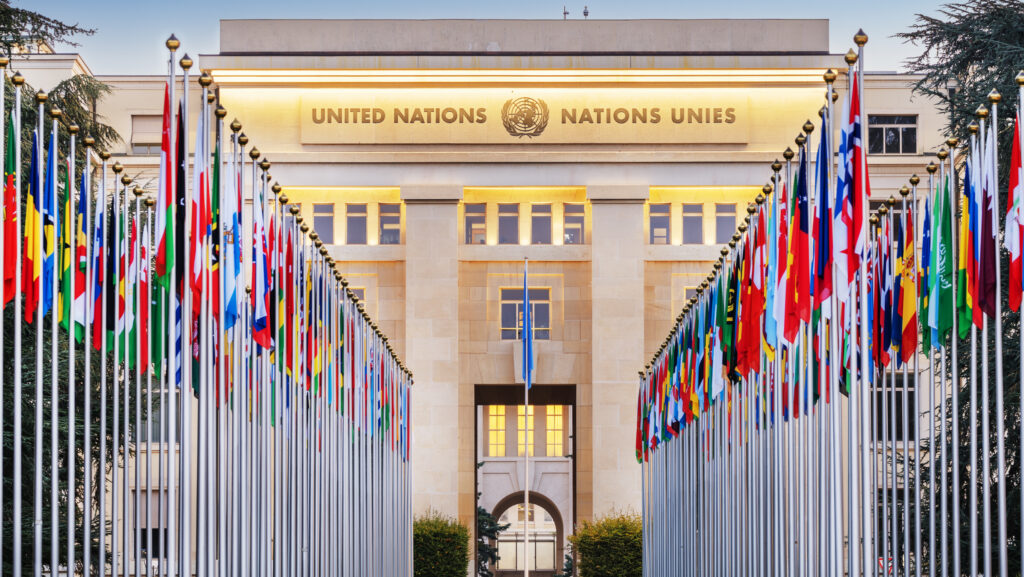
The United Nations is confronting an unprecedented financial crisis that threatens to undermine its global operations. Secretary-General António Guterres has issued a stark warning to the General Assembly’s budget committee, revealing that the organization is rapidly approaching insolvency due to massive unpaid contributions from member states.
Current financial records show that the UN ended 2024 with approximately $760 million in outstanding dues from previous years, while an additional $877 million allocated for 2025 remains unpaid. This combined deficit of $1.6 billion has forced the Secretary-General to propose drastic austerity measures for 2026, including a 15% budget reduction exceeding $577 million and the elimination of 2,681 positions—nearly one-fifth of the UN’s workforce.
The funding shortfall disproportionately affects critical operations, including special political missions that maintain fragile peace processes and development programs essential for vulnerable nations. While some institutional inefficiencies exist, the primary cause of the crisis stems from unreliable financing patterns rather than mismanagement.
Analysis reveals that the crisis originates from overreliance on major contributors, particularly the United States (assessed at 22% of the budget) and China (responsible for nearly 20%). Both nations have consistently delayed payments, with the U.S. citing domestic political debates over foreign spending and China tending to pay later in the calendar year. Several middle-income countries have also fallen behind on their financial obligations.
The consequences are particularly severe for Small Island Developing States (SIDS) and climate-vulnerable nations in the Caribbean and Latin America. As climate impacts accelerate, UN development and adaptation programs are shrinking precisely when they’re most needed. Peacekeeping operations face similar constraints, operating with reduced resources and weakened mandates that compromise civilian protection capabilities.
This financial instability mirrors challenges faced by other international organizations, including the Organization of American States (OAS), which has struggled with inadequate funding for over fifteen years. Both institutions face the paradoxical situation where wealthy nations effectively determine which programs survive through their payment patterns.
Practical solutions exist, including treating timely payment of assessed contributions as integral to membership obligations and establishing financial buffers when liquidity falls below safe thresholds. Small states have the most to lose from a weakened UN and should lead by example in prompt payment while encouraging major contributors to fulfill their responsibilities.
The alternative—a retreat from multilateralism—would create power vacuums likely to be filled by ad hoc coalitions with less transparency and legitimacy. As Ambassador Sir Ronald Sanders notes, when multilateralism weakens, the strong grow stronger while small states stand alone.