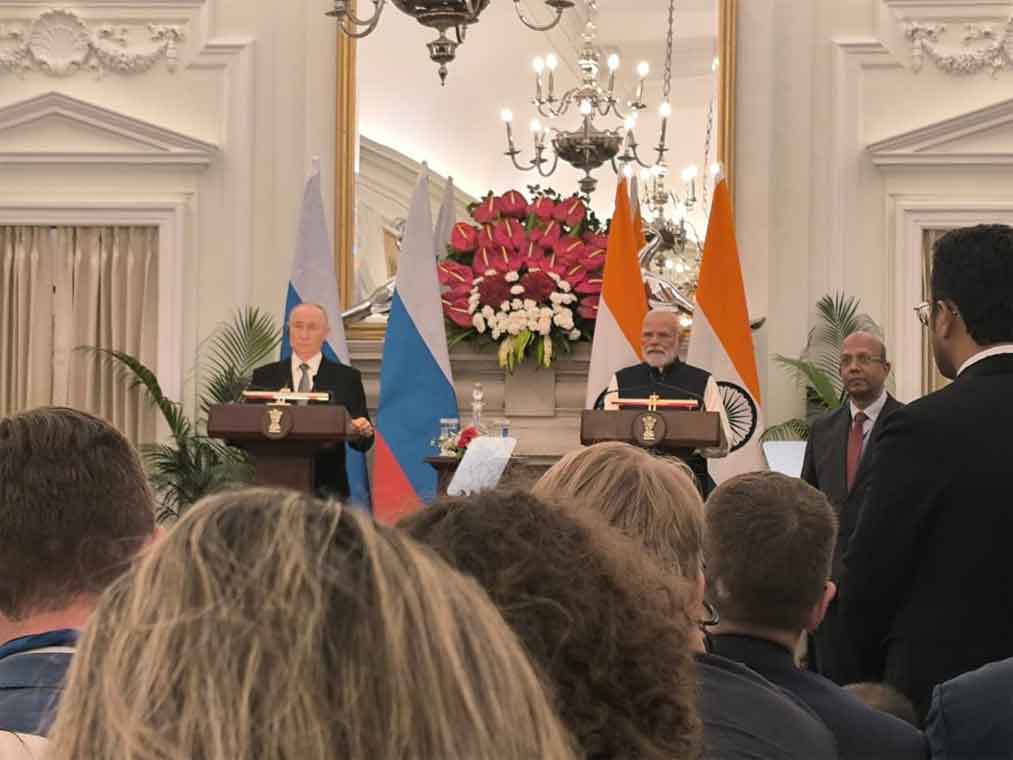
In a significant diplomatic advancement, India and Russia have established a robust framework to substantially enhance their strategic and privileged partnership. The cornerstone of this strengthened alliance is an ambitious target to achieve $100 billion in bilateral trade over the next five years, a goal that underscores a mutual commitment to deepening economic integration.
The partnership was formally advanced through the exchange of 16 distinct cooperation mechanisms covering a diverse array of sectors. A key agreement focuses on regulating the mobility of skilled Indian professionals to Russia, establishing clear pathways for legal employment while implementing measures to combat irregular migration, thereby addressing a critical issue of mutual concern.
Collaboration extends into the realms of public health and education, with new pacts designed to foster joint initiatives in medical research, healthcare, and academic exchange in science. In a specialized move, the nations agreed to facilitate the training of Indian maritime specialists for operations in challenging polar waters, signaling India’s growing interest in Arctic logistics and Russia’s expertise in this domain.
Economic cooperation received a significant boost with agreements to create a joint regulatory framework for a major urea manufacturing venture in Russia, led by Indian companies. This initiative aims to secure a stable supply of fertilizers for India’s vast agricultural sector. Further streamlining trade, both countries committed to implementing systems for the pre-arrival exchange of customs data for goods and vehicles, a measure expected to drastically reduce border clearance times.
Recognizing the digital economy’s potential, the partners pledged to strengthen cross-border postal services and actively support the growth of e-commerce, with a special focus on empowering small and medium-sized enterprises (SMEs) from both nations to access each other’s markets. The breadth of the partnership is further evidenced by new mechanisms for scientific and academic exchanges, specialized industrial training programs, and enhanced media cooperation to foster greater public understanding and people-to-people ties.