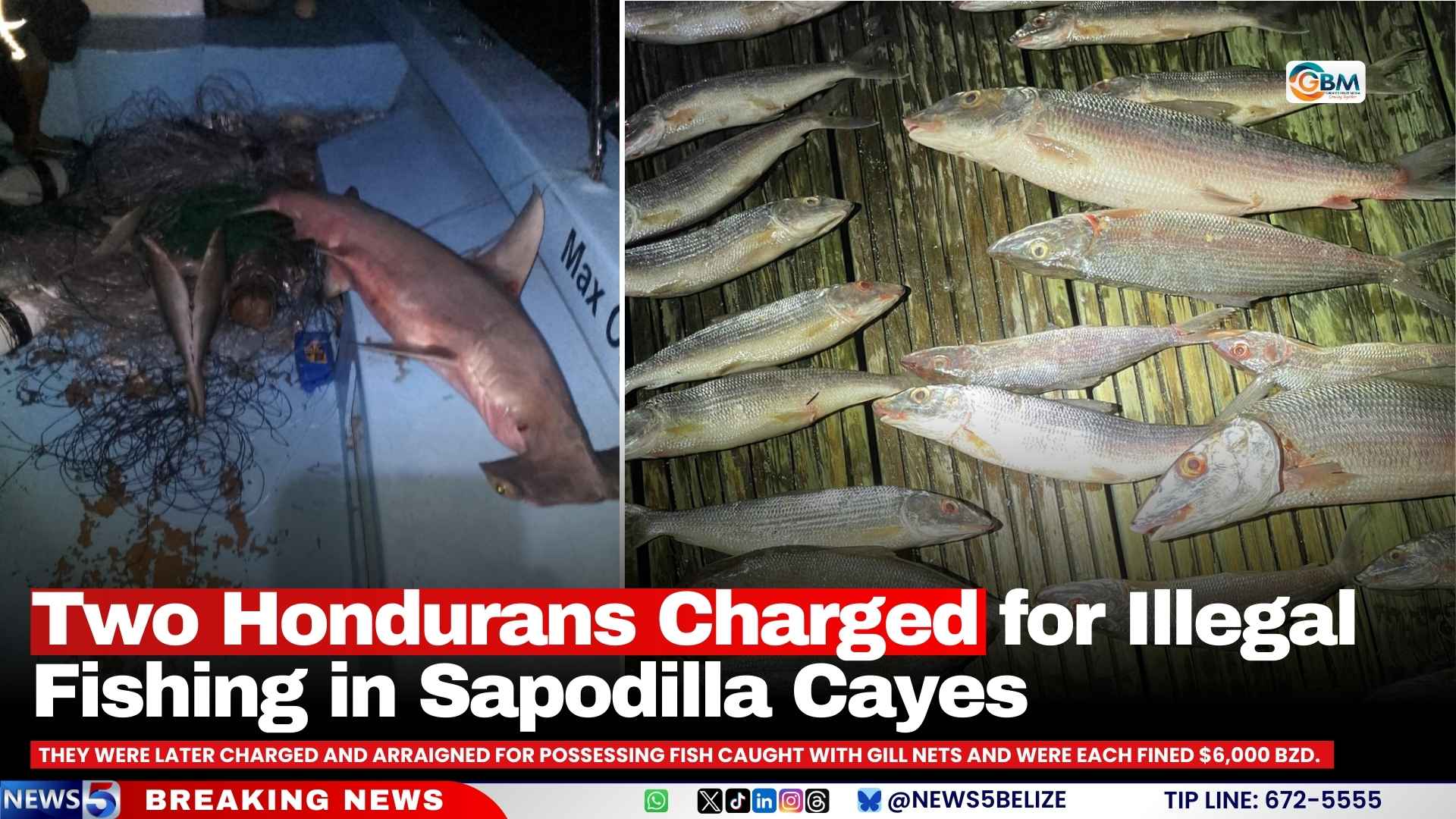
Belizean authorities have apprehended and charged two Honduran nationals for engaging in unlawful fishing activities within the ecologically sensitive Sapodilla Cayes Marine Reserve. The incident, which occurred on December 2, 2025, represents a significant enforcement action against illegal fishing operations in the region.
The coordinated operation was conducted through a collaborative effort between the Toledo Institute for Development and Environment (TIDE), the Belize Coast Guard, and the Fisheries Department. According to Florencio Coc, Project Manager for TIDE, the enforcement action followed the alarming discovery of an extensive three-mile fishing line on December 1 that had already caused substantial marine casualties, including the death of a hammerhead shark and multiple reef sharks.
“When our team retrieved the landline, these marine creatures were already deceased, eliminating any possibility of returning them to their natural habitat,” Coc stated, highlighting the irreversible environmental damage caused by such illegal practices.
The subsequent patrol resulted in the interception of the two Honduran fishermen who were found in possession of 37 bonefish—a species specifically protected within the reserve boundaries. Both individuals were formally charged and arraigned before the judicial system, receiving fines of $6,000 BZD each for utilizing prohibited gill nets and possessing illegally caught marine life.
Coc acknowledged the persistent challenges in monitoring the vast 300,000-acre reserve with limited enforcement resources. Local fishing communities have previously expressed concerns about inadequate patrol presence, but Coc emphasized that enforcement capabilities have significantly improved since TIDE assumed co-management responsibilities of the protected area.
“We recognize that patrols and enforcement were limited prior to our management takeover,” Coc explained. “The current administration has implemented a renewed focus and increased patrol presence to better protect this critical marine ecosystem.”