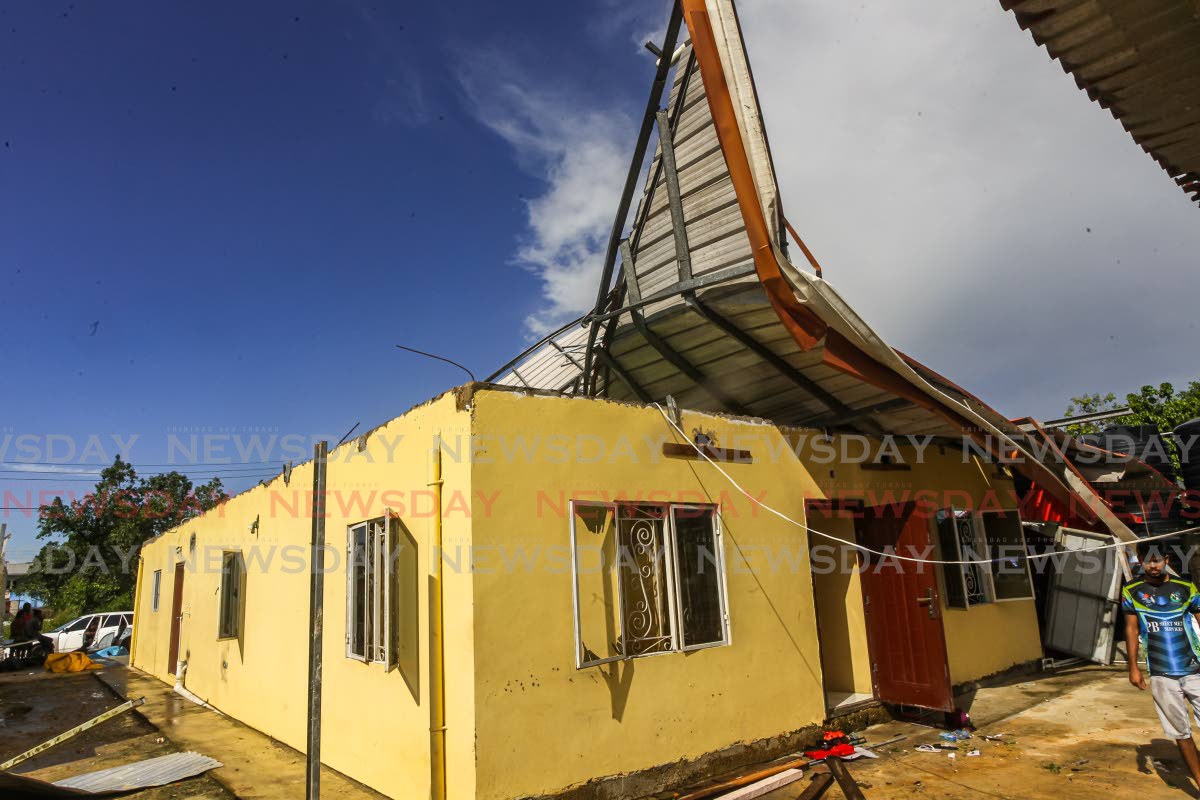
Trinidad and Tobago confronts a recurring pattern of structural vulnerability as moderate wind events continue to cause catastrophic roof failures across the nation. Over the past decade, increasingly severe weather phenomena—including torrential rains, flash flooding, and powerful windstorms—have exposed critical deficiencies in residential construction practices, particularly within the informal housing sector.
The core issue lies in inadequate anchorage systems connecting roof structures to supporting walls. Investigations reveal that entire roof assemblies—including framing, rafters, purlins, and sheeting—are frequently detached during wind events far below hurricane intensity. This systematic failure points to fundamental engineering flaws rather than exceptional weather conditions.
Financial implications for affected families are devastating. While replacing individual roofing sheets might cost a few thousand dollars, complete roof reconstruction ranges from $40,000 to $90,000—economically crippling sums for working-class households. The cyclical nature of damage and reconstruction without improved standards creates a perpetual burden on communities.
Despite existing technical solutions outlined in the TT Bureau of Standards’ TTS 599:2006 guidelines, implementation remains critically limited. The informal construction sector—comprising small-scale contractors and self-built homes—often operates without formal engineering supervision, relying on experiential knowledge rather than scientific principles.
A multi-faceted solution framework proposes: 1) Comprehensive public education on wind-resistant design principles, 2) Institutional collaboration between disaster management agencies and engineering associations, 3) Community-level outreach through hardware stores and municipal offices, 4) Enhanced enforcement of building standards, and 5) Professional certification programs for contractors.
As climate change intensifies wind patterns, the urgency for structural resilience becomes increasingly pressing. Proper roof anchorage represents not merely technical compliance but fundamental disaster preparedness—protecting families, preserving economic stability, and strengthening national resilience against future climate challenges.