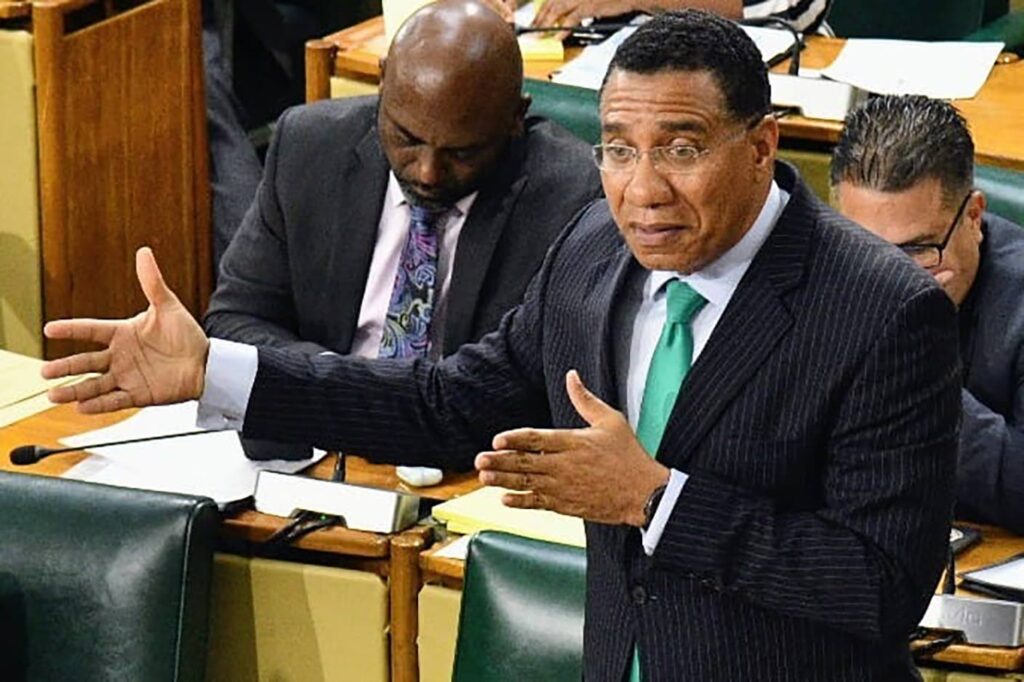
A significant political divergence emerged in Jamaica’s House of Representatives on Tuesday as Prime Minister Andrew Holness and Opposition Leader Mark Golding presented contrasting visions for addressing climate-induced disasters. The debate centered on Jamaica’s recovery strategy following Hurricane Melissa, exposing fundamental differences in approaching climate injustice and economic sovereignty.
Opposition Leader Golding launched a forceful critique against global climate inequality, characterizing Jamaica as an innocent victim suffering from ecological crises it didn’t create. He emphasized that wealthy, high-emission nations bear historical responsibility for climate disruptions that disproportionately affect small island developing states. Golding warned that Jamaica faces ‘a massive amount of additional debt’ to recover from disasters, creating an unfair burden that should be shouldered by major polluting nations.
Prime Minister Holness acknowledged the validity of climate injustice arguments but articulated a philosophy of pragmatic self-reliance. While reaffirming his longstanding advocacy for climate justice on international platforms, including his role as co-chair of the Global Committee for Climate Financing, Holness insisted Jamaica cannot depend on external goodwill. He maintained that the nation must ‘stand on its own two feet’ while pursuing international compensation claims.
The Prime Minister highlighted Jamaica’s transformed fiscal credibility, noting that the country now qualifies for concessional financing from international financial institutions—a scenario he described as ‘unthinkable two decades ago.’ Holness pointed to Jamaica’s dramatically improved debt-to-GDP ratio over the past decade as evidence of strengthened economic management that commands global confidence.
Crucially, Holness emphasized that borrowing terms matter more than borrowing itself. He detailed how current recovery financing offers more structured, concessionary, and predictable terms than previous arrangements. The Prime Minister stressed that wise deployment of reconstruction funds could expand GDP and facilitate debt repayment, urging parliamentary discipline and long-term strategic thinking as recovery programs accelerate.
Golding later clarified that he wasn’t advocating for handouts but highlighting the structural injustice that forces vulnerable nations into debt for survival. Both leaders agreed on the reality of climate inequality but diverged significantly on how Jamaica should navigate its consequences while maintaining economic stability and sovereignty.