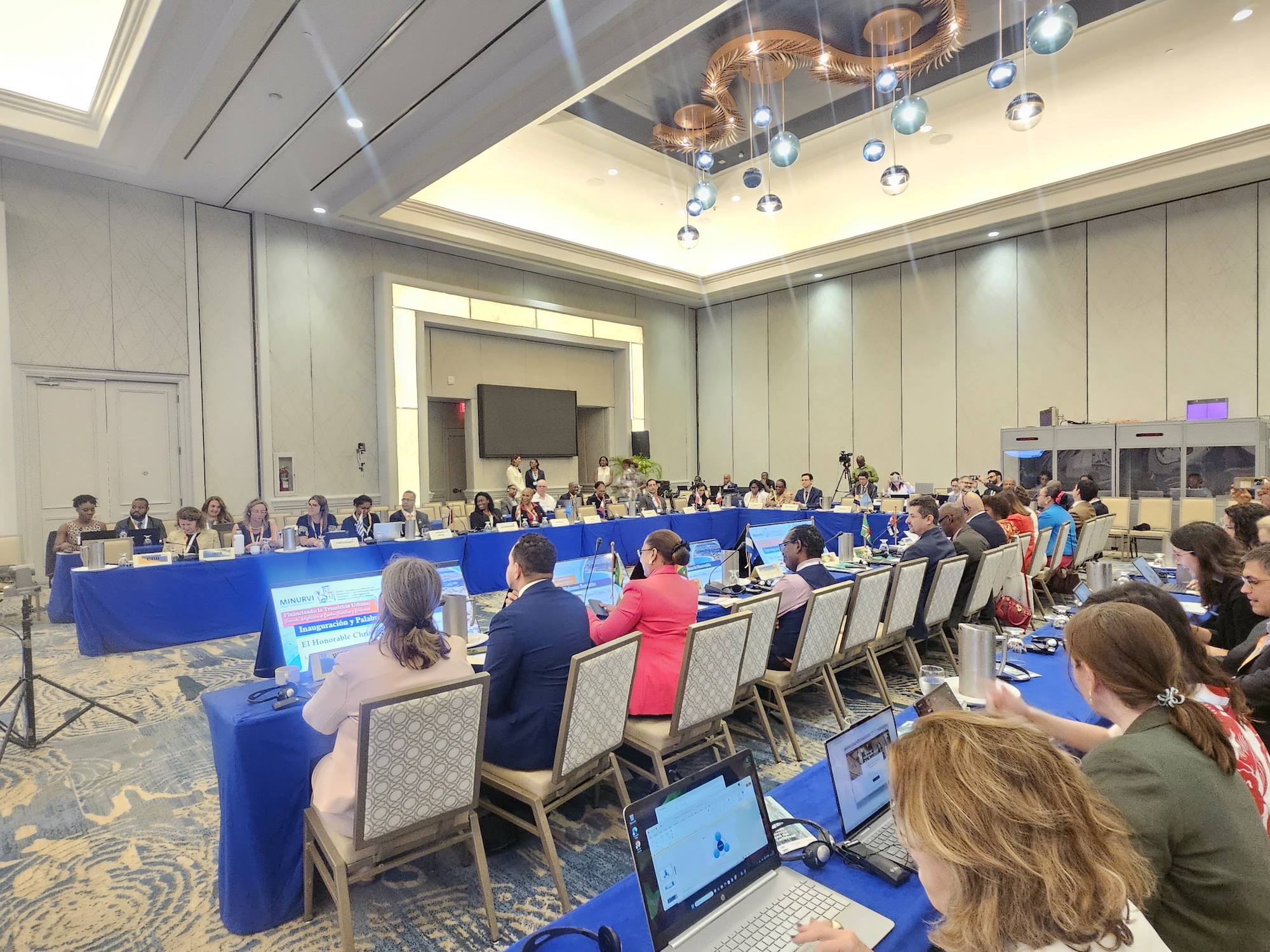
Barbados is accelerating innovative strategies to transform derelict structures and vacant lands into sustainable housing solutions, positioning urban renewal as a cornerstone of climate adaptation policy. Acting Prime Minister Dr. William Duguid unveiled this initiative while addressing the 34th general assembly of MINURVI, the Forum of Ministers and High-Level Authorities of Housing and Urban Development of Latin America and the Caribbean.
Dr. Duguid delivered a compelling argument for rethinking urban infrastructure in the era of climate change, stating that existing systems were designed for environmental conditions that no longer exist. “As we build for the future, we must build for the new climate reality,” he emphasized. “This means constructing with greater emphasis on resilience—not just in roads, but in buildings and housing infrastructure as well.”
The minister connected recent extreme weather events, including Hurricane Melissa’s devastation in Jamaica and Cuba, to the urgent need for adaptive urban planning. He highlighted how strategic reuse of underutilized assets could simultaneously address housing shortages, attract private investment, and create more robust urban environments.
Barbados’s Ministry of Housing, Lands and Maintenance is already advancing several policies in this direction. In collaboration with the Inter-American Development Bank, officials are conducting technical studies on repurposing vacant lots and abandoned buildings within urban corridors for future housing development.
Housing Minister Chris Gibbs reinforced the critical timing of these initiatives, noting that climate impacts have become a “global equalizer” leaving all nations operating with heightened vulnerability. He emphasized the alignment between these urban adaptation strategies and recent climate discussions at COP30 in Belém, Brazil.
The regional significance of these efforts was further underscored by José Manuel Salazar Xirinachs, executive secretary of the UN Economic Commission for Latin America and the Caribbean. In a pre-recorded address, he warned that housing deficiencies across the region leave millions exposed to climate risks while exacerbating existing challenges of inequality and weak governance structures.