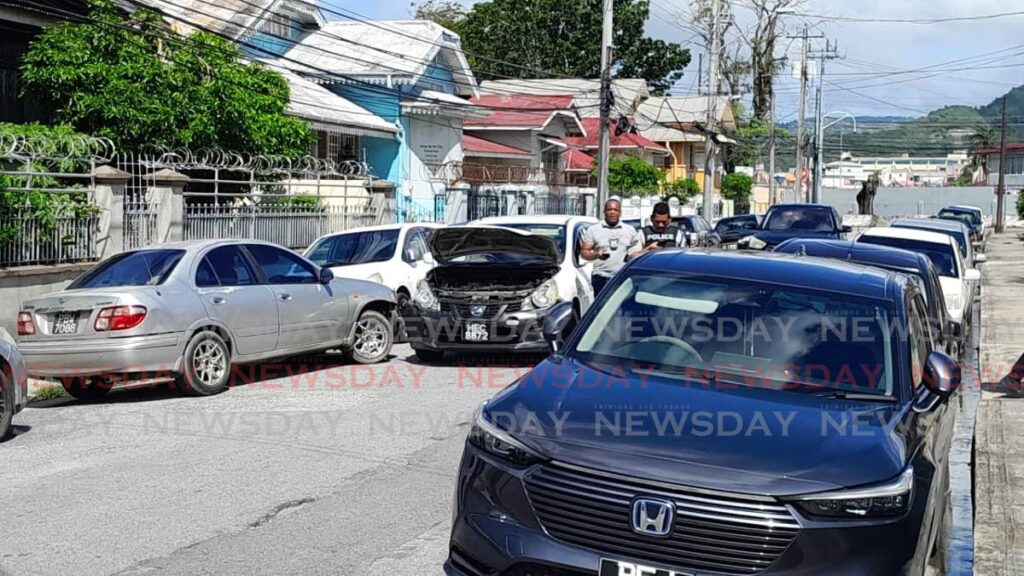
A medical emergency escalated into a dramatic public safety incident on Ariapita Avenue in Port of Spain Monday morning when a taxi driver suffered a sudden seizure while operating his vehicle. The 63-year-old driver lost control of his white Nissan AD wagon around 9:30 am, colliding with five vehicles in successive impacts that created chaotic scenes along the busy thoroughfare.
The situation intensified when one of the struck vehicle owners—a legally armed individual—drew his licensed firearm and pursued the errant taxi on foot. This response, while intended to intercept the seemingly reckless driver, inadvertently triggered public panic as bystanders misinterpreted the armed chase as an active shooting scenario. Multiple emergency calls reported a gunman pursuing a vehicle, prompting a tactical police response.
Heavily armed officers from the Port of Spain Task Force mobilized rapidly under the presumption of an ongoing armed incident. Upon arrival, they discovered the true nature of the emergency: the taxi had come to rest on Scott Bushe Street with both occupants assisted by civilians. Passers-by had extracted the non-responsive driver and his 51-year-old female passenger, placing them in recovery positions in a nearby preschool driveway.
The crisis highlighted both community compassion and systemic challenges. Brent Lee, a local worker certified in first aid, provided critical medical stabilization to both victims. He revealed the driver had been fasting since 3:30 that morning and experienced memory loss surrounding the incident. Lee’s intervention proved vital during the agonizing 80-minute wait for emergency medical services, with ambulines delayed at Port of Spain General Hospital.
In the aftermath, Lee advocated for widespread first aid education, sharing his personal experience with his father’s fatal heart attack. His testimony underscored the vital importance of immediate medical response capabilities within communities, emphasizing that professional help cannot always arrive promptly during critical emergencies.