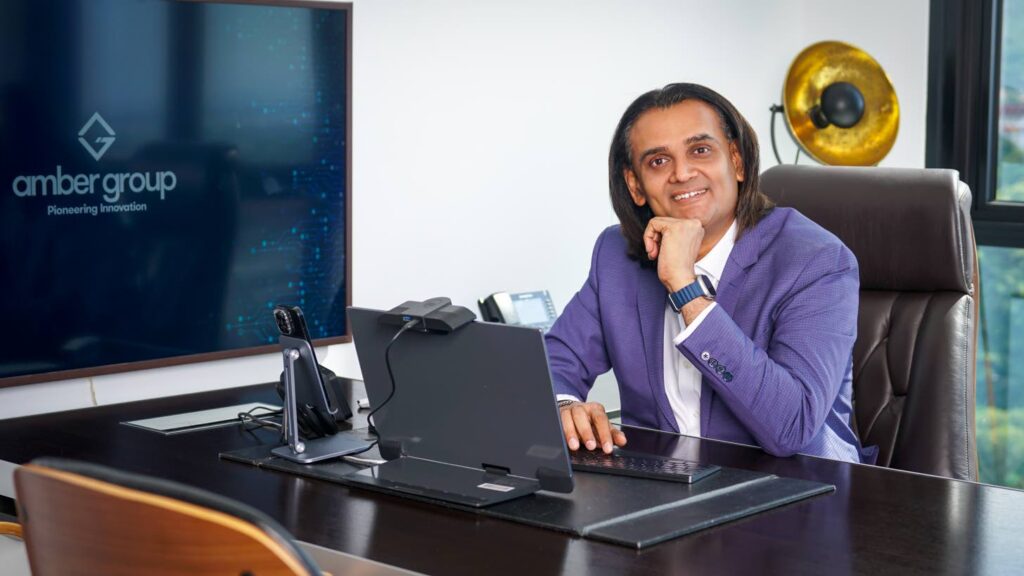
At a recent World Television Day virtual symposium hosted by the Caribbean Institute of Media and Communication (CARIMAC), industry leader Dushyant Savadia delivered a compelling argument about artificial intelligence’s role in media’s future. The Amber Group CEO and founder addressed attendees during his keynote presentation, asserting that while AI continues to advance rapidly, it will never duplicate the emotional intelligence and intuitive capabilities inherent to human storytellers.
The event, organized by final-year public relations students under the provocative theme ‘AI TV: The Future or The End?’, assembled media professionals, students, and television enthusiasts to examine television’s evolving landscape amid artificial intelligence integration. Rather than framing AI as an existential threat to creative industries, Savadia encouraged emerging media professionals to embrace it as an innovative tool that automates repetitive tasks, thereby liberating human creators to concentrate on more substantive narrative development.
Savadia’s presentation highlighted the accelerating global expansion of AI technologies, predicting that by March 2026, AI chatbots will achieve unprecedented sophistication, paving the way for the next transformational phase: physical AI. “We are entering an era where AI systems will resemble humans in both appearance and interaction,” he explained, characterizing television’s current evolution as its most significant transformation since the transition from black-and-white to color broadcasting.
Illustrating this rapid pace of change, Savadia demonstrated Revonews.ai, an innovative platform revolutionizing modern newsroom operations. The cutting-edge system enables audiences to engage directly with news content through an AI assistant utilizing media veteran Cliff Hughes’ voice, access decades of archival material instantly, and curate personalized real-time story selections across news, sports, and entertainment categories.
“Whatever you imagine, you can now create,” Savadia told participants, envisioning a future where viewers can pause programming and interact directly with their television content. The subsequent question-and-answer session generated vigorous discussion regarding ethical challenges, cultural preservation imperatives, and the future trajectory of Jamaican content creation.
Dr. Patrick Prendergast, CARIMAC’s director, reflected on the symposium’s significance, noting the institution’s continuous pursuit of technological adaptation for industry and societal advancement. The event provided a platform to contemplate television’s enduring cultural influence while innovating responsibly within the framework of established media values, standards, and creative practices.