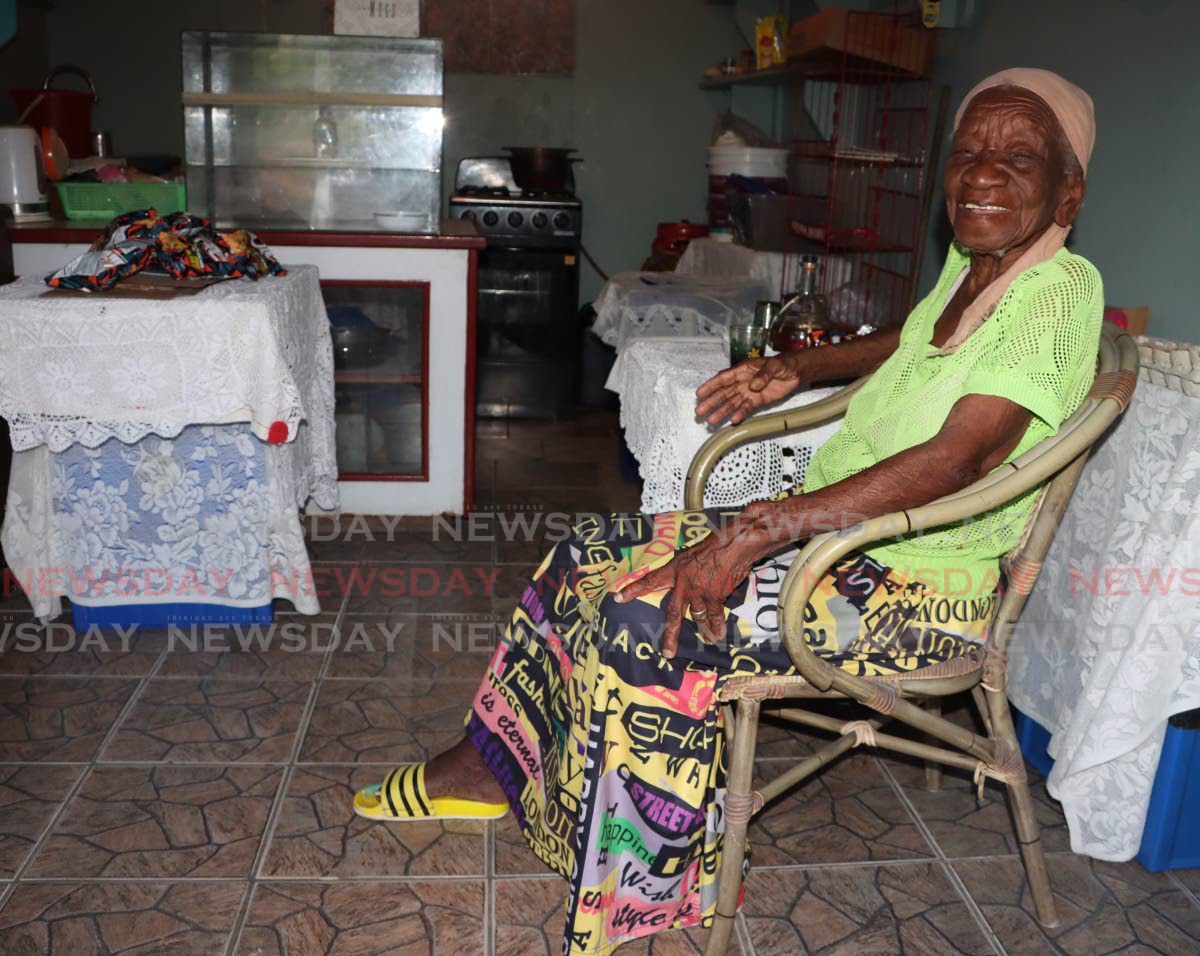
In the tranquil village of Alensdale, Toco, 91-year-old Elsie London continues to operate her namesake café, a local institution known for its coconut drops, sweetbread, and bottled preserves. Five years after our initial encounter, Ms. London remains seated in her favorite chair, greeting visitors with characteristic warmth and occasional mischievous laughter.
Despite scaling back her culinary activities, she continues weekend baking—producing cakes, bread, and kuchela mango that remain in high demand. Her infamous humor surfaced when discussing homemade wine, as she recounted a neighbor’s mock outrage about supplying sugarcane for her babash production: “He bawl out, ‘Ms. Elsie! I must bring cane for you to make that?’ He say dais jail!”
Beneath the laughter lies profound emotional depth. Without prompting, London revealed a childhood trauma that has shaped her entire existence: “My mother, Kathy, give me away when I was six years old.” The recollection remains painfully vivid despite decades passing. Confronting her mother about the abandonment, young Elsie recognized what she believed to be “fake cry” before walking away with no possessions or plan.
Her salvation came through neighbor Theresa, who immediately embraced the child despite already raising four biological children. Their exchange established a new foundation: “‘Where yuh going?’ I say, ‘Ah come home.’” Theresa’s practical concern—asking about meals and bathing—defined true motherhood for London: “You hear what a mother does ask if she care? That is a mother.”
Theresa became London’s legitimate guardian, arranging schooling and eventually presiding over her marriage ceremonies. This adoption forged London’s fierce independence and perspective on relationships: “No man eh having me so! I had a mind of meh own.” She revealed having been married twice—to George Byron (deceased at 89) and another previously undisclosed spouse.
Even at 91, London maintains sharp political awareness, analyzing US-Venezuela tensions through a fisherman’s lens: “A fishing boat doh have three engines.” Her wisdom reflects lived experience—interpreting politics with the same clarity developed through surviving childhood abandonment.
Ultimately, Elsie London’s story transcends personal history to explore motherhood’s essence. Her resilience demonstrates how familial bonds are forged through choice rather than biology, embodied by Theresa’s simple declaration to a six-year-old: “Well, yuh home.”