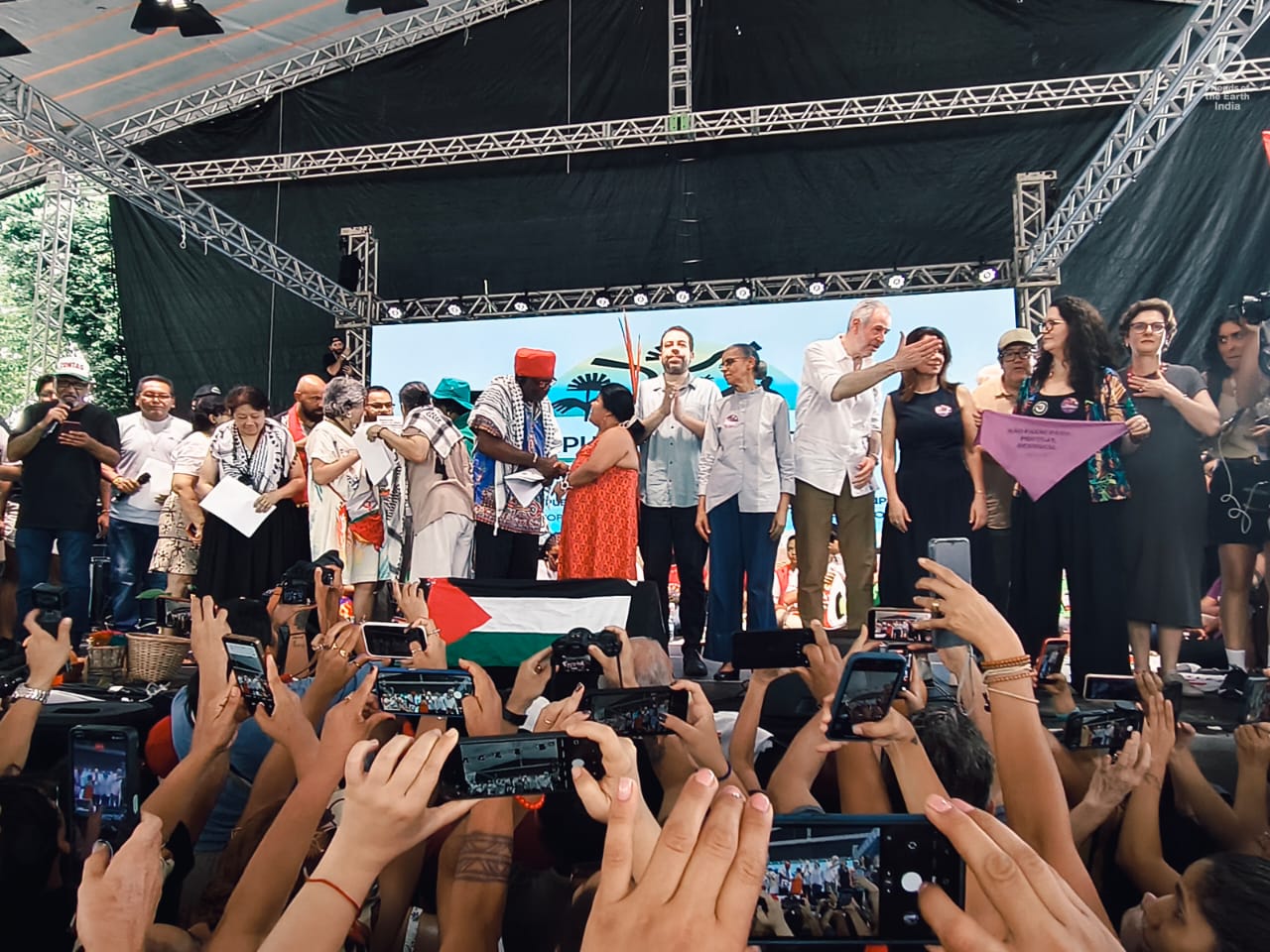
BELÉM DO PARÁ, BRAZIL – From November 12-16, 2025, the historic We, the Peoples’ Summit convened in the heart of the Brazilian Amazon, culminating in a powerful declaration that represents months of preparation and the collective voice of over 70,000 participants from diverse global movements.
The unprecedented gathering brought together indigenous communities, traditional peoples, peasants, quilombolas, fishermen, extractivists, shellfish gatherers, urban workers, trade unionists, homeless populations, babassu coconut breakers, terreiro peoples, women, LGBTQIAPN+ communities, youth, Afro-descendants, elders, and representatives from forest, rural, peripheral, marine, river, lake, and mangrove regions worldwide. Their unified mission: to build a just, democratic world centered on the principle of ‘buen vivir’ or ‘good living’ for all humanity.
The Summit’s declaration identifies capitalism as the fundamental driver of the escalating climate emergency, asserting that the current mode of production directly causes environmental destruction through its relentless pursuit of profit. The document condemns transnational corporations in collusion with Global North governments as primary beneficiaries of this system, specifically naming mining, energy, arms, agribusiness, and Big Tech industries as major contributors to the planetary crisis.
A significant portion of the declaration addresses geopolitical conflicts, expressing unequivocal solidarity with Palestine against what participants term ‘genocide perpetrated by the Zionist state of Israel.’ The document also condemns US imperial expansion in the Caribbean through military operations like ‘Southern Spear,’ and stands with resistance movements in Venezuela, Cuba, Haiti, Ecuador, Panama, El Salvador, Colombia, Democratic Republic of Congo, Mozambique, Nigeria, Sudan, and emancipatory projects in the Sahel and Nepal.
The Summit rejected market-based climate solutions, warning that financialized programs like the Task Force on Fossil Fuels (TFFF) perpetuate harmful practices without addressing root causes. Instead, delegates demanded transformative approaches including land demarcation for indigenous territories, popular agrarian reform, agroecology, and climate justice centered on ancestral knowledge and popular participation.
Key demands include: complete demilitarization and redirection of military spending to climate recovery; fair compensation for losses and damages from destructive projects; feminist justice recognizing care work as essential labor; a just energy transition that respects national sovereignty; and climate financing mechanisms independent of IMF and World Bank influence.
The declaration concludes with a call for strengthened international organizing against common enemies of humanity, invoking the spirit of popular internationalism with the rallying cry: ‘Peoples of the world: Unite!’