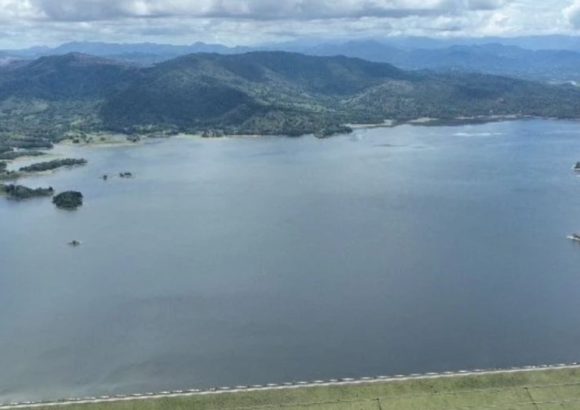
Santo Domingo, Dominican Republic – The National Institute of Hydraulic Resources (Indrhi) has issued an official assurance that the country’s network of national reservoirs holds enough stored water to fully sustain the ongoing grain planting season, as well as the upcoming rice cultivation cycle scheduled to kick off this December.
Indrhi’s Executive Director Olmedo Caba Romano shared that the nation’s combined dam storage capacity currently sits at roughly 70%, with a total of 1.4 billion cubic meters of usable water held across all major facilities. Romano noted that steady precipitation brought by successive weather troughs that have swept across the Dominican Republic since mid-September has injected more than 243 million cubic meters of additional water into the reservoirs, accelerating their recovery from earlier seasonal drawdowns. This positive storage rebound has been reinforced by targeted, coordinated water governance efforts led by the national Water Observatory and the Committee for the Operation of Dams and Reservoirs (Copre), which have overseen optimized release and conservation schedules for all key facilities.
For the high-priority bean-growing operations in the San Juan region, local supplies are fully secured by the Sabaneta Dam, which currently holds 54.85 million cubic meters of water, standing at 97.5% of its total maximum capacity. The Ministry of Agriculture officially launched mechanized bean planting operations in the San Juan area on November 10 for the 2026–2027 fall-winter agricultural cycle, with a planned cultivation footprint covering 126,000 tareas of farmland.
Major rice producing hubs in the Cibao and Northeast regions also have guaranteed access to reliable irrigation water for their upcoming planting cycles, Indrhi confirmed. The network of key reservoirs supporting these rice operations includes the Monción Dam at 97.9% capacity, Tavera at 76.3%, Bao at 76.6%, Rincón at 69.4%, and Hatillo at 69.8%.
Romano emphasized that Indrhi will maintain its ongoing collaborative water management framework through the Water Observatory and Copre for the coming months, to proactively safeguard consistent water access for all national agricultural production activities and uphold the country’s broader food security targets. For additional local Dominican news coverage, readers can visit DominicanScope.