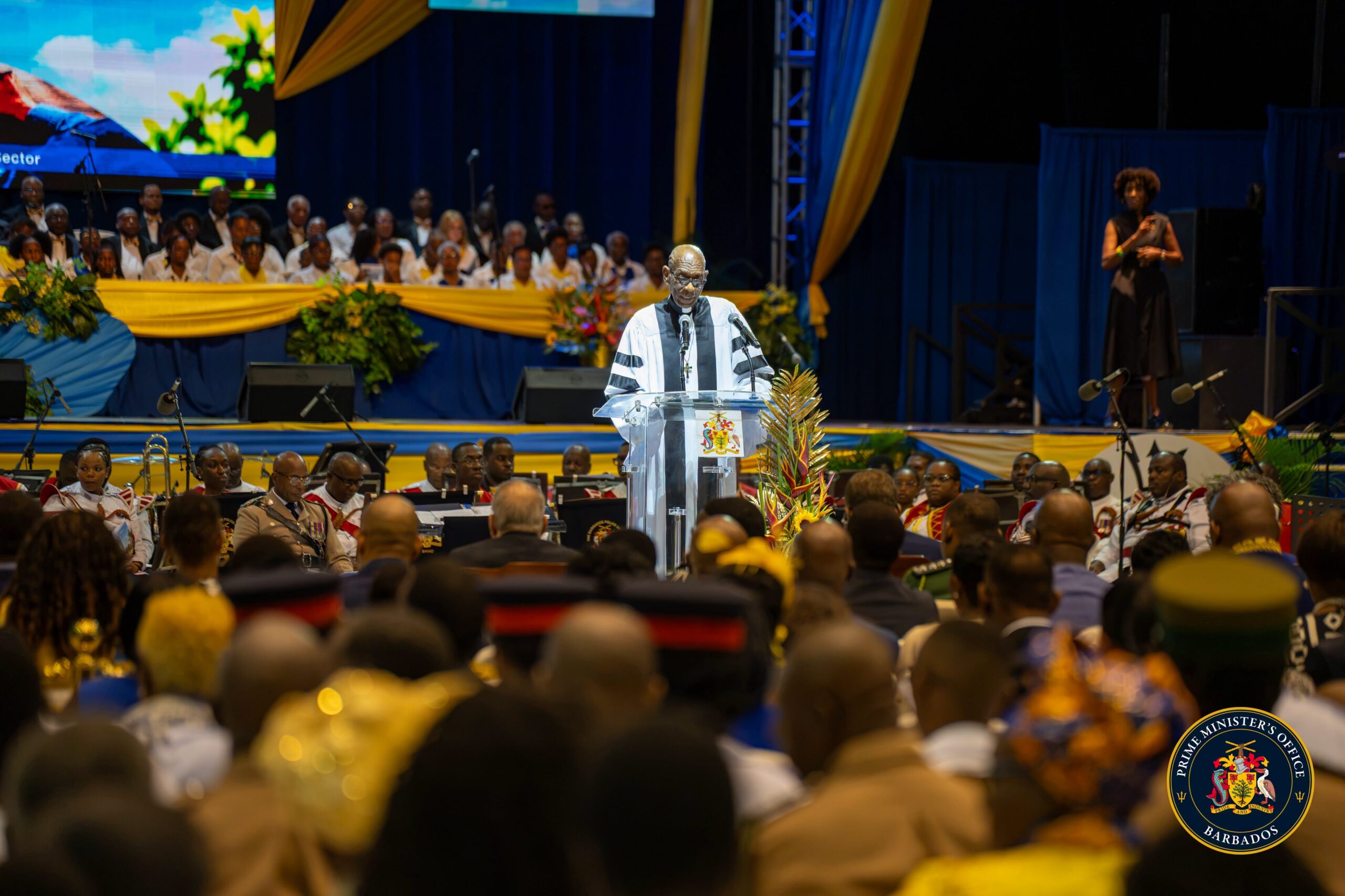
During a landmark interfaith National Thanksgiving Service held at the Garfield Sobers Sports Complex this past Sunday, marking two pivotal national milestones: the 60th anniversary of Barbados’ independence and the fifth year since the nation transitioned to a republic, Reverend Dr Adrian Smith, acting superintendent of the Moravian Church, delivered a stirring sermon under the overarching theme “Anchored by Legacy, Sustained by Resilience.”
At the core of his address, the religious leader unequivocally settled the long-running public debate over coastal access across the Caribbean island, stating clearly that no stretch of Barbadian beach qualifies as private property. He clarified that all legal private ownership of beachfront parcels terminates strictly at the high-tide line, enshrining the inherent, inalienable right of every Barbadian to access every public shoreline on the island. Drawing a direct reference to The Mighty Gabby’s iconic, decades-old calypso track “Jack” that first popularized the demand for universal beach access, Smith repeated the culturally resonant line “That beach is mine” to thunderous approval from the assembled congregation of multi-faith worshippers.
Beyond the coastal access ruling, Smith expanded his message to reject any narrative of a divided nation, insisting emphatically that “there are not two Barbadoses. There’s one Barbados.” He framed national resilience as the foundational trait that has carried the island through decades of challenges, defining the value as the combined capacity to endure hardship, adapt to shifting global conditions, and rebound swiftly from any setback, both personal and collective.
Challenging fellow citizens to move beyond mere celebration of the resilience demonstrated by past generations, Smith posed a pointed rhetorical question: “Are we merely celebrating the resilience of those who came before us, or are we cultivating the resilience that those who come after us will most surely need?” He stressed that building that intergenerational resilience requires balancing the preservation of Barbados’ long-held core cultural values with an open, curious mindset to navigate rapid global shifts, including the disruptive rise of artificial intelligence and emerging superintelligent systems that are reshaping work, learning, worship and daily communication patterns.
Smith also laid out a multi-pronged call to action for all Barbadians: he highlighted volunteerism as an irreplaceable driver of national development, noting that critical community work in youth organizations, local charities and neighborhood groups can never be fully compensated through paid employment. He pushed back against cultural stigma around public feedback, stating explicitly that constructive criticism of policies related to healthcare, infrastructure, environmental stewardship and the rising cost of living should never be mislabeled as disloyalty to the nation. He further urged collective action to protect the island’s fragile natural ecosystems, including safeguarding coral reefs, cutting down on litter, and maintaining the cleanliness of public parks and shorelines. Finally, he called on all residents to prioritize investment in young people through mentorship, expanded opportunity and intergenerational guidance, to ensure future Barbadians can achieve even greater progress than previous cohorts.
The full National Thanksgiving Service, hosted by the Ministry of Labour, Social Security and the Third Sector, brought together representatives from all of Barbados’ diverse faith communities, featuring interfaith prayers, scriptural readings, cultural musical performances, and pre-recorded reflective segments highlighting the island’s 60-year journey of independent nationhood.
‘No private beach in Barbados’, clergyman declares