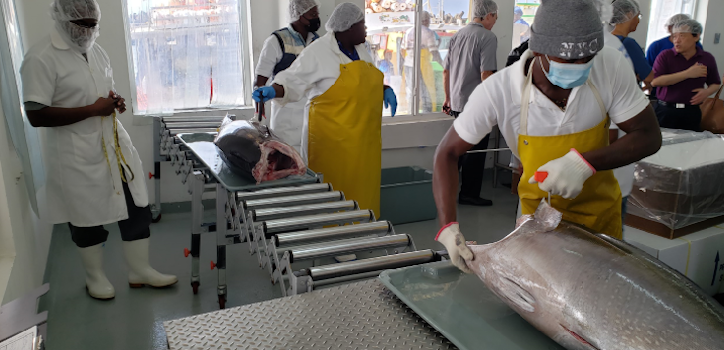
In a landmark move to elevate public health protections and streamline regional food governance, the Caribbean Community (CARICOM) Secretariat has formally launched two standardized legislative frameworks designed to overhaul aquatic food safety and aquatic animal health safeguards across the Caribbean. The twin instruments — the Model Aquatic Animal Health Bill and accompanying Model Aquatic Food Safety Regulations — received formal sign-off from CARICOM’s Legal Affairs Committee (LAC) during its 43rd official convening on August 28, 2026. The finalized model rules have been distributed to 17 member jurisdictions of the Caribbean Regional Fisheries Mechanism (CRFM): Anguilla, Antigua and Barbuda, The Bahamas, Barbados, Belize, Dominica, Grenada, Guyana, Haiti, Jamaica, Montserrat, St Kitts and Nevis, St Lucia, St Vincent and the Grenadines, Suriname, Trinidad and Tobago, and the Turks and Caicos Islands, alongside six additional applicable Caribbean territories: Bermuda, the British Virgin Islands, the Cayman Islands, Curaçao, French Guiana, and Martinique. The development of the two regulatory documents was carried out under the 10th European Development Fund Sanitary and Phytosanitary (SPS) Measures Project, a collaborative initiative led by the Inter-American Institute for Cooperation on Agriculture (IICA) in partnership with the CRFM. CARICOM’s Office of the General Counsel provided specialized legal expertise to refine the drafts ahead of the LAC review and approval process, with a supplementary explanatory note for the Model Aquatic Animal Health Bill also released alongside the core legislative texts to support national implementation. CRFM Executive Director Dr Marc Williams emphasized the people-centric purpose of the new frameworks, noting that Caribbean households deserve full confidence in the safety of the fish and aquatic products they purchase and serve to their families. He outlined that the model legislation establishes a unified, adaptable foundation for national governments to tailor enforceable, context-specific protections, and stressed that successful rollout requires active consultation and input from frontline stakeholders including small-scale fishers, aquaculture operators, market vendors, and seafood processing workers who will adhere to the new rules on a daily basis. Williams confirmed that the CRFM will offer ongoing technical support to national authorities as they adapt the model texts to local legal systems, and will facilitate cross-national peer learning networks to share best practices during implementation. He added that the ultimate success metric for the policy push will be twofold: reduced public health risks for local communities, and clear, practical regulatory guidelines that reduce unnecessary burdens for the tens of thousands of regional workers whose livelihoods depend on the aquatic food supply chain. In an official public statement released this week, IICA framed the LAC’s approval of the model legal instruments as a transformative regional milestone, noting that the new frameworks significantly expand CARICOM member states’ operational capacity to meet global international trade standards while strengthening formal governance systems for aquatic animal health and food safety. Dr Jose Urdaz, Head of IICA’s Agricultural Health, Biosecurity, and Food Safety and Quality (AHFS) Program, highlighted that the legislative package marks a critical step toward helping Caribbean nations align their domestic rules with international sanitary and phytosanitary benchmarks, removing longstanding barriers to safe, seamless cross-border trade in aquatic animals and seafood products. Urdaz extended formal recognition to the CRFM team for their sustained dedication to advancing the policy drafting process, and thanked the CARICOM Secretariat for consistent strategic guidance and rigorous legal oversight that guided the initiative from its early stages through to successful formal approval.