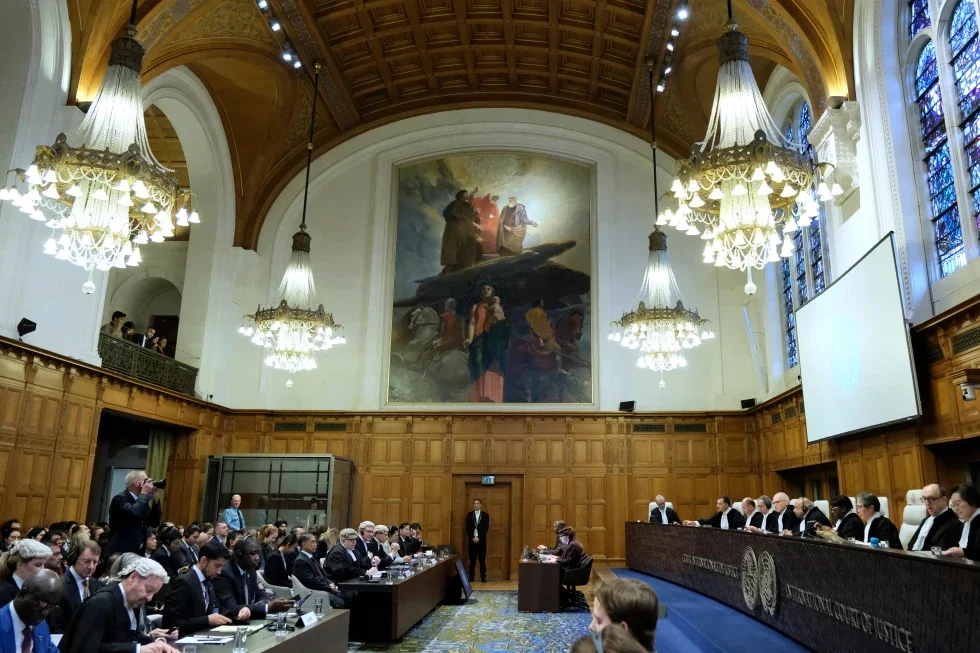
In a landmark, first-of-its-kind verdict delivered at the International Court of Justice (ICJ) in The Hague on November 19, the United Nations’ highest judicial body formally ruled that Myanmar violated the 1948 Convention on the Prevention and Punishment of the Crime of Genocide for widespread atrocities committed against the Rohingya ethnic minority during 2017 military operations. The 9-6 majority decision concludes a five-year legal process launched in 2019 by the West African nation of Gambia against Myanmar. The court explicitly rejected Myanmar’s longstanding official claim that the 2017 military crackdown was solely targeted at neutralizing armed insurgents in Rakhine State. Instead, judges found overwhelming verified evidence that the campaign included systematic mass killings, targeted sexual violence against Rohingya women and girls, deliberate brutal assaults on children, and coordinated actions designed to physically erase a substantial portion of the predominantly Muslim Rohingya community. The 2017 military offensive triggered one of the largest forced displacement crises of the 21st century, with more than 700,000 Rohingya fleeing across the border to Bangladesh in a matter of months, most settling in the overcrowded Cox’s Bazar refugee camps where hundreds of thousands still live in precarious, resource-scarce conditions. The Rohingya population has faced decades of systemic state-sponsored discrimination in Myanmar, where authorities largely deny them full citizenship status, restricting their access to formal education, healthcare, and freedom of movement, rendering the majority of the community stateless and chronically vulnerable to persecution. The legally binding ICJ ruling, which cannot be appealed, imposes a series of mandatory obligations on Myanmar: it must immediately end all ongoing violations of the Genocide Convention, align its domestic legislation with its international legal commitments, launch full, transparent investigations into all individuals suspected of perpetrating genocide-related crimes, and prosecute and punish any suspects where sufficient evidence exists. Myanmar is also required to implement targeted safeguards to prevent any recurrence of similar mass atrocities, establish conditions that allow for the safe, voluntary, dignified repatriation of displaced Rohingya to their ancestral lands, and reunite families separated by the mass expulsion. The court has additionally ordered Myanmar to provide financial compensation for all harms inflicted on the Rohingya community, with the exact amount and disbursement framework to be determined in subsequent procedural phases. Myanmar is mandated to submit a full progress report on all remedial measures and proposed compensation structures to the ICJ within two years. While the ICJ lacks independent enforcement powers to compel Myanmar’s compliance, the ruling marks an unprecedented milestone in international human rights law: securing a formal legal finding of state-level genocide requires proving not just mass violence, but the specific, explicit intent to destroy a protected ethnic or religious group in whole or in part, a threshold rarely met in prior international judicial proceedings. This ruling now establishes a critical legal precedent for pending international genocide cases, including the ongoing proceeding brought by South Africa against Israel over military operations in Gaza, though the ICJ emphasized this verdict does not represent a pre-judgment of that separate case. Significant practical hurdles remain to full implementation, however: Myanmar has been engulfed in a brutal, ongoing civil war following the 2021 military coup, with widespread instability and active armed conflict persisting across large swathes of Rakhine State, making immediate safe repatriation of Rohingya refugees logistically impossible. Enforcement of the ruling will depend heavily on sustained coordinated international pressure on Myanmar’s ruling junta, and non-compliance could eventually be referred to the UN Security Council, though geopolitical divisions among the council’s permanent members may complicate any binding enforcement action. For the Rohingya community, the verdict represents a long-awaited formal global recognition of decades of unaddressed persecution, displacement, and targeted violence, even as many community members continue to hold cautious optimism that the ruling will translate to tangible, long-term restoration of their basic human rights.