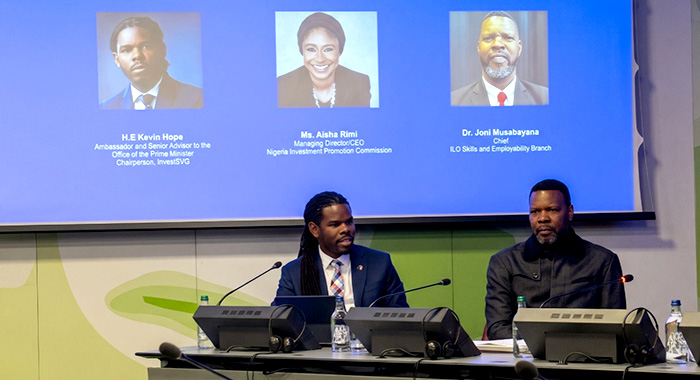
Delegates from the Caribbean Association of Investment Promotion Agencies (CAIPA) issued a landmark policy call at the 2026 World Investment Conference hosted by the World Association of Investment Promotion Agencies (WAIPA) in Geneva this month, urging regional investment stakeholders to prioritize the quality of roles generated by foreign direct investment rather than fixating solely on headcount targets. Delivering the official address on behalf of CAIPA, Ambassador Kevin Hope, Executive Chairman of Invest SVG and Saint Vincent and the Grenadines’ special envoy for finance and investment, emphasized that high-value, skill-aligned employment is the only sustainable strategy to retain the Caribbean’s most promising young talent.
Hope drew on on-the-ground data from his home nation to illustrate the urgency of the shift: while SVG has completed construction of a state-of-the-art modern port and is rolling out widespread upgrades to public hospital infrastructure, 60% of the skilled construction workforce required for these projects – including qualified masons, carpenters, and heavy equipment operators – is being brought in from overseas, rather than recruited locally. This mismatch is compounded by stark regional labor market trends: 60% of Caribbean university graduates leave the region to seek opportunities abroad, youth unemployment across the Caribbean hovers at roughly 20%, and in SVG alone, 40% of young people actively participating in the labor force are unable to secure formal work. “When our brightest graduates are forced to migrate for decent work, that is not a success story for our region,” Hope told the panel. “We are extending invitations to global firms not just to pour capital into our land, but to invest in the potential of our people.”
A 45-year longitudinal study tracking factor productivity in Saint Vincent and the Grenadines confirms the long-term cost of this brain drain: national productivity has steadily declined since the 1980s, with the exodus of skilled workers identified as the single largest contributing factor. Hope, who spent 25 years living and working overseas before choosing to return to his native SVG to drive its investment agenda, noted he is a firsthand witness to both the lost potential of emigrating talent and the untapped capacity of young people remaining in the region.
Hope delivered his remarks as a panelist at the International Labour Organization (ILO) session titled *Catalysing Skills & Productivity for More and Better Jobs*, which was moderated by Joni Musabayana, Director of the ILO Skills Branch, and featured Aisha Rimi, CEO of the Nigerian Investment Promotion Commission, as a fellow panelist. Representing a network of 25 investment promotion agencies spanning 24 Caribbean nations, CAIPA has already partnered with the ILO on a targeted capacity-building program for its members. The cohort completed training on the ILO Tripartite Declaration of Principles concerning Multinational Enterprises and Social Policy in September, followed by a October workshop focused on measuring foreign investment’s impact on decent work using the joint ILO-WAIPA key performance indicator framework. CAIPA members selected four core priority domains to track across all regional investment projects: equitable employment opportunities, formal job quality, structured skills development, and inclusive, sustainable economic growth.
At the national level, Invest SVG is already embedding local community benefit clauses directly into investment concession agreements. One recently negotiated deal requires the incoming investor not only to prioritize local hiring, but to source construction materials from domestic small and medium enterprises, and partner with SVG’s national community college to deliver targeted vocational training programs for local residents. The country is also streamlining its business regulatory ecosystem: company registration timelines have been slashed from two full months to just five business days, a new comprehensive Investment Act is under development, and a centralized online business portal is set to launch to cut red tape for incoming and local firms alike. The national Centre for Enterprise Development is also running dedicated support programs to prepare small domestic suppliers to bid for contracts from large incoming international investors.
While Invest SVG does not currently track skills development outcomes as part of its investment oversight, the agency has announced plans to formalize skills metrics as a core key performance indicator for all future projects, with dedicated tracking for both the skilled roles investors are seeking to fill and the new skill sets they will build among local workers. The government is also expanding its successful WE CAN training program, which will upskill 400 young people in rural communities across SVG in climate-smart agricultural practices to unlock new green economy employment pathways.
In the coming week, CAIPA member agencies will present individual national job quality roadmaps, which will be consolidated into a unified regional framework with standardized, shared metrics for measuring decent work outcomes across the Caribbean. The association is also finalizing a memorandum of understanding with the ILO to formalize their long-term collaborative partnership, and has been invited to join the global ILO-WAIPA Community of Practice, a peer network that allows investment promotion agencies from around the world to share tools, data, and proven best practices to advance decent work through foreign investment.