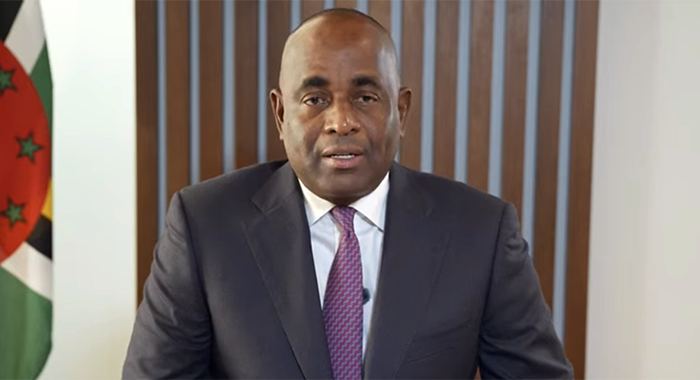
ROSEAU, Dominica – In a nationally televised and radio broadcast delivered on Wednesday, Dominica’s long-serving Prime Minister Roosevelt Skerrit formally announced that the Commonwealth nation will hold its next general election on December 16, 2026, more than 12 months before the legal end of the current parliamentary term. Nomination Day for all contesting candidates has been scheduled for November 30, 2026. Skerrit, who first assumed the office of Prime Minister in January 2004 and led his ruling Dominica Labour Party (DLP) to a landslide 19-2 victory in the December 2022 general election (a poll boycotted by the two main opposition parties, the United Workers Party and the Dominica Freedom Party), explained the early election call was rooted in his desire to secure a fresh five-year popular mandate, rather than governing under the constant shadow of a looming election for the remaining 12 months of the current term. “I do not want to govern for the next year looking over my shoulder at an election. I want to govern for the next five years, looking only at the future of Dominica,” Skerrit told citizens, framing the vote as a chance to empower a renewed DLP team that balances seasoned political experience, youthful energy, and a forward-focused mindset to steer the country through its next phase of development. The Prime Minister confirmed he had formally advised Dominica’s President to dissolve Parliament and issue official election writs effective November 18, 2026. A core backdrop to the early election announcement is the successful completion of long-demanded electoral reforms that opposition groups had spent 20 years advocating for: a fully cleaned, verified voters’ register and mandatory national ID cards for voting purposes. Skerrit noted that as of November 17, a total of 36,923 eligible electors had completed registration, a milestone many critics had dismissed as impossible to achieve within the lifespan of the current parliament. He lauded the Electoral Commission, civil society stakeholders, and ordinary Dominican citizens for their collective work to deliver the strengthened electoral system, arguing that the successful rollout of these reforms proves the country can turn seemingly unattainable national goals into reality with clear leadership, political will, and public collaboration. Skerrit used the national address to outline a track record of DLP achievements over the current term, including rising employment rates, progress on the long-awaited geothermal energy project, expanded affordable housing schemes, and an international airport now in advanced construction that is on track to welcome its first transatlantic flight within 21 months. He emphasized that Dominica has repeatedly bounced back stronger from successive crises over recent decades, from devastating hurricanes to the global COVID-19 pandemic, even when faced with harmful external policy decisions that threatened national economic stability. Addressing the single biggest public concern today, the global cost of living crisis, Skerrit acknowledged that fuel and food prices remain unacceptably high across the island, but noted the pressure is a universal challenge felt across the Caribbean, the United States, Europe, and Asia. He confirmed his administration has deployed every feasible policy tool to subsidize energy and food costs to cushion residents from the worst impacts, while all promised social support programmes are now fully implemented or at an advanced stage of rollout. Skerrit added that the government remains current on nearly all domestic and international debt obligations, has kept tax rates relatively low with plans for further reductions, and is actively exploring measures to raise the national minimum wage to support low-income earners. Looking ahead, he flagged that Dominica’s core long-term challenges will be building food, housing, and economic security amid worsening climate change impacts and declining traditional development funding from the global community. He highlighted that over the past five years, Dominica has invested EC$2.3 billion in public infrastructure, averaging EC$460 million per year – a figure far higher than the average annual public sector investment of less than EC$300 million recorded across comparable OECD member states over the same period, supported by the country’s well-regulated Citizenship by Investment programme.
Dominica calls Dec. 16 election more than a year ahead of due date