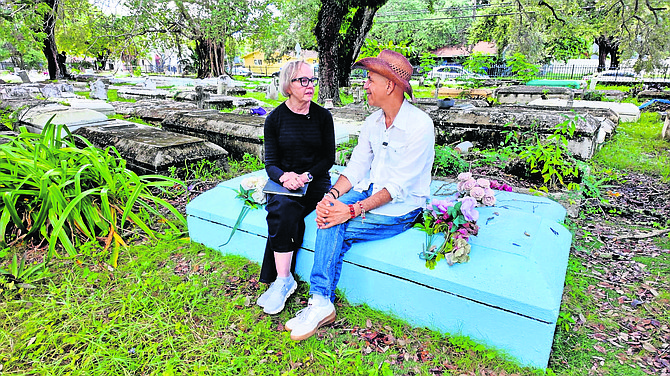
Veteran storyteller Charlie Bahama has spent more than two decades uncovering a largely untold foundational narrative of South Florida’s development, a journey that unexpectedly traces back to his own family roots long before he began formal work on the upcoming full-length documentary highlighting Bahamian contributions to the region. The personal origin of the project stretches back generations to 1916, when Bahama’s great-grandfather Asa Washington Smith left Grand Bahama to settle in Miami’s Coconut Grove neighborhood, laying down roots that would anchor the family as respected community pillars. Bahama first stumbled onto the scale of Bahamian influence in the early 2000s, when he was contracted by the 1974-founded Miami-Dade Chamber of Commerce to produce profiles of local community pioneers. The chamber, established to advocate for historically marginalized minority small business owners across the county, tasked him with documenting the lives of South Florida’s most transformative leaders. What began as routine production work quickly became a revelation: nearly every prominent trailblazer he interviewed shared direct Bahamian ties, whether through birth, parentage, or grandparentage. Familiar Bahamian accents and recognizable family names popped up in every corner of his research, and he soon realized the depth of the often-overlooked legacy Bahamian migrants had built across the region – a connection reflected even in the chamber’s current leadership, as its president G. Eric Knowles is of Bahamian descent. Bahama’s own family history is woven directly into this broader community story. His great-grandfather’s Coconut Grove homestead became part of a tight-knit Bahamian enclave centered on the iconic Royal Poinciana gathering space at the west end of Grand Avenue, a popular meeting spot where newly arrived migrants gathered to socialize, share meals, and maintain cultural ties to their home islands. Bahama recalls visiting the site as a young child traveling from Nassau, where he would eagerly stop to buy cold orange Nehi soda from Aunt Joyce – a treat unavailable in the Bahamas at the time – without fully grasping the deep historical significance of the neighborhood’s dense Bahamian heritage. Historical records confirm Bahamian migrants first arrived in Key West as early as the 1700s, with mass migration surging in the early 19th century, primarily from the Abaco Cays and Eleuthera. They dominated local industries of the era including wrecking, sponging, and turtling, so successfully that Bahamian native William Curry became Florida’s first recorded millionaire. As Dr. Cori Convertito, Curator and Historian at the Key West Art & Historical Society, notes, “Key West would not be what it is today if it were not for Bahamians.” When the Keys’ economy declined in the late 1800s, Bahamian communities migrated north to settle in what are now known as Lemon City, Overtown, and Coconut Grove. Drawing on generations of experience farming in the identical rocky coral soil of their home islands, they defied widespread white settler beliefs that crops could not grow in South Florida’s harsh landscape, transforming untamed wilderness into productive, fertile farmland. Even Coral Gables founder George Merrick publicly credited Bahamian farmers with proving tropical agriculture could thrive on the region’s rocky terrain. Their specialized expertise working with coral rock made them indispensable to the era’s largest infrastructure projects: Henry Flagler relied on their skilled labor to build his historic cross-state railroad, and James Deering hired Bahamian craftspeople to construct his iconic Italian Renaissance Vizcaya villa on Biscayne Bay, now a world-famous museum. When Miami was formally incorporated as a city in 1896, a substantial share of the residents who signed the official city charter were Bahamian migrants. The documentary project first launched in 2019 in partnership with then-Bahamian Minister of Tourism Obie Wilchcombe, but production was derailed by the global COVID-19 pandemic, and later put at further risk following Wilchcombe’s sudden passing, leaving the critical historical narrative seemingly at risk of being lost. The project was revived when local artist and researcher Lea Nickless reached out to Bahama as part of her Coconut Grove Cemetery Project, an initiative documenting the unmarked graves and life stories of people buried in the historic community plot. Nickless uncovered the cemetery’s deep Bahamian ties during her research – including the final resting places of Bahama’s grandmother, great-grandparents, and other family members who migrated from Grand Bahama – and rekindled momentum to complete the long-delayed film. Featured interviews in the documentary include leading local historians such as Dr. Marvin Dunn, who previously interviewed Bahama’s grandmother Laurena Smith for his seminal book *Black Miami in the Twentieth Century*, and respected Bahamian-American historian Dr. Enid Pinkney, who reflects that the community’s long track record of excellence in South Florida stems directly from its shared Bahamian cultural heritage. All contributors emphasize the urgency of Bahamians documenting and sharing their own history, rather than allowing outside voices to overlook or misrepresent their foundational role. The full documentary is scheduled for release in 2027. In the lead-up to its launch, Bahama will host a special episode of the Charlie Bahama Show featuring his conversation with Lea Nickless exploring Bahamian history in Miami, airing this Saturday at 8 p.m. on Cable Bahamas Channel 212, with additional related content available on his official social media channels and YouTube page.
Old Nassau’s – Did you know that Bahamians were integral to making Miami a city?