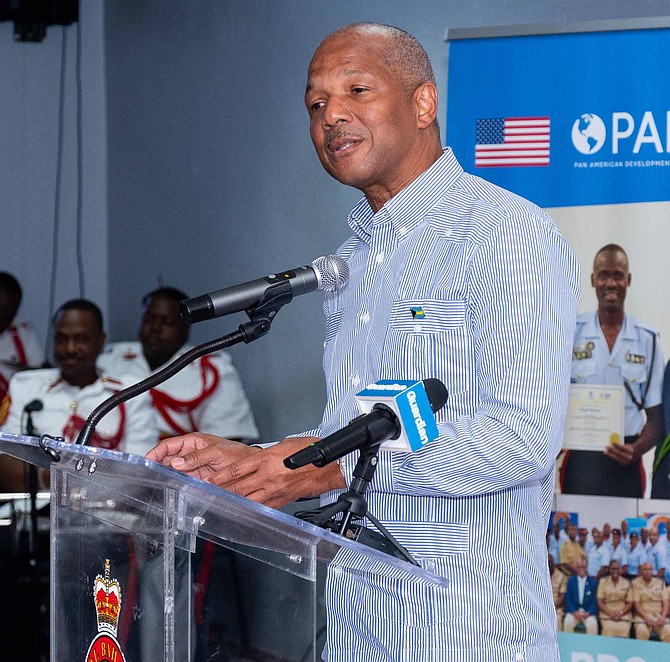
National Security Minister Myles LaRoda has addressed widespread public backlash following the sudden death of 40-year-old Grand Bahama funeral director Joaquin Hamilton, who passed away in police custody just 24 hours after being detained over an unresolved outstanding traffic violation. LaRoda pushed back against growing public criticism of the arrest, emphasizing that selective enforcement of laws, or “cherry-picking” which individuals are held accountable for legal obligations, undermines the foundational integrity of community safety. “We cannot sustain a functional society where the public demands consistent law and order, but then arbitrarily decides which rules apply to which people based on personal preference,” he stated during a press briefing. When pressed on whether arresting officers were aware that Hamilton required regular prescription medication for a chronic health condition, LaRoda noted that preliminary accounts suggest the critical health information may not have been formally disclosed to law enforcement at the time of his detainment. The sequence of events leading to Hamilton’s death began during a routine roadside police stop on Friday. The day after his arrest, shortly before midday on Saturday, Hamilton suffered an acute medical emergency while in holding. Emergency Medical Services personnel rushed him to a local hospital, where medical staff pronounced him dead on arrival. The incident has sparked urgent questions from Hamilton’s family, colleagues, and community members over whether officers were notified of his pre-existing health needs, and if he was granted access to the life-sustaining blood pressure medication he relied on daily. Jamal Nairn, operations supervisor at Restview Memorial Funeral Home where Hamilton had worked since February 2009, told reporters he visited the police station on the day of Hamilton’s arrest to alert officers that his coworker was unwell, and explicitly asked staff to monitor his condition closely. He said responding officers only instructed him to bring a blanket for Hamilton, with no further follow-up on his health warning. Just one month prior to his passing, Hamilton had been promoted to the role of licensed funeral director, a milestone his colleagues say he had worked toward for over a decade. “Joaquin was a beautiful soul, everyone in the community knew and loved him,” Nairn shared. “He was one of the most well-liked people you could ever meet anywhere we went.” Bishop Damien Fox, a close collaborator of Hamilton’s for 20 years who now resides in New Providence, raised additional concerns about the appropriateness of the arrest itself, arguing that officers should have issued a standard court summons rather than taking him into physical custody for a traffic ticket. Fox also claimed that the majority of Hamilton’s cited traffic violations had already been settled, and that local Grand Bahama law enforcement should have been aware of his long-documented health needs from prior interactions with police. Hamilton’s coworkers are now demanding a full, transparent public investigation, with specific requests for official confirmation of whether Hamilton requested his blood pressure medication while in custody, and if that request was ever fulfilled. Royal Bahamas Police Force press liaison Chief Superintendent Leonard Ramsey confirmed earlier that initial checks of officer reports could not confirm whether Hamilton had disclosed his medical conditions to detainment staff. Minister LaRoda extended formal, heartfelt condolences to Hamilton’s grieving family, but cautioned the public against drawing definitive conclusions about the incident before a full, evidence-based investigation is completed. He noted that he had received preliminary briefing notes from the acting Commissioner of Police, but was still waiting for verified, finalized facts to be released. Per Bahamian legal protocol, any death that occurs while an individual is in police custody automatically triggers a mandatory coroner’s inquest to review all circumstances of the fatality.