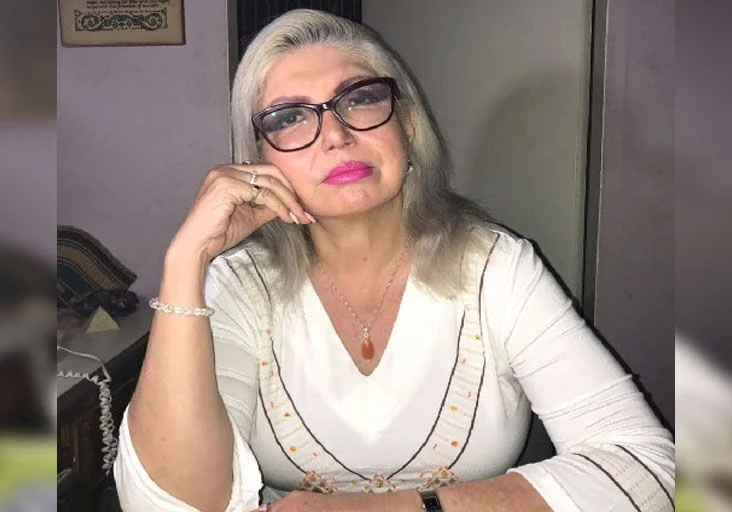
Trinidad and Tobago-based Venezuelan human rights advocate Yesenia Gonzalez revealed in a telephone interview with the Express on Wednesday that a growing cohort of Venezuelan migrants are voluntarily returning to their home country, disillusioned with the government’s newly rolled out Migrant Registration Framework (MRF) that they say strips them of basic mobility rights and imposes crippling financial and administrative barriers.
The core grievance driving the exodus, Gonzalez explained, is a widely understood provision that any migrant who successfully secures legal status under the MRF will forfeit their newly granted documentation if they leave the country for any reason, even to visit ill family members back in Venezuela. “Nearly none of the people heading home plan to stay in Venezuela permanently,” Gonzalez clarified, noting that dozens of distraught migrants have contacted her for guidance in recent days. “They only wanted to pop back to see their loved ones, but they’ve been told that step would erase all the legal status they worked so hard to get. That is a blatant violation of their fundamental human right to free movement.”
Beyond the mobility ban, Gonzalez laid out a litany of systemic failures plaguing the MRF rollout. She recounted stories of migrants standing for hours under blistering tropical sun in long queues, only to be handed a temporary slip of paper instead of the promised official secure permit, with no clear timeline for when they might receive their actual government-issued card. Many of the low-wage migrant workers, most of whom send a large share of their earnings back to struggling family members in Venezuela, say the non-refundable $710 registration fee is financially out of reach for all but a tiny minority. Even those who have managed to scrape together the fee say the program’s advertised guarantee of formal work authorization comes with hidden bureaucratic hoops: any emergency travel requires navigating a maze of unstated, unpredictable procedures with no promise of approval to re-enter the country and retain their status.
Official data from the Ministry of Homeland Security shows that to date, 20,242 migrants have been pre-vetted and recommended for MRF permits following what the government describes as a rigorous, multi-layered security screening. Homeland Security Minister Roger Alexander previously announced that the state collected $1,839,610 in registration fees across just 2,592 transactions over a four-day window. Gonzalez pushed back sharply on the government’s revenue projections, warning that the planned total revenue from the MRF will never be realized because thousands of disenchanted Venezuelan migrants are choosing to depart the country rather than subject themselves to the restrictive, unfair terms of the program.
Gonzalez called on Minister Alexander to exercise greater compassion for the vulnerable migrant population, to hold direct, public consultations with Venezuelan community representatives, and to issue clear, unambiguous public guidance to resolve widespread confusion over the program’s rules. She noted that the lack of transparent communication from the ministry has fueled widespread anxiety across the migrant community.
In an official public notice two weeks prior, the Ministry of Homeland Security confirmed that the first phase of appointment-based permit collection for Caricom and other nationalities had been completed. The ministry updated its guidance to confirm that all MRF applicants with formally approved status, regardless of nationality, can submit their $710 registration fee at any National Lotteries Control Board (NLCB) outlet, then proceed to the dedicated collection centre at Ato Boldon Stadium in Couva to pick up their Minister’s Permit. The notice specified that permits are distributed on weekdays between 8 a.m. and 4 p.m., excluding public holidays and additional scheduled closure dates on November 18, 20, 24 and 27, as well as December 1, 4 and 8. Officials have not yet announced a final deadline for the full MRF registration process.
The Express reached out to both Minister Roger Alexander for an official response to the activists’ allegations, and La Romaine Migrant Support Group coordinator Angie Ramnarine for additional on-the-ground context. Ramnarine confirmed she was attending an out-of-town conference and could not provide immediate comment, while Alexander did not reply to the newspaper’s requests for statement as of press time.