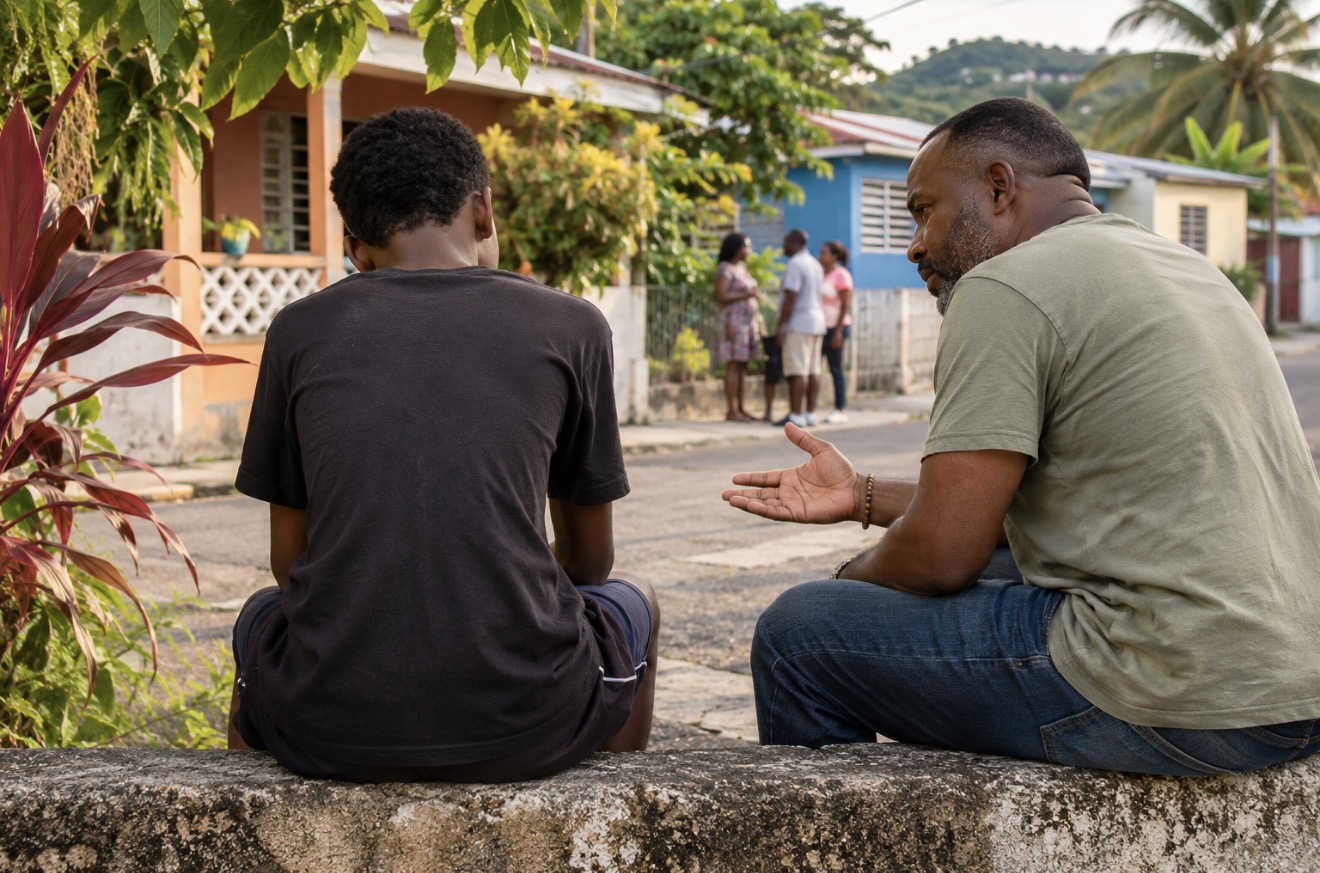
Antigua and Barbuda’s Minister of Education Daryll Matthew has issued a stark call for a paradigm shift in how local authorities and communities confront rising youth-related violence, emphasizing that the pervasive issue cannot be pigeonholed as a problem exclusive to school campuses. Delivering remarks during a recent appearance on the popular Browne and Browne Show, Matthew laid out evidence that the vast majority of physical altercations and hostile incidents involving school-aged youth unfold far beyond classroom walls: on public thoroughfares, at busy bus terminals, and across residential village neighborhoods.
“At its core, this is a societal violence challenge that happens to draw in schoolchildren, not a school violence problem that spills over into the community,” Matthew asserted, pushing back against prevailing narratives that place disproportionate blame on educators and school administrators for addressing harmful youth behavior.
The education minister outlined a tangled web of interconnected root causes that fuel the cycle of aggression, starting with systemic failures in family support structures. He flagged a widespread trend of caregivers offloading full responsibility for their children’s upbringing onto school staff or third parties, frayed community safety nets for households, high rates of paternal absence, and crushing economic strains that leave minors unsupervised for large stretches of the day. “Many households now have both parents working two or even three low-wage jobs just to make ends meet, leaving no adult available to monitor children after school or guide their decision-making,” Matthew explained.
He also took aim at a troubling cultural norm he observed, where some community members boast about having children with multiple romantic partners while completely abdicating their financial and emotional parental duties. This pattern, he noted, leaves overstretched teachers to manage the fallout of unaddressed household trauma: frequent classroom disruptions, unprovoked aggression toward peers, and behavioral issues that have no origin inside school policy or curriculum.
While Matthew acknowledged the critical, longstanding contributions of youth organizations ranging from sports leagues to the Scouts and Girl Guides movements, he stressed that no after-school program or structured activity can ever fully substitute for the foundational care and guidance of a stable, supported family unit. When pressed on whether the government should introduce formal legal penalties for parents whose children repeatedly engage in violent acts, Matthew pushed back against simplistic punitive measures, noting that many caregivers are already doing their utmost under impossible circumstances: he cited the example of a single mother working two full-time minimum-wage shifts, who cannot be reasonably blamed if her child still runs afoul of the law despite her best efforts.
Instead of leaning on punishment, Matthew outlined a collaborative, community-led intervention framework to prevent youth violence before it escalates. He called on the national government to ramp up targeted wraparound support for struggling households, and urged local churches, service clubs, and grassroots civil society groups to roll out accessible, free parenting workshops that directly engage at-risk families, including teen parents and expecting young caregivers. He pointed out that primary school educators are uniquely positioned to flag households in need of extra support, as they often have intimate, long-term knowledge of which students are facing unmet social or emotional needs and what their home circumstances look like.
Matthew reserved special emphasis on the untapped potential of local faith communities, arguing that their public engagement should expand far beyond applying for government grants to renovate church buildings or distributing holiday gift hampers during Christmas. “Our churches have deep roots in every neighborhood, and they have a moral responsibility to step up and do far more to solve these pressing social crises,” he stated. He also criticized harmful informal cultural advice that encourages children to immediately retaliate physically if they are hit by a peer, noting that this guidance actively undermines efforts to teach constructive, non-violent conflict resolution skills to young people. Matthew concluded that a coordinated, cross-sector response that centers supporting families rather than scapegoating schools would create sustainable, long-term reductions in youth violence across Antigua and Barbuda.
Youth violence rooted in homes and wider community, education minister says