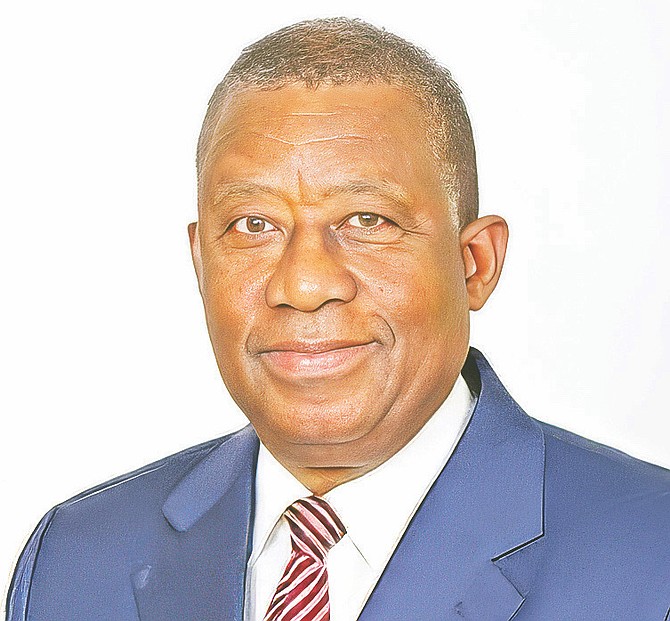
Long-serving former Central Bank of The Bahamas governor James H. Smith, a widely respected non-partisan public servant who stewarded the nation’s currency and financial stability across decades of cross-party political leadership, passed away on a Saturday at the age of 79, triggering an outpouring of national tributes from leaders across the political spectrum, financial sector peers, and personal acquaintances.
A towering figure in Bahamian public life, Smith earned widespread admiration for his unwavering integrity, sharp economic acumen, and refusal to prioritize partisan interests over national welfare, a reputation that saw him entrusted with senior public roles by governments led by opposing political parties for over 20 years. Tributes shared across social media and official statements uniformly described him as a consummate statesman, a paragon of public honour, and a distinguished gentleman who dedicated his entire career to advancing The Bahamas’ fiscal resilience and domestic economic ownership.
Prime Minister Philip Davis hailed Smith as an irreplaceable “national treasure”, noting that his passing would be deeply felt across every corner of public administration and the country’s entire financial ecosystem. Davis emphasized that few Bahamian public figures had ever earned such consistent, unqualified trust from leaders on both sides of the political divide, a status Smith earned through unmatched professional competence, deliberate discretion, and unwavering loyalty to national interests rather than partisan gain.
Former Attorney General Sean McWeeney, who served alongside Smith on multiple bank boards for decades, remembered him as “as smart as a whip and as honest as the day is long”, highlighting the rare dynamic of Smith and his late wife Portia, a pioneering academic administrator at the College of The Bahamas (now the University of The Bahamas, which named a campus building in her honour). McWeeney noted the pair formed an unassuming but deeply impactful “evenly-yoked power couple” for the nation, with Portia transforming the tertiary education landscape while James reshaped the country’s financial architecture. He added that Smith never fully recovered from Portia’s earlier passing, noting that the couple were now joyfully reunited.
Smith built his foundational expertise in economics during his studies in Canada, where he earned bachelor’s and master’s degrees in the field from the University of Alberta and University of Windsor, alongside a financial management diploma from Ryerson University. Returning home to serve his newly independent nation, he first joined the Ministry of Finance as Secretary for Revenue before rising to the rank of Permanent Secretary, where he played a core role in drafting the young country’s early fiscal policy framework. He also represented The Bahamas as Alternate Governor at the International Monetary Fund in this period.
He took the helm as Central Bank Governor on February 1, 1987, under the administration of Sir Lynden Pindling, and served in the post for a full decade until January 1997. During his tenure, he also chaired the Paradise Island Bridge Authority, and led the central bank through a period of significant domestic and global economic volatility. Current Central Bank Governor John Rolle recalled that Smith’s deliberate, thoughtful leadership and calm, steady demeanour kept the national economy and financial sector stable through overlapping crises: when the first Gulf War erupted, local banks were already grappling with liquidity shortages, and Smith implemented targeted policy interventions, first capping deposit rates to end destabilising competition for limited funding resources, then adding temporary limits on consumer credit growth to safeguard the country’s critical foreign reserves. The policy measures proved highly effective: the economy staged a gradual, sustained recovery, with consumer credit restrictions fully lifted by 1993 and interest rate controls phased out by 1994. Rolle also noted that Smith championed the full localisation of the Bank of Montreal’s Bahamian operations to become Bank of The Bahamas, driving a landmark expansion of domestic Bahamian ownership of the banking sector. He prioritized workforce development, personally mentoring generations of young staff to become skilled economists, regulators and technical specialists, and also oversaw the creation of one of the country’s first public art gallery spaces, which remains housed in the Central Bank headquarters to this day. Rolle added that even after leaving the governorship, Smith remained a dedicated advisor and trusted friend to every subsequent Central Bank leadership team.
After stepping down from the Central Bank, Smith served five years as Ambassador for Trade under the Hubert Ingraham administration, until April 2002. In this role, he led the services negotiations for the proposed Free Trade Area of the Americas, and headed multiple trade and investment missions to key global markets including Canada, the United States, China, Japan, South Korea and Dubai. He also held the chairmanship of the Bahamas Maritime Authority between 1997 and 2002.
In 2002, then-Prime Minister Perry Christie appointed Smith to the national Senate and his Cabinet as Minister of State for Finance, with direct oversight of day-to-day fiscal operations, national budget planning, and the regulation of the country’s world-renowned financial services industry. He retired from formal public office in 2007. Prime Minister Davis noted that Smith’s appointment to the finance portfolio at a delicate, uncertain juncture had shored up both domestic and international investor confidence in the Bahamian financial sector, and that Davis himself came to appreciate the full scale of Smith’s contribution to national fiscal stability when he later took on the finance portfolio during his own first term in office, seeing firsthand how much of the country’s modern financial security rested on the policy foundations laid by Smith and his generation of public servants.
Deputy Prime Minister Chester Cooper shared a personal tribute via Facebook, recalling that even when the two were competitors working in the private financial services sector, they maintained a warm, mutually respectful relationship. Cooper recalled that in 2007, when Smith was still serving as Minister of State for Finance, he had approved the acquisition of British American by 36-year-old Cooper and his business partner John Wilson, then 42, without hesitation, actively celebrating the milestone as a win for young Bahamian entrepreneurs taking ownership of key domestic industry assets. “That was the measure of the man,” Cooper wrote. “He believed unreservedly in Bahamian ownership, Bahamian enterprise, and the full potential of our people.”
McWeeney added that Smith was a steadying, calming force during every period of economic turbulence, the quintessential technocratic public servant who never allowed partisan political loyalties to override his commitment to the national good, and commanded unmatched respect across the country on all macroeconomic policy matters. A long-time member of an informal policy-focused think tank group, Smith rarely posted publicly in shared forums due to his strong aversion to unnecessary controversy, instead sending thoughtful private messages to other members to share his input on ongoing debates. McWeeney, who served alongside Smith on the Scotiabank board and multiple Swiss-based international bank boards, described him as the perfect embodiment of a rigorous, independent non-executive director: always fully prepared for every discussion, and consistently contributing actionable, thoughtful insight to board deliberations.
Following his retirement from public office, Smith served as chairman of Colina Financial Advisors Limited (CFAL), and held board seats at multiple domestic banks and the Bahamas International Securities Exchange. A 25-year veteran of CFAL who later held the honorary title of chairman emeritus, Smith was remembered by the firm for his rare, remarkable ability to make every person he interacted with, from senior C-suite leaders to entry-level new hires, feel genuinely seen, heard and valued. “He was, in every sense, a gentleman,” the firm’s official tribute read.
Over the course of his distinguished career, Smith was awarded a CBE (Commander of the Most Excellent Order of the British Empire) in 2000, and received the financial services industry’s highest honour, its Lifetime Achievement Award, in 2017. He also served as a trustee for the Governor General’s Youth Award and the Anglican Diocese Pension Fund. Prime Minister Davis noted that the most meaningful way to honour Smith’s legacy was to uphold the exacting standards he set for public service: prudence in the management of public funds, uncompromising integrity in public office, and unwavering devotion to the national interest above all other priorities.