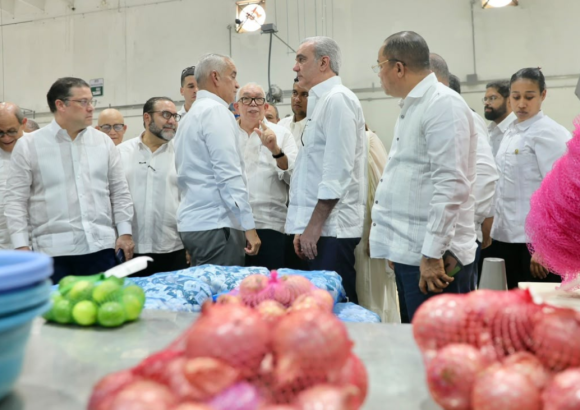
During an official event in La Vega, Dominican Republic, President Luis Abinader delivered a positive update on the nation’s core agricultural output, noting significant, sustained growth in the production of four staple food commodities: chicken, eggs, rice, and plantains. The head of state credited this upward trajectory to a combination of surging domestic consumer demand, expanded access to regional and local distribution networks, and a long-running collaborative framework between smallholder producers and federal agricultural authorities that his administration has prioritized since taking office in 2020.
The occasion marked the formal launch of the Caplatagro pilot initiative, a targeted program designed to streamline the collection, standardized processing, and value addition of locally grown plantains, a dietary staple for millions of Dominican households. Abinader toured the on-site processing and packaging facility at the Jeremías Producers Market, where he held closed-door discussions with small-scale farmers, cooperative leaders, and representatives of national agricultural associations to gather direct feedback on operational pain points facing the plantain sector.
The president specifically underscored targeted financing support disbursed through the state-owned Agricultural Bank, as well as ongoing inter-agency coordination with producer collectives to mitigate volatile price swings that have historically threatened the livelihoods of plantain growers. He reaffirmed his administration’s full, long-term backing for the Caplatagro project, and expressed optimism that the pilot’s successful implementation could be replicated across other agricultural regions of the country to lift additional smallholder communities.
Eduardo Sanz Lovatón, Minister of Industry, Commerce and MSME Development, framed Caplatagro as a landmark model of cross-sector productive integration, noting that the program’s unique combination of traditional agricultural expertise, processing innovation, and accessible low-interest financing would unlock new value for domestic food products and open up untapped export markets for Dominican plantain-derived goods. He further emphasized that strengthening domestic staple food production is a foundational pillar of the country’s national food security strategy, and a key driver of inclusive, broad-based economic growth that benefits rural and urban communities alike. The pilot project is jointly developed and promoted by Adoplatano, a national plantain industry association, and Coopevive, a leading cooperative representing hundreds of fruit, vegetable, and plant-based food producers across the Dominican Republic.