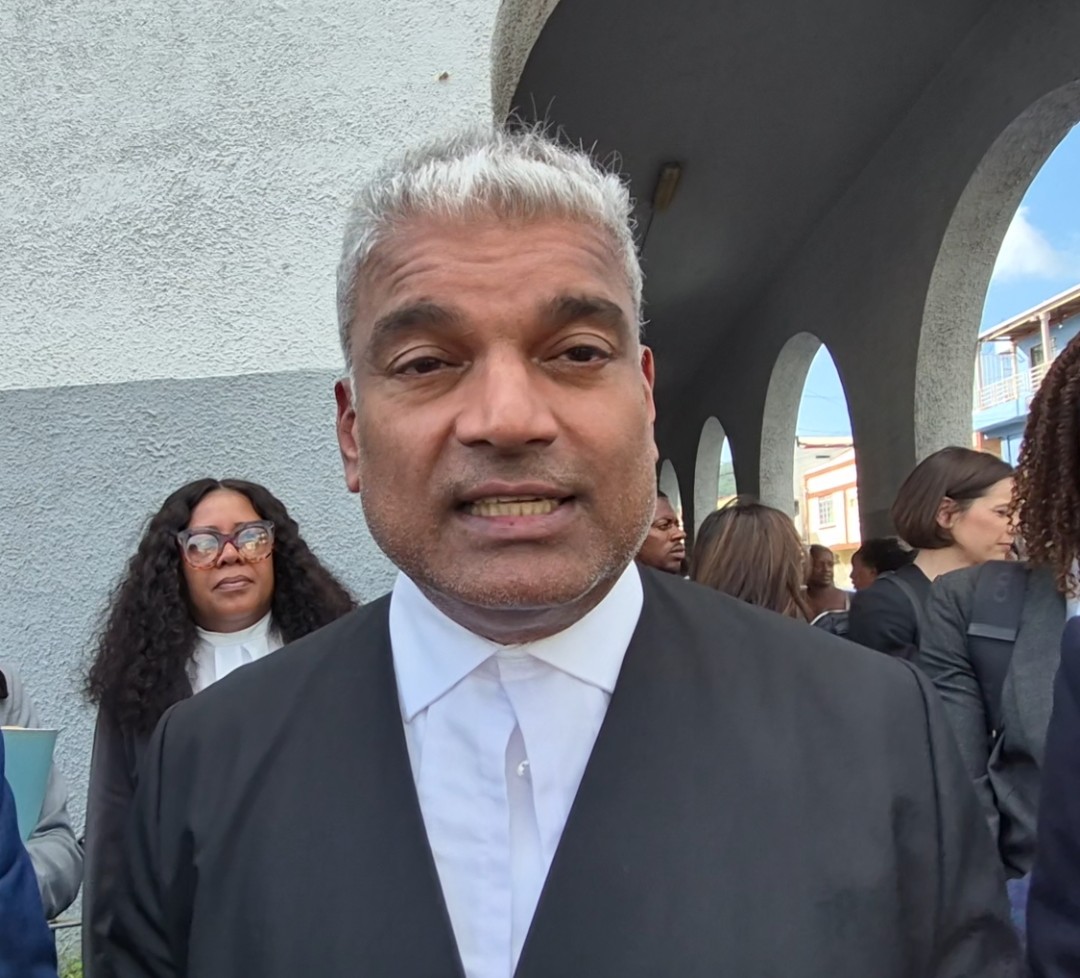
In a post-hearing press briefing held Thursday, lead defence attorney Anand Ramlogan delivered sharp remarks on ongoing election petitions that threaten to unseat St. Vincent and the Grenadines Prime Minister Godwin Friday and Foreign Affairs Minister Dwight Fitzgerald Bramble over alleged dual citizenship violations. The legal challenge, filed by defeated 2025 Unity Labour Party candidates Augustus Williams and Luke Browne, aims to nullify the pair’s November general election victories, claiming their Canadian citizenship breaches Section 26(1)(a) of the national constitution, which bars officials with allegiance to a foreign power. Ramlogan’s defence team has countered that Section 25’s explicit provisions for Commonwealth citizenship fully protect the two officials’ parliamentary eligibility.
Following three rounds of closing submissions from legal counsel, High Court Justice Gertel Thom formally reserved her ruling at the conclusion of proceedings, indicating she would not deliver a verdict before the end of the current legal term. Ramlogan told assembled reporters that the court’s timeline points to a final decision likely to be issued in early 2026, noting the complexity of the cross-cutting legal and societal issues at stake left the judge with extensive materials to review.
Beyond the specifics of the local case, Ramlogan framed the dual citizenship ban as a deeply outdated policy that runs directly counter to the Caribbean’s core developmental interests. He opened his remarks by congratulating Prime Minister Friday on marking his one-year anniversary in office, before contextualizing the case’s ripple effects across all small island Caribbean nations, where diaspora populations often equal or even exceed the number of residents living domestically.
“In an era defined by globalized connectivity and the widespread normalization of cross-border movement for education, work, and family, barring dual citizens from parliamentary service is nothing short of archaic,” Ramlogan emphasized. He highlighted that both Friday and Bramble voluntarily left established professional careers in Canada to return to St. Vincent and the Grenadines, dedicating their expertise to advancing national progress. The defence team submitted official census data from the St. Vincent and the Grenadines Statistical Office as evidence, documenting that a large share of the nation’s young people pursue higher education and career opportunities overseas as a standard part of their life trajectory.
Ramlogan warned that enforcing a strict dual citizenship disqualification would actively suppress regional development, robbing small island states of the intellectual capital, global professional networks, and investment acumen that returning diaspora members bring. He noted that the issue is already on the policy agenda of CARICOM, arguing that a coordinated regional review of citizenship eligibility rules is a critical macroeconomic priority. Without access to the skills of returning dual citizens, foreign investors, and cross-border professionals working in high-growth sectors like Guyana and Trinidad and Tobago’s oil and gas industries, Caribbean nations would be left with stagnant, weak economies that fail to deliver a prosperous future for coming generations, he argued. “Slamming the door on people who have built expertise abroad and want to come home to serve makes no logical or economic sense,” Ramlogan said. “It is a self-defeating policy that no small developing nation can afford to uphold.”