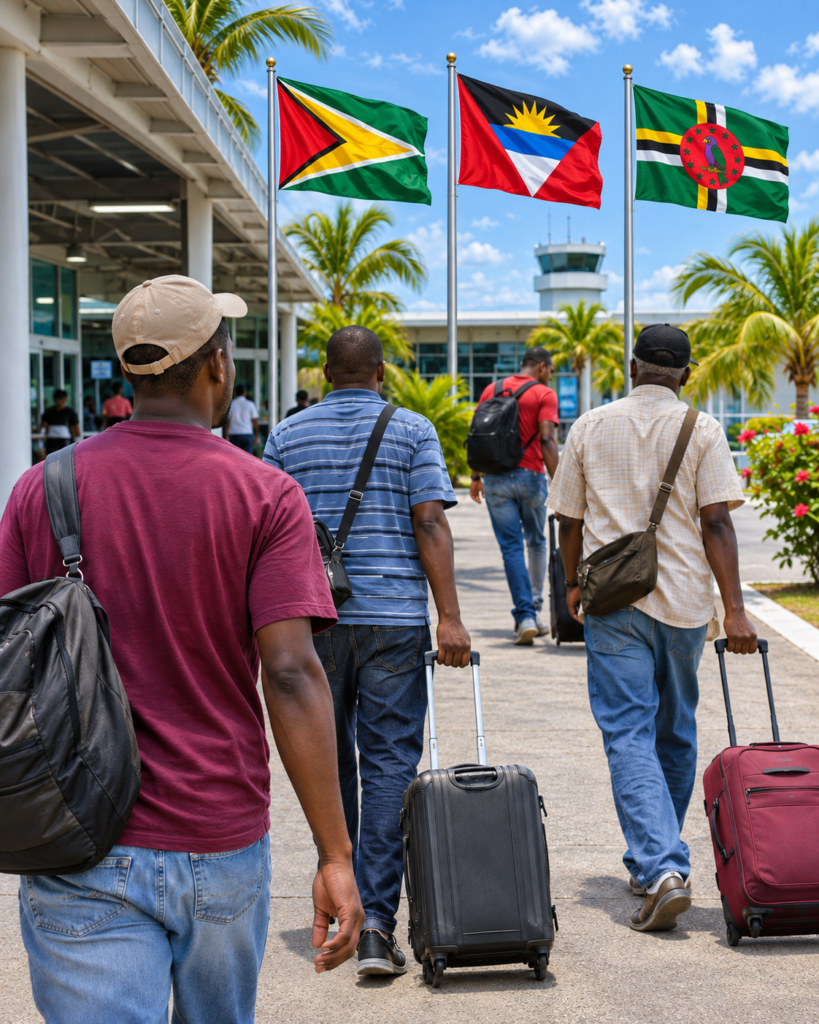
Newly processed demographic data from the United Nations Department of Economic and Social Affairs (UN DESA)’s 2024 International Migrant Stock dataset, published via the open-access research platform Our World in Data, has mapped the full breakdown of male international migrants residing in Antigua and Barbuda as of mid-2024, excluding all female migrant populations and tracking total long-term resident counts rather than new arrivals recorded exclusively over the 2024 calendar year. The figures confirm that Guyana and Dominica stand as the two largest source nations for this demographic group, with 3,139 Guyanese male migrants and 2,268 Dominican male migrants calling the twin-island nation home, for a combined total of 5,407 people that makes up the single largest share of the documented male immigrant community. Trailing closely behind the top two source markets, Jamaica claims the third spot with 1,446 male migrants, edging out the United States by a narrow margin of just 20 residents, where 1,426 American male immigrants were counted as of the mid-year snapshot. Rounding out the top tier of sending regions, the Dominican Republic contributed 729 male migrants, followed by a cohort of regional Caribbean nations that make up a substantial portion of the remaining foreign-born male population. Montserrat sent 621 male residents, St. Vincent and the Grenadines accounted for 595, and the United Kingdom ranked as the leading European source with 528 male immigrants. Additional documented communities include 378 migrants from Trinidad and Tobago, 374 from the U.S. Virgin Islands, 317 from St. Lucia, 241 from St. Kitts and Nevis, 228 from Canada, and 193 from Barbados. The dataset, widely recognized as a leading authoritative global source for cross-border migrant demographic tracking, offers granular context for regional Caribbean migration patterns, reflecting long-standing cultural, economic, and geographic ties that have driven movement between neighboring island nations and Antigua and Barbuda for decades, alongside growing inflows from North American and European expatriate communities.
Guyana and Dominica account for largest male immigrant groups in Antigua and Barbuda