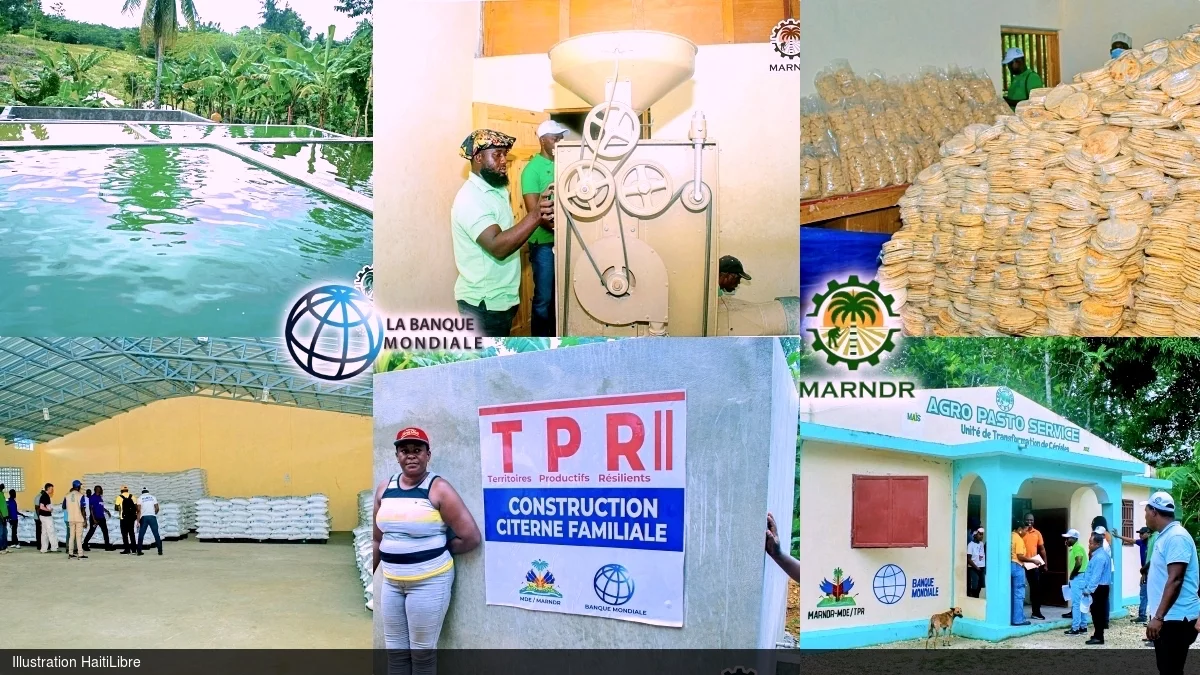
On November 8, 2026, a cross-stakeholder delegation led by the World Bank completed a week-long field assessment tour spanning multiple communities across Haiti’s Nippes department, from Fonds-des-Nègres to Anse-à-Veau, to track on-the-ground progress of two key Bank-funded agricultural development initiatives: the Resilient Agriculture for Food Security Project (PARSA) and the Resilient Productive Territories Project (TPR II). Joined by senior representatives from Haiti’s Ministry of Agriculture (MARNDR) and core project implementation teams, the visit was designed to rigorously evaluate tangible outputs, operational sustainability, and remaining barriers to long-term impact of investments targeted at lifting rural food security and climate resilience. The delegation’s itinerary included hands-on site inspections of community infrastructure and structured dialogues with direct beneficiary groups to capture unfiltered feedback on performance and unmet needs. In Fonds-des-Nègres, the team first reviewed two TPR II-supported agro-processing facilities built to reduce post-harvest loss and add value to locally grown staple crops. The first site, run by the Farmers’ Group for Economic and Environmental Development, operates a cassava processing line equipped with Bank-provided industrial graters, presses, cooking surfaces and sieves. The facility produces popular local goods including traditional cassava flatbreads, the regional pastry konparèt fòs, food-grade cassava flour and starch, and has processed 60 tons of raw cassava in the last 12 months alone. The upgraded equipment has expanded the group’s market reach to formal commercial partners including national supermarket chains and public school canteens, a milestone previously out of reach for small-scale local cassava producers. The second stop in Fonds-des-Nègres, in the nearby community of Jovange, featured a visit to Agro-Pasto Service (APS), a TPR II-supported rice and corn processing unit that serves smallholder farmers working the fertile Abraham Plain. Over the past year, the facility has milled and processed 216 tons of locally harvested white rice, eliminating the need for producers to travel long distances for husking services, cutting post-harvest waste, and streamlining the flow of staple grains to regional markets. Moving to Petite-Rivière-des-Nippes, the delegation toured a PARSA-funded aggregation and storage hub operated by the Network of Agricultural Producers of the Nippes (ROPANIP). This purpose-built center acts as a central logistics node for the regional school feeding program, facilitating the collection, safe storage and coordinated distribution of both fresh and dried farm produce to 39 public schools across five adjacent communes. An adjacent dedicated cereal storage warehouse, recently completed as part of the same investment, will further extend the network’s ability to manage supply stockpiles and maintain consistent food deliveries to school meal programs even during seasonal harvest gaps. The team also inspected a newly installed family rainwater cistern in the same commune, a core TPR II intervention designed to address the chronic water access gaps that have long forced local households to travel extreme distances to fetch potable water, pay exorbitant rates for privately supplied water, and rely entirely on unpredictable rainfall reserves. Local residents shared firsthand accounts of how the cisterns reduce daily household labor burdens and strengthen community resilience during extended drought periods. The tour then proceeded to the Abraham locality, where the delegation assessed a TPR II-developed aquaculture site with 11 purpose-built fish ponds, managed by the Farmers’ Organization for the Development of Abraham. The initiative is designed to introduce sustainable small-scale aquaculture to the region, diversify rural household income streams, and increase local availability of affordable, nutrient-dense fish for community markets. The final leg of the monitoring visit took the team to O-Rouck, a neighborhood in the coastal commune of Anse-à-Veau, to review a suite of climate-adapted community infrastructure investments built to reduce agricultural vulnerability to extreme weather events. Across all stops, structured roundtable discussions with beneficiary farmers, cooperative leaders, and local government representatives formed a central component of the mission, giving stakeholders a platform to celebrate measurable gains, share operational lessons, and flag remaining structural challenges that risk undermining the long-term sustainability of project investments. The full cross-departmental tour confirmed that the complementary design of PARSA and TPR II interventions is already delivering interconnected benefits across Haiti’s Greater South region, building more robust agricultural value chains, expanding access to critical public services, and equipping rural communities to better withstand the growing shocks of climate change.