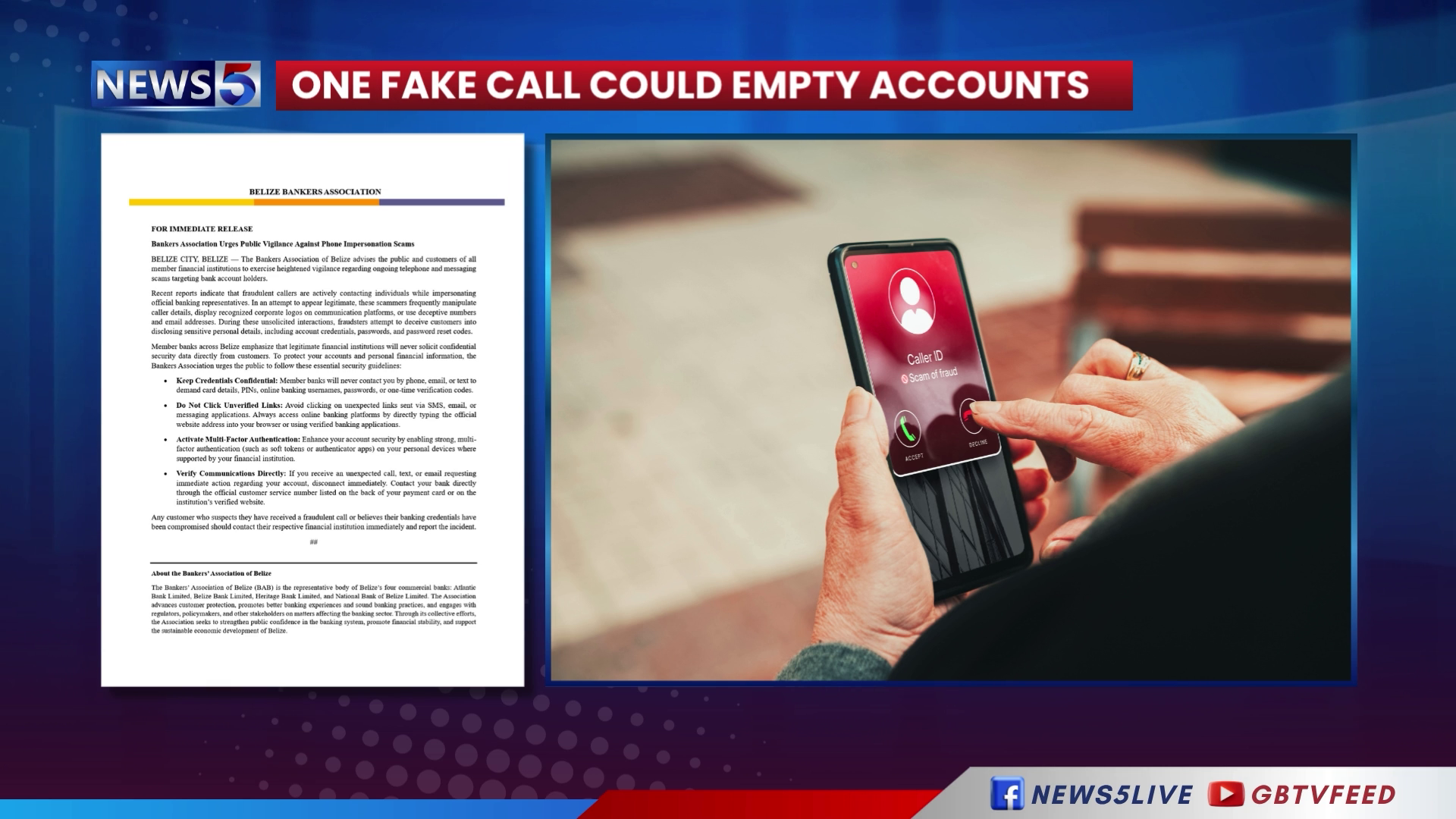
On November 4, 2026, the Belize Bankers’ Association (BBA) released a public advisory alerting local residents to a rapidly spreading wave of financial fraud that preys on customer panic to steal sensitive personal and financial data. Fraudsters behind the scheme are meticulously impersonating official bank representatives, reaching out to targets via phone calls, text messages, and fraudulent emails to deliver alarming, false claims that their bank accounts are at imminent risk of suspension, compromise, or permanent closure.
Dyon Elliott, President of the BBA, emphasized that the manufactured sense of urgency embedded in these communications is the core tactic of the scam, designed to push victims into making impulsive, unthinking decisions before they have time to verify the request’s legitimacy. Elliott explained that the recent surge in these phishing attacks—encompassing text-based smishing and voice-call vishing variants—comes in direct response to major local banks’ ongoing, multi-million-dollar investments in robust cybersecurity infrastructure. Drawing a simple analogy, he noted that local financial institutions have effectively “locked and reinforced the doors of their metaphorical houses” to block direct unauthorized access to customer accounts, so scammers have shifted their strategy to manipulate customers themselves into voluntarily handing over their keys.
The sophisticated scams operate on three carefully engineered psychological layers, Elliott outlined. First, fraudsters leverage stolen personal data including full names, home addresses, and partial contact details to pose as verified, authoritative bank staff, quickly building false credibility that leads many targets to drop their guard. Second, they deliberately stoke primal fear by inventing urgent, high-stakes crises, warning victims that immediate action is required to avoid account freezes, lost funds, or permanent financial damage. Third, they push targets to click unvetted links, share confidential login or identification details, or transfer funds to so-called “secure verification accounts” before they can reach out to their bank through official channels.
The BBA has issued clear, actionable guidance for all Belizean banking customers: any unsolicited communication claiming to be from a bank that demands immediate action to resolve an account emergency should be treated as a potential scam. Customers are instructed to hang up on suspicious callers, delete unprompted text or email messages, and independently contact their bank via publicly listed, verified official phone lines, in-branch visits, or official mobile banking portals to confirm the status of their accounts. The advisory applies to all major local financial institutions, including Atlantic Bank, Heritage Bank, Belize Bank, and the National Bank of Belize, all of which have confirmed they will never contact customers out of the blue to demand sensitive account information or request urgent fund transfers.
Your Bank Account Is Fine, But Scammers Want You Panicking