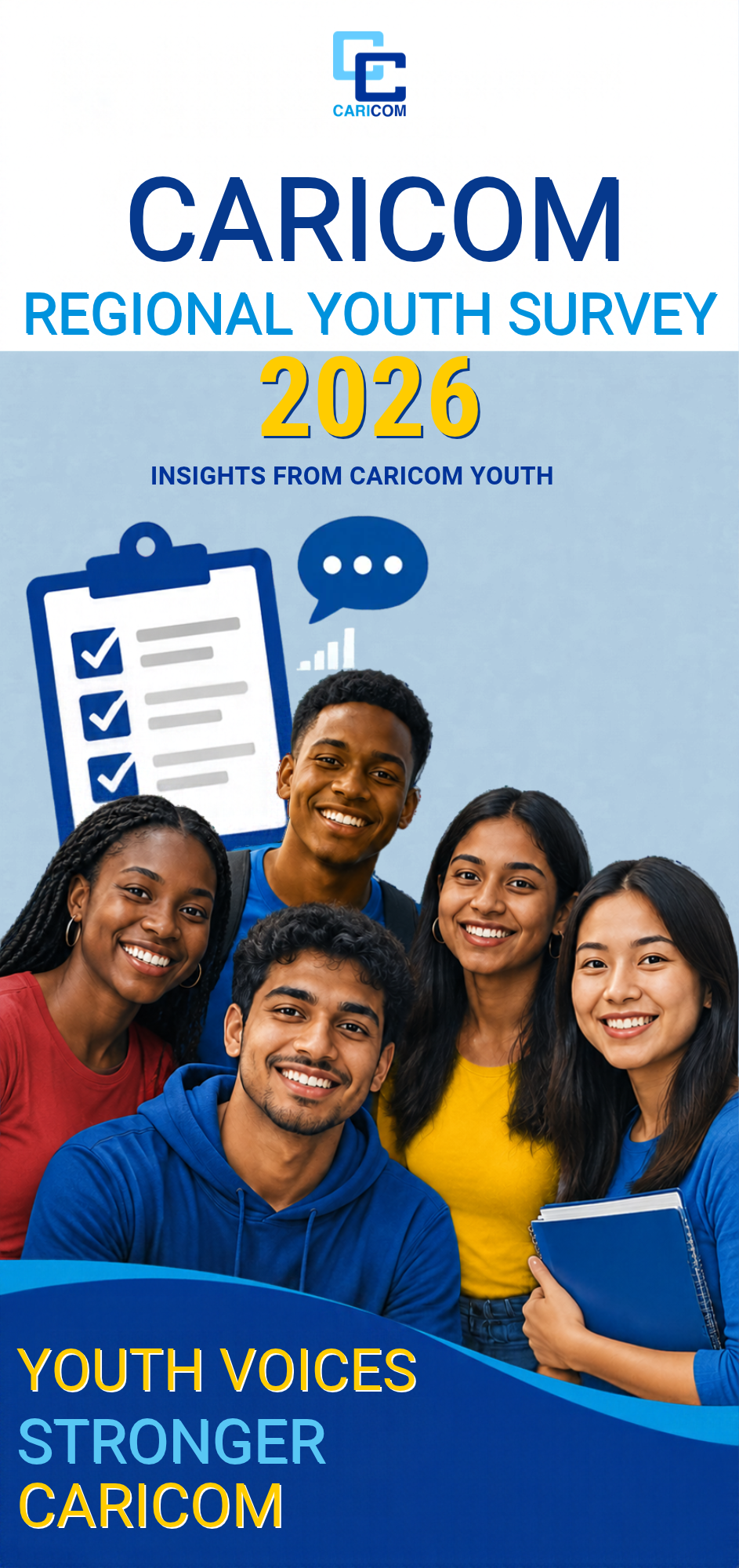
A newly released 2026 CARICOM Regional Youth Survey, which collected feedback from over 550 young people across all member states of the Caribbean Community, has laid out a clear, unified call from the region’s youth demographic to move beyond token consultation and secure formal, influential roles in designing and implementing regional policies and development programmes. The survey’s data reveals near-universal support for structural reforms that embed youth as core stakeholders in CARICOM’s governance frameworks: a staggering 95% of participating young people confirmed that establishing a dedicated regional youth governance structure is a critical priority, while 92% backed the creation of a standardized CARICOM Youth Development Index. Respondents explained these two mechanisms would directly amplify youth representation, make institutional decision-making more responsive, and ensure regional policies are rooted in the lived realities of young Caribbean residents, rather than being designed without their direct input. Michele Small-Bartley, Youth Development Programme Manager at the CARICOM Secretariat, emphasized that the full set of survey findings will serve as an evidence base for ongoing work to revamp youth engagement across the community, ensuring that future strategies are shaped by the actual voices, on-the-ground experiences, and stated priorities of the region’s youth population. The data will also be the central discussion agenda for the upcoming Meeting of Senior Officials and Regional Youth Dialogue on Youth Development, set to take place on 4 November 2026 at the University of the West Indies Five Islands Campus in Antigua and Barbuda. Beyond articulating their demands for expanded decision-making power, the survey respondents also outlined the most pressing barriers that currently block young people from participating in regional governance, with 70% identifying widespread lack of access to clear, timely information about engagement opportunities as the single largest obstacle. Participants also flagged deep gaps in inclusivity, noting that young people with disabilities, rural and remote-based youth, and out-of-school youth are disproportionately excluded from existing youth engagement channels. To address these gaps, respondents ranked targeted policy interventions as top priorities: 51% called for increased sustained funding for youth-led community organizations, while 42% advocated for formalized mentorship programmes connecting young people with senior regional leaders and institutional decision-makers. Full highlights and the complete dataset of the 2026 CARICOM Regional Youth Survey are available for public review via the official CARICOM website at https://caricom.org/documents/caricom-regional-youth-survey-2026/.
Youth want more than a voice. They want a role in decision-making, CARICOM survey finds