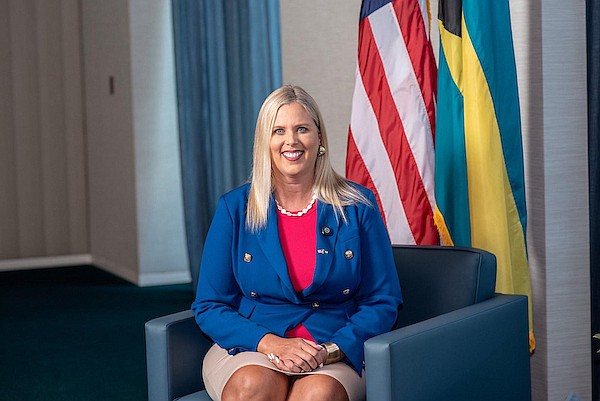
U.S. Deputy Chief of Mission Kimberly Furnish confirmed yesterday that local Bahamian authorities have ramped up regulatory enforcement across the domestic jet ski industry, following years of sustained bilateral concerns over the safety risks posed by unregulated operators to American travelers. During a press briefing with local journalists, Furnish noted that the U.S. Embassy has been heartened by recent coordinated actions targeting unlicensed, non-compliant rogue jet ski rental providers, stating she was thoroughly satisfied with the incremental milestones achieved to date. Furnish emphasized that a cross-agency collaborative framework, led by Bahamian port authorities alongside local police units and national defense force personnel, is now being paired with upgraded technological tools, all designed to drastically reduce preventable incidents that harm U.S. nationals. For months, the administration of Bahamian Prime Minister Philip Davis has faced mounting public and diplomatic pressure from the U.S. Embassy over long-documented gaps in oversight of jet ski operations concentrated in high-traffic tourist zones of New Providence and Paradise Island. Back in June, the U.S. Embassy issued a revised public security advisory for all American residents and visitors in the Bahamas, flagging persistent, severe hazards associated with unvetted jet ski rentals that have resulted in a string of documented injuries, fatal accidents, and reported sexual assault cases, compounded by historically inconsistent official monitoring of designated rental zones. In direct response to that advisory, Bahamian regulators rolled out a suite of targeted policy interventions, including a landmark proposal to equip all participating tourist jet ski riders with body-worn cameras as a proactive safety and accountability measure, alongside a structured schedule of fixed on-the-spot fines for illegal and reckless operating behavior in Bahamian territorial waters. Furnish reiterated her optimism that the body camera initiative would deliver tangible safety benefits, but underscored that consistent, rigorous on-the-ground enforcement remains the single most critical factor to drive long-term sector improvement. She added that the embassy’s core priority remains the physical well-being and security of U.S. citizens visiting the island nation, and expressed formal gratitude to Bahamian officials for their ongoing collaborative work to address the long-simmering safety gaps. To tackle these systemic failures in the watercraft regulatory ecosystem, the Bahamian government formally launched a dedicated national jet ski task force in March 2024, though the inter-agency group has faced persistent public scrutiny over its perceived slow pace of implementation and unclear operational output in its early months. Earlier this year, U.S. Ambassador to the Bahamas Herschel Walker made a direct public appeal to local governing bodies to fast-track the previously announced suite of safety reforms without additional delays, shortly after local law enforcement reported yet another jet ski-linked sexual assault incident targeting a tourist. Task force member Robert Sands, who also serves as Senior Vice President of major resort operator Baha Mar, later confirmed to Tribune Business that the group has secured initial gains in lifting overall industry compliance levels, but openly acknowledged that more steady, timely progress is required to meet public and diplomatic expectations. Sands noted that sustained oversight of the widely dispersed jet ski sector presents unique operational challenges, and will require long-term commitments of dedicated manpower, patrol resources, and cross-stakeholder coordination from all relevant government agencies.