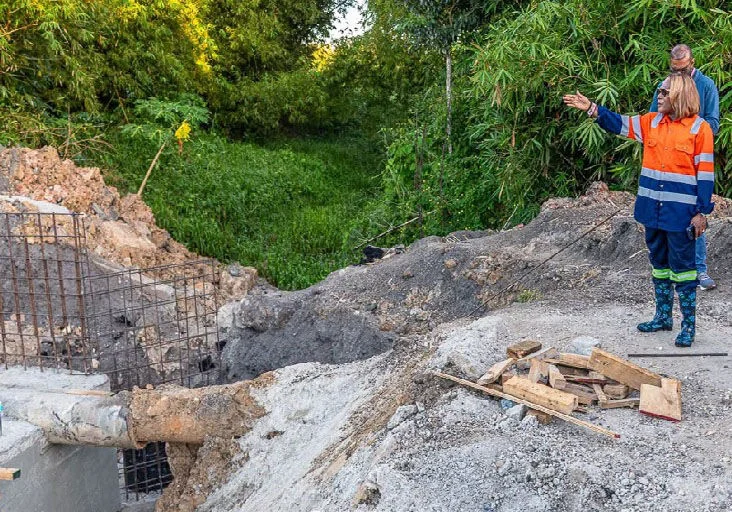
Trinidad and Tobago’s Minister of Works and Infrastructure Jearlean John has announced a sweeping operational realignment across her portfolio, addressing longstanding systemic flaws that have drained public resources and driven steady decline in the country’s national road network. During a press briefing responding to media queries from the Express regarding the future of the Programme for Upgrading Roads Efficiency (PURE) Unit and the recent termination of the unit’s deputy director Hayden Phillip, John confirmed that the restructuring drive is already underway, with no pause to ongoing critical infrastructure works. The minister did not elaborate on the specific circumstances of Phillip’s dismissal, but framed the broader overhaul as a direct response to years of fragmented governance of road maintenance duties. Currently, national road infrastructure responsibilities are split across three separate state entities: the National Infrastructure Development Company Ltd (Nidco), which manages major highways, bridge construction and slope stabilization projects; the Highways Division, which supports the Highways Authority in maintaining Trinidad and Tobago’s primary road network; and the PURE Unit, originally launched to address widespread pothole repairs before expanding to oversee local road maintenance under regional corporation jurisdiction. John noted this tripartite division of labor has created crippling operational gaps: rampant duplication of work streams, severe underutilization of skilled full-time government tradespeople already on the public payroll, and persistent waste of taxpayer funds, all of which have accelerated the decay of roads across the twin-island nation. She acknowledged that ordinary citizens have repeatedly and justifiably voiced frustration over deplorable road conditions, including shoddy repair workmanship, multi-week delays for basic maintenance, and potholes that reappear within days of being patched. “These public concerns align directly with the ministry’s own internal assessments, which make clear that we have lacked sufficient oversight and accountability mechanisms across every stage of roadwork planning, execution and post-completion monitoring,” John stated. The core goals of the ongoing realignment are to consolidate overlapping responsibilities, deploy the full expertise of underused in-house skilled workers, eliminate redundant spending, and deliver faster, longer-lasting road repairs for communities nationwide. John emphasized that no PURE Unit frontline staff have been laid off as part of the restructuring, and all existing PURE personnel will be integrated into expanded ministry operations wherever possible to boost overall workforce capacity and productivity. She stressed that the overhaul has not interrupted any active road maintenance projects, and will not do so moving forward. Recent ongoing works include culvert replacement along the 7.5-kilometre stretch of Western Main Road, and a full cylinder crossing rebuild at the 13-kilometre mark in Las Lomas, alongside widespread daily patching and paving operations across all regions of the country. John released verified performance data for the 2026 operational period, noting that between February and September of this year, the ministry resolved 4,036 separate road defects, while the Highways Division patched 335 kilometres of roadway spanning 40,410.48 square metres, consuming 5,343.5 tonnes of asphalt. Looking ahead to the 2027 fiscal year, the government will scale up its national road rehabilitation programme with 57 high-priority infrastructure projects targeted for communities across south, central, east and north-west Trinidad. Complementing road works, the ministry is rolling out an ambitious nationwide drainage improvement initiative designed to mitigate chronic flooding risks and prevent water-related damage to newly repaired roads. Priority zones for desilting and structural upgrades include the flood-prone Caroni, North Oropouche and South Oropouche river basins. Planned works include full upgrades to the Williams Street Pump Station in El Socorro South and the Bamboo No 3 Pump Station, design and construction of new sediment traps on the St Joseph and Arima rivers, and maintenance dredging of the lower Caroni River. Seven active drainage projects are on track for completion in the 2027 fiscal year, with additional planned works covering channel reshaping, river bank stabilization, reinforced channel linings and retaining walls, rehabilitation of failed drainage structures, and critical outfall drain upgrades. John concluded that the full suite of integrated infrastructure interventions is designed to maximize value for every dollar of public spending, deliver durable, high-standard public assets, reduce recurrent flood damage to communities, and reverse decades of underperformance in the national road network.