Longtime residents of the Dominican Republic’s capital, Santo Domingo, often speak of a bygone era when the city’s thoroughfares were shaded by sprawling oaks, fragrant laurels, and towering mahogany trees, forming a lush, verdant landscape that stood in sharp contrast to urban built environments across the Caribbean. A newly published volume titled *The Trees of Santo Domingo* preserves this fading heritage, documenting iconic green corridors: Bolívar Avenue once curved beneath a canopy of pink oaks that formed a natural tunnel, Duarte Avenue was lined on both sides by stately mahogany plantings, and Independence Avenue’s wide sidewalks were cooled by the dappled shade of mature laurel trees. These green spaces were not accidental: they were the product of deliberate, large-scale reforestation efforts launched in the 1930s in the wake of the devastating San Zenón cyclone, a targeted recovery initiative that turned the capital into a regional model for urban greening for decades.
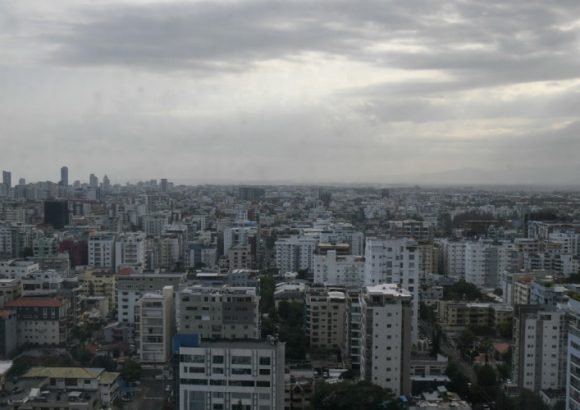
Eighty years later, that legacy has been almost entirely erased. A peer-reviewed urban tree inventory conducted by researchers from the Technological Institute of Santo Domingo (INTEC), with support from international environmental research partners, has confirmed that the city’s current tree cover sits at a mere 15.4 percent. More than 60 percent of the National District’s total land area is now sealed under impermeable surfaces: concrete sidewalks, asphalt roads, and multi-story commercial and residential developments. This dramatic shift from permeable, shaded green space to hard, heat-absorbent built infrastructure has directly driven two cascading public crises: steadily rising urban heat island temperatures that disproportionately impact low-income neighborhoods, and increasingly severe seasonal flooding as rainwater can no longer be absorbed by tree roots and vegetated soil.
This collapse of the city’s tree canopy did not happen overnight. Municipal archives, decades of academic research, and official records of permitted and unpermitted tree removals paint a gradual, decades-long pattern of erasure, spurred by unregulated road expansion, a construction boom of high-rise housing and commercial towers that bulldozed thousands of private yards and public community gardens, repeated failures to enforce long-promised urban reforestation plans, and the widespread use of poorly chosen, short-lived tree species that could not replace the lost mature native canopy.
The full timeline of Santo Domingo’s green rise and fall stretches back more than a century. As early as 1908, civic leaders founded the city’s Tree Society to launch its first large-scale public planting campaign, putting 300 native almond trees into the ground across downtown. In 1929, a formal Senate act mandated that all city streets wider than 15 meters reserve dedicated space for trees and public green verges. By 1956, city planners drafted Santo Domingo’s first comprehensive Regulatory Plan, which was designed to protect vast, connected green zones including the site of what is now the sprawling Mirador Sur public park. That landmark plan was never implemented, however, after fierce pushback from powerful local landowners — including the family of long-ruling dictator Rafael Trujillo — who blocked zoning restrictions to allow unbridled, unplanned urban sprawl with no green space safeguards.
For a brief window between 1966 and 1978, the city’s green canopy hit its historic peak. Even as Santo Domingo’s population surged from 400,000 to more than 1 million residents, city leaders oversaw the creation of four iconic major green public spaces: Mirador Sur Park, the National Zoo, the city’s Botanical Garden, and Mirador del Este coastal park. As cited in *The Trees of Santo Domingo*, prominent urban architect Manuel Valverde Podesta calculated that per-capita green space access in the city jumped from 3.6 square meters per resident to 13 square meters over that 12-year period, a benchmark that still outpaces many neighboring Caribbean capital cities today.
That progress came to a sudden halt in 1979, when two back-to-back extreme weather events — Hurricane David and Tropical Storm Federico — destroyed an estimated 40 percent of the city’s total tree population. Losses were far starker in key green zones: 50 percent of the trees in Mirador Sur were toppled, and 60 percent of coastal tree cover along the city’s waterfront was wiped out entirely. While municipal authorities launched replanting campaigns throughout the 1980s, widespread shortages of native, slow-growing saplings forced urban forestry teams to rely almost exclusively on fast-growing, short-lived exotic species including casuarina, yellow acacia, and melina, which provided only temporary shade and failed to deliver the long-term ecosystem benefits of the lost native canopy.
In 1993, the Dominican government issued Decree 183-93 to create the Santo Domingo Green Belt, a 130-square-kilometer protected green zone designed to wrap around the capital and halt unregulated urban expansion. By 2010, however, data compiled in *The Trees of Santo Domingo* shows that two-thirds of that designated green belt had been bulldozed for informal and formal urban development, leaving only fragmented, disconnected patches of vegetation.
Multiple 21st century policy initiatives have attempted to reverse the decades of green loss, but gaps in regulation and enforcement have undermined most progress. In 2004, the National District Mayor’s Office partnered with the National Botanical Garden and the Dominican Environmental Consortium to roll out formal Urban Tree Regulations for the capital, setting clear rules for public tree planting, pruning, and felling, and explicitly banning the planting of the invasive, low-benefit exotic species that had been overused in prior decades, including yellow acacia, casuarina, neem, and melina. In 2021, the Mayor’s Office joined the Ministry of Environment, the Botanical Garden, INTEC, and a coalition of local nonprofits to launch the “Plant Your City” large-scale reforestation initiative. By July of this year, program leaders announced they had planted more than 110,000 trees, shrubs, and ornamental plants across the city since 2020, though no public data has been released to specify how many of those plantings are long-lived, mature trees rather than small ornamental shrubs.
Major regulatory loopholes continue to hamper protection of the city’s remaining tree canopy. The Ministry of Environment’s official tree-cutting permitting system explicitly excludes public green spaces including sidewalk verges and neighborhood parks, placing all jurisdiction for those sites under local municipal control with no centralized oversight. In September, city councilman Wilkin Martinez submitted a formal reform to the existing municipal tree ordinance, noting that the current text contains ambiguous language that allows property developers to exploit legal gaps to remove protected trees without penalty. That same month, President Luis Abinader issued Decree 615-26, declaring a national crackdown on what the administration termed “environmental terrorism” to protect priority ecosystems including national protected areas, watersheds, mangrove forests, and coastal wetlands — but the final published list of protected sites did not include urban sidewalk trees or public street greenery, leaving those vulnerable to unpermitted removal.
The media outlet that compiled the report reached out to both the Ministry of Environment and the National District Mayor’s Office to request official comments on the decades of tree loss and recent reports of unpermitted felling, but neither institution had issued a formal response by the time of publication. This pattern of unplanned urban growth outpacing green space safeguards is not a new observation: the book documents a 40-year-old assessment by two Michigan State University environmental technicians who warned Dominican officials that road and urban infrastructure construction across the country’s cities was never paired with adequate, enforceable tree-planting mandates. Four decades later, that warning remains an accurate description of Santo Domingo’s ongoing reality, as the city’s gray concrete sprawl continues to overtake its once-iconic green landscape.