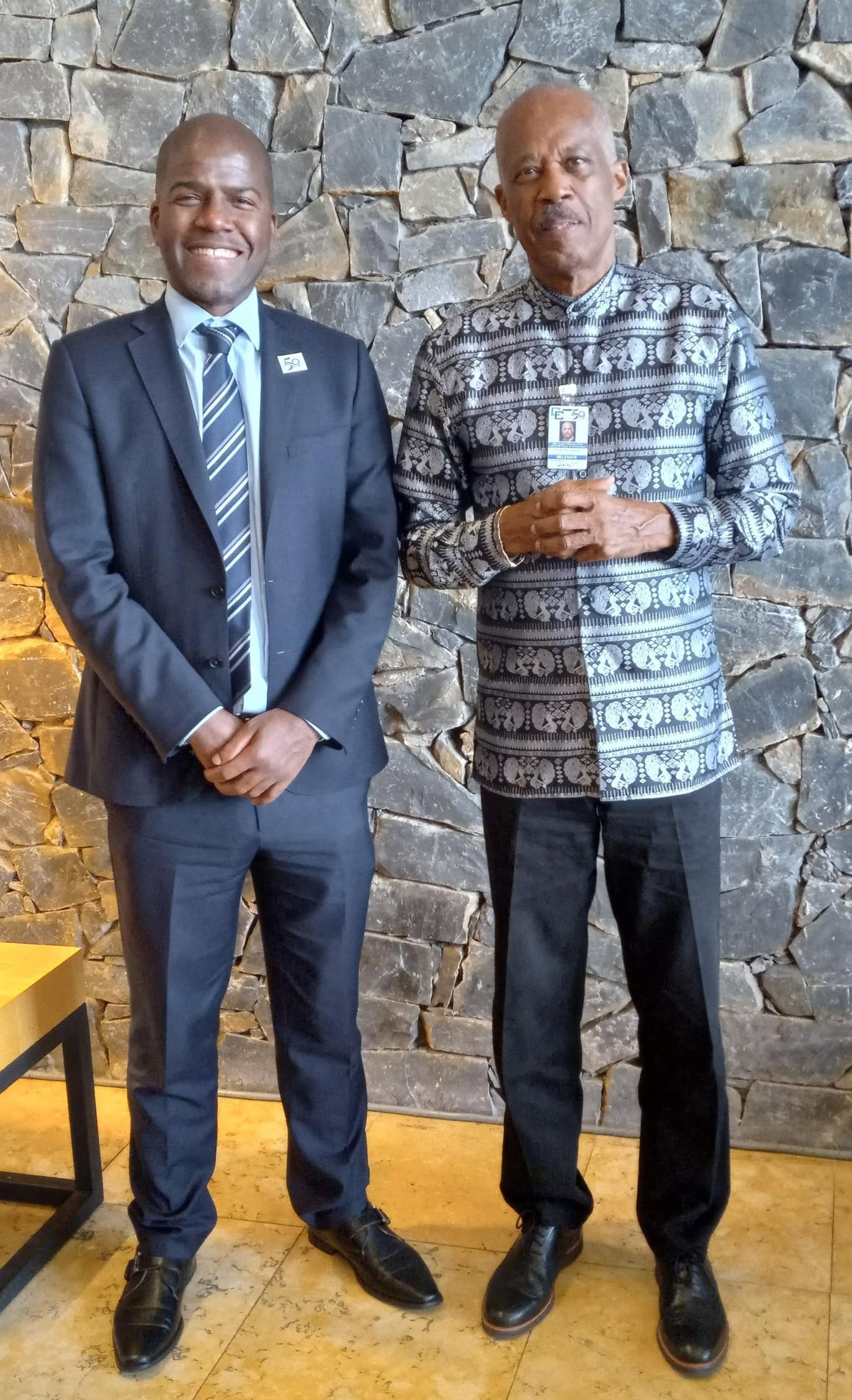
Against the backdrop of the 81st United Nations General Assembly (UNGA) proceedings in New York, the Caribbean Community (CARICOM) has formally articulated its unreserved commitment to advancing the full decolonization of the British Virgin Islands (BVI) during a session of the UN Fourth Committee, a stance that has received full endorsement from the regional bloc’s Reparations Commission (CRC). The official position was delivered by H.E. Ambassador Dr. Mutryce Williams, Permanent Representative of St. Kitts and Nevis to the UN, during the committee’s 7th plenary gathering. Ambassador Williams outlined that CARICOM’s Heads of Government have formally ratified all ongoing work of the UN Special Committee on Decolonization (known as the C-24, chaired by Saint Lucia) related to the BVI, and pledged sustained collaborative engagement to move the territory’s self-determination agenda forward. She highlighted the tangible progress the BVI has made in preparing its population for full self-governance, as local stakeholders advance negotiations for a pre-independence constitutional framework. CARICOM, she emphasized, is advocating for ongoing constructive, inclusive dialogue between the United Kingdom, the BVI administration, and UN bodies, with explicit priorities centered on broad democratic public participation, robust good governance structures, long-term economic resilience, and full alignment with the expressed political aspirations of the BVI’s resident population. The ambassador further tied the decolonization agenda to the region’s longstanding reparatory justice movement, referencing the revised Ten-Point Plan for Reparatory Justice that CARICOM unveiled just one month prior during its 3rd Regional Conference on Reparations. The updated framework, she noted, positions reparations not as a symbolic gesture but as a foundational pillar of restorative justice, historical accountability, and equitable sustainable development across the Caribbean. She stressed that decolonization efforts cannot be limited solely to securing formal political autonomy, but must also extend to dismantling systemic barriers to equal economic opportunity, advancing transformative social justice, and delivering on reparatory commitments for historical exploitation. The BVI’s top leadership publicly recognized CARICOM’s show of solidarity during the same Fourth Committee session: BVI Premier Hon. Dr. Natalio Wheatley extended his gratitude for the regional body’s unwavering advocacy for his territory’s full decolonization, while BVI Special Envoy Mr. Benito Wheatley specifically thanked the CARICOM Reparations Commission, led by Chairman Sir Hilary Beckles and Deputy Chairman H.E. Ambassador David Comissiong, for successfully integrating decolonization as a core new pillar of the updated Ten-Point Reparatory Justice Plan. The landmark draft UN resolution affirming the BVI’s inalienable right to self-determination passed the Fourth Committee by a resounding margin of 157 votes in favor, with only 2 votes against and 5 abstentions; the United Kingdom was among the parties that chose to abstain from the vote. The resolution now moves to its final procedural step, a plenary vote before the full UN General Assembly, where it is widely expected to pass and formalize the global community’s collective endorsement of the BVI’s decolonization trajectory. As an Associate Member of CARICOM, the BVI is classified as one of only 17 remaining Non-Self-Governing Territories (NSGT) globally that fall under the official oversight of the C-24 Decolonization Committee.
Antigua and Barbuda, CARICOM back BVI decolonization, links push to reparations