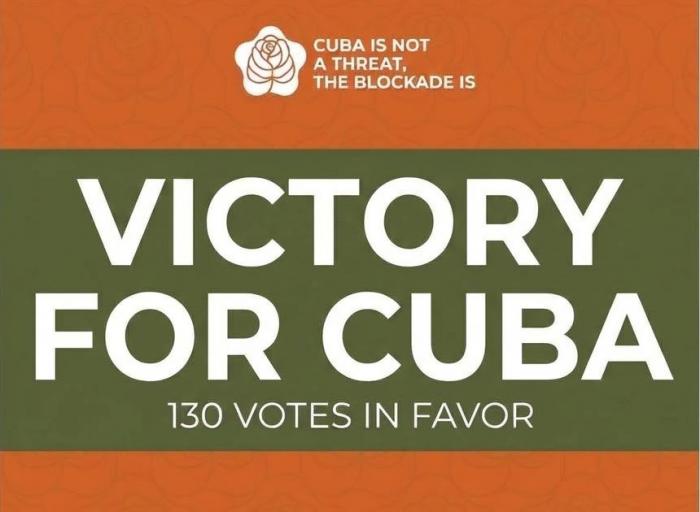
On October 28, 2026, the 78th United Nations General Assembly cast a landmark vote that reaffirmed decades of global consensus against Washington’s decades-long economic, commercial, and financial embargo on Cuba, with 130 member states voting in favor of the resolution, 17 opposing it, and 25 delegations choosing to abstain. The outcome capped two days of heated floor debates, during which representatives from across every regional bloc lined up to condemn the extraterritorial reach of U.S. sanctions, which penalize third-party nations and businesses that engage in lawful trade with the Caribbean island, and detail the cascading humanitarian harms the restrictions have inflicted on ordinary Cuban families, from shortages of life-saving medical supplies to disrupted access to essential food imports. Moments after the final vote tally was announced, Cuban First Secretary of the Communist Party Central Committee and President Miguel Díaz-Canel Bermúdez took to his official X social media account to issue a public statement celebrating the resounding global rebuke of the U.S. policy. “The global community has once again made its voice heard by an overwhelming margin, standing firm against the blockade, even in the face of the most blatant, unapologetic pressure and blackmail deployed by the United States in a desperate bid to sway the vote outcome in their favor,” Díaz-Canel wrote. The Cuban head of state framed the UN vote as an unambiguous victory for his nation’s resilient population, who have refused to capitulate to years of deliberate economic strangulation, repeated political threats, and systematic abusive tactics deployed by successive U.S. administrations to force political change in Havana. “This is a triumph of unvarnished truth over the forces that peddle lies and wield coercive blackmail to impose collective punishment on an entire sovereign nation,” he emphasized. Díaz-Canel went on to sharply critique the conduct of the U.S. diplomatic delegation during the General Assembly session, describing their lobbying efforts to defend the embargo as a shameful, futile display of imperialist aggression. “The miserable, gangster-style coercion deployed by the representatives of the empire to justify this policy of collective punishment, which inflicts devastating human costs on the Cuban people and blatantly violates core international human rights norms, has failed to convince a single neutral party. Their efforts have amounted to nothing more than a transparent attempt to prop up a widely discredited policy that the vast majority of the world has already rejected for years,” he stated. The 2026 vote marks the 31st consecutive time the UN General Assembly has passed a resolution demanding an end to the U.S. embargo on Cuba, a policy first imposed in the early 1960s that remains one of the longest-running unilateral economic sanctions regimes in modern global history.
Victory for Cuba at the UN: The world has once again spoken out, by an overwhelming majority, against the blockade