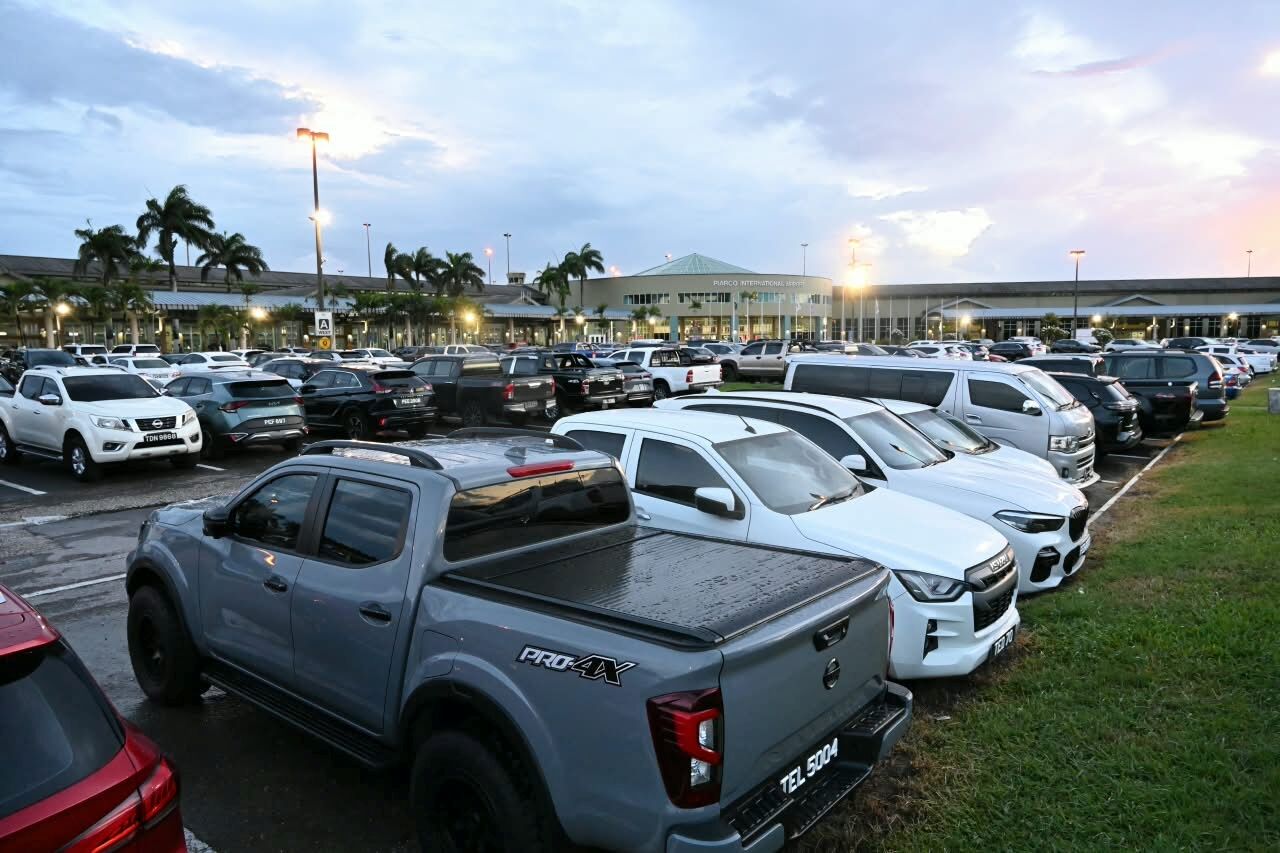
As Trinidad and Tobago’s national cost-of-living crisis continues to squeeze household budgets, a newly announced 50% across-the-board increase to parking fees at the country’s two major international airports has sparked widespread frustration from frequent travellers and airport staff, who say the unanticipated additional cost adds unnecessary strain to already stretched personal finances. The Airports Authority of Trinidad and Tobago formally published the revised parking tariff schedule in a public notice, confirming that the new rates will go into full effect on November 1, applying to both Piarco International Airport and ANR Robinson International Airport. Every tier of parking pricing has been raised by roughly 50%: the hourly rate for stays under six hours jumps from $10 to $15, the daily rate (applicable to any stay of six hours or longer, capped at a 24-hour window) climbs from $63 to $95, and the monthly long-term parking rate for users parking 12 or more consecutive days rises from $750 to $1,125. For context, a traveller leaving their vehicle at Piarco for a two-day trip will now face a $190 total parking bill, a $64 premium over the previous $126 charge. Interviews conducted on-site at Piarco International Airport this week captured the depth of public discontent with the policy. Simone Sam, a professional who travels to Tobago several times per month for work, described the hike as entirely unjustified. “$63 a day was already a steep cost, so there is no logical reason to push it even higher. Every single household expense is going up right now, and most of us have no extra income to cover these new charges, even if we have no choice but to pay them to get to work,” she noted. Michael Chan, another member of the public, called on the government to revisit the decision, highlighting that frontline airport employees have not received corresponding salary adjustments to offset the higher costs, and expressed concern that staff could be forced to absorb the new parking fees out of stagnant wages. Jesse Finbar echoed that frustration, pointing out that while private sector workers cannot demand instant pay raises from their employers to match rising costs, public-facing fees and service charges appear to be increased arbitrarily overnight, creating a growing financial burden that is taking a measurable toll on household stability. Occasional airport visitor Susan Harry added that a moderate 10% adjustment might have been reasonable, but the near 51% spike in daily parking charges is disproportionate and unfair, even if it fits a broader pattern of unrelenting price hikes across consumer goods and public services in the country.