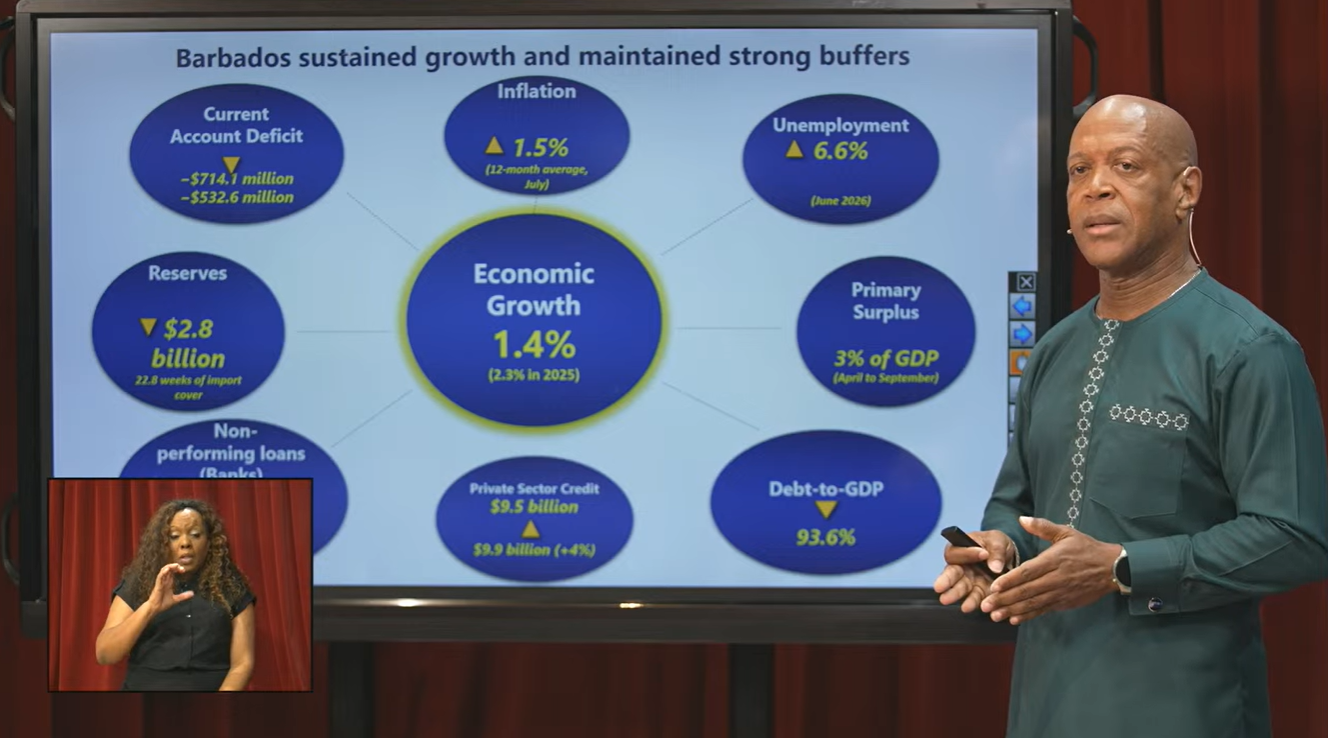
In an official mid-year economic briefing delivered on Wednesday, Barbados Central Bank Governor Dr Kevin Greenidge unveiled new macroeconomic data showing the island nation’s gross domestic product expanded by 1.4% across the first nine months of 2026, marking a notable deceleration from the 2.3% growth rate posted in the identical January-to-September window of 2025. The slowdown is being largely attributed to softening performance across the country’s flagship tourism sector, which has long served as the backbone of Barbados’ service-driven economy. Labor market trends mirrored the broader cooling trajectory: between the 12-month period ending in June 2025 and the same 12-month window closing in June 2026, the national unemployment rate ticked upward from 6.1% to 6.6%. Despite the dampened growth momentum, several key macroeconomic metrics remained stable. Annual inflation held at a muted 1.5% as of July 2026, well within the Central Bank’s targeted price stability range, while the country’s international foreign reserves stayed steady at $2.8 billion, a level that provides sufficient buffer for critical import payments and external debt servicing. The public debt-to-GDP ratio currently stands at 93.6%, a figure that reflects ongoing fiscal consolidation efforts following years of structural adjustment programs. In response to the weaker-than-expected first nine months of activity, the Central Bank has formally revised downward its full-year 2026 economic growth projection, though specific revised numerical targets and supplementary policy details are set to be released in the bank’s upcoming comprehensive quarterly monetary policy report.