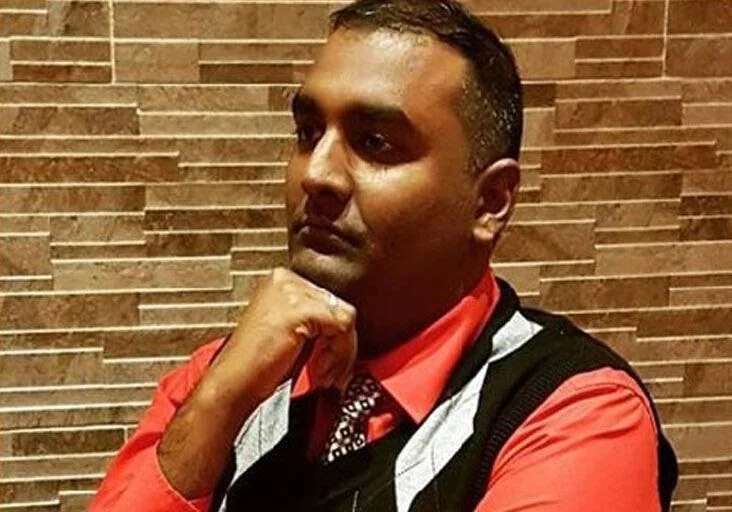
A former 10-year executive board member of Trinidad and Tobago’s National Council of Indian Culture (NCIC) is urging a far-reaching, systemic review of governance frameworks for all local cultural organisations, following a high-profile wave of state-linked sponsor withdrawals from the iconic annual Divali Nagar festival. Visham Bhimull, who served on the NCIC leadership team from 2015 to 2025, issued the call in the wake of recent announcements that major public and semi-state entities including bmobile, National Flour Mills, First Citizens Bank and Caribbean Airlines would pull their planned sponsorship for this year’s event, shortly before local beverage brand Blue Waters stepped forward as the headline diamond sponsor. The sequence of events has sparked a flurry of partisan political commentary across public and social media platforms, but Bhimull emphasized that no assumptions about unsubstantiated motives behind the sponsor withdrawals should be circulated without concrete evidence. Instead, he argued, the public discourse should shift away from surface-level partisan sparring to address far more foundational questions about the long-term sustainability, operational independence and public accountability of cultural institutions that steward shared community heritage. Bhimull stressed that no cultural organisation’s identity or public mandate should ever be reduced to the personal political affiliations of its individual volunteer or appointed officeholders. Across all successive national administrations regardless of party affiliation, governments have a dual responsibility: to fully respect the operational autonomy of community cultural bodies, while also enforcing rigorous, transparent accountability standards for any public funds allocated to cultural programming. Disputes over public cultural funding, he added, should never devolve into partisan mudslinging, and instead be resolved through structured, inclusive public dialogue rooted in consistent, publicly published policy guidelines. Crucially, he noted, the rich cultural heritage that the NCIC exists to safeguard belongs not to any political party, corporate entity or small leadership cohort, but to every citizen of the country. Sustained preservation of that heritage can only be achieved through publicly transparent institutional governance, cross-sector collaborative partnerships, and structural commitments that outlast changes in government leadership, corporate sponsorship cycles and internal organisational turnover. Bhimull pushed back against the emerging narrative that direct public funding for grassroots community Divali celebrations and support for the large-scale national Divali Nagar event are inherently competing priorities, arguing that both streams of investment can advance collective national cultural development as long as funding eligibility criteria are clearly communicated and applied fairly across all applicants. For its part, the NCIC itself must also uphold equally rigorous public standards for its internal governance, fundraising practices, corporate partner vetting processes and public reporting on the real-world outcomes of its cultural programmes. Private sector sponsorship, he noted, is a fully legitimate and highly valuable revenue stream for cultural organisations, provided that no corporate partnership ever undermines the institution’s core public service mandate or erodes its independent decision-making authority. To move beyond the longstanding overreliance on a single flagship event, Bhimull outlined a vision for the NCIC to build year-round, structured collaborative partnerships with grassroots community cultural groups, non-governmental organisations, primary and secondary schools, academic researchers, independent traditional and emerging Indo-Trinidadian artistes, and private sector stakeholders. These expanded partnerships would create far more performance and skill-development opportunities for creatives, while deepening the NCIC’s community impact across all regions of the country. He emphasized that the 60-year-old organisation, founded in 1964, has a far broader public mandate than just successfully staging the annual Divali Nagar festival: its core mission requires sustained, year-round investment in expanding public access to Indo-Trinidadian cultural knowledge, boosting community participation in cultural activities, and creating long-term professional pathways for cultural workers nationwide. Bhimull went on to raise a critical, long-unaddressed question: why an institution with six decades of established cultural legacy, a permanent dedicated event site, and an internationally recognised flagship festival remains structurally vulnerable to sudden, unilateral decisions made by political actors and corporate sponsors. He noted that the current public confrontation over sponsorship is merely a visible symptom of deep-seated institutional weaknesses that developed years before the current NCIC leadership team and sitting national administration took office. “My concern is not just securing funding for this year’s festival,” Bhimull explained. “It is addressing decades of missed opportunities to strengthen the NCIC’s broader mandate, modernise its governance structures, and build the operational capacity to operate as a fully self-sustaining institution.” He added that during his 10-year tenure on the board, the NCIC had successfully drafted a comprehensive strategic growth plan and rolled out several new pilot cultural initiatives, but those efforts ultimately failed to deliver lasting change because they were never paired with viable long-term business and operational models capable of generating stable, recurring independent revenue, supporting full-time professional staffing, and ensuring long-term organisational continuity. The organisation remained far too dependent on the single annual Divali Nagar event and its last-minute annual scramble for sponsors, a structural flaw that the current sponsorship crisis has laid completely bare. The public controversy drew comments from multiple senior political figures in recent days. Prime Minister Kamla Persad-Bissessar initially made public remarks highlighting the irony of Blue Waters stepping in as the diamond sponsor, referencing a past derogatory public comment about Indo-Trinidadian citizens made by a relative of the Hadeed family that owns the Blue Waters brand. Former UNC government minister Dr Bhoendradatt Tewarie later released a public social media statement urging all stakeholders to refrain from politicising Divali and the Divali Nagar event, describing attempts to inject partisan conflict into the Hindu cultural and religious festival as deeply inappropriate and counterproductive. When questioned by reporters later, Prime Minister Persad-Bissessar announced that she considered the sponsorship controversy “old news” and was no longer interested in engaging with the debate, stating she had already moved her focus to other pending national policy priorities, and dismissed questions about whether her earlier comments had politicised a sacred community event.