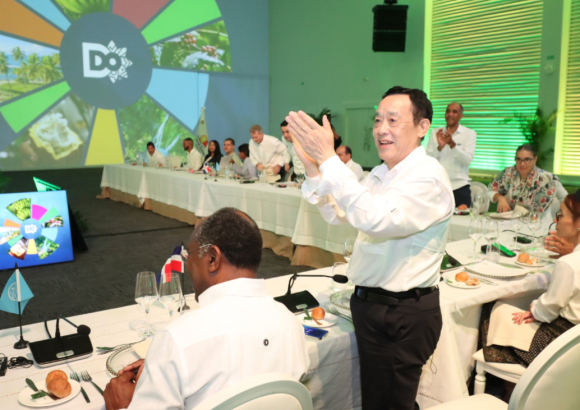
In a high-profile meeting held in Punta Cana, Dominican Republic tourism authorities formally shared a landmark national strategy with Qu Dongyu, Director-General of the Food and Agriculture Organization (FAO), that leverages the country’s booming tourism sector to bolster domestic agricultural output and long-term food security, shortly after the nation was officially removed from the FAO’s global Hunger Map.
Led by Dominican Vice Minister of Tourism Carlos Peguero, the delegation walked the FAO chief through the tangible, data-backed impacts of decades of steady tourism expansion on the country’s agri-food ecosystem. Peguero highlighted that the tourism industry currently injects over 98 billion Dominican pesos into the domestic agricultural market each year, making it one of the single largest buyers of locally grown farm goods in the nation. This consistent, high-volume demand has strengthened end-to-end agricultural value chains, delivered steady, reliable income for small and mid-sized food producers, and significantly expanded access to affordable, nutritious food for communities across the Dominican Republic.
“Tourism has emerged as a proven, high-impact mechanism to translate broad economic growth into tangible human development gains and widespread social well-being,” Peguero stated during the discussions. He emphasized that every incremental rise in tourist arrivals directly drives higher demand for domestically produced goods and services, creating a virtuous cycle that supports local livelihoods. The vice minister noted that projected continued growth in the tourism sector creates a unique window to further scale domestic agricultural output, while advancing key priorities around environmental sustainability, product quality, innovation, and global market competitiveness to meet strict international standards.
Qu Dongyu, who was visiting the Dominican Republic for the first time, shared positive feedback on the country’s cross-sector progress that integrates tourism, agricultural development, and localized territorial growth models. He reaffirmed the FAO’s full commitment to extending technical and partnership support for national initiatives that advance food security outcomes and lift the well-being of rural and coastal communities.
Meeting participants spotlighted two flagship ongoing projects as replicable blueprints for this integrated model: the FAO’s Hand-in-Hand rural development initiative operating in the Pedernales region, and the large-scale sustainable development project in Cabo Rojo, both designed to embed local agricultural producers into the formal tourism supply chain. The two sides also mapped out collaborative priorities to streamline and diversify the domestic agri-food supply network, including rolling out improved product traceability systems, upgrading cold chain and distribution logistics, supporting the formalization of small producer operations, embedding sustainable production practices, and aligning national food quality benchmarks with global norms.
During the session, the Ministry of Tourism formally launched its new flagship program, titled “Tourism as a Platform for Linkages with National Production”. Representatives from the Dominican Ministry of Economy and global hospitality group Meliá also presented complementary targeted projects, including territorial development frameworks and industry-wide programs to cut food waste across the country’s hotel and resort sector. The meeting concluded with both parties outlining a roadmap for ongoing joint collaboration to scale these successful models across more regions of the Dominican Republic.