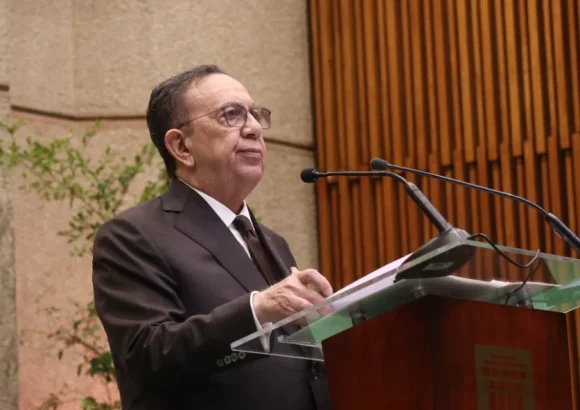
During the official 79th anniversary celebration of the Central Bank of the Dominican Republic (BCRD), Governor Héctor Valdez Albizu unveiled a series of upbeat macroeconomic indicators that paint a picture of resilient, broad-based growth for the Caribbean nation in 2026. The latest official data confirms that the national economy recorded a 5.6% year-on-year expansion in September alone, pushing cumulative growth for the first nine months of 2026 to a solid 4.6%. Full-year projections point to a 4.5% total GDP expansion by the end of December, outpacing many regional peers.
Albizu also highlighted encouraging progress on price stability: headline year-on-year inflation, which hit a recent peak of 5.67% in June, has since cooled to 5.12%, and the central bank forecasts it will fall squarely within its pre-defined target band during the final quarter of 2026.
Foreign exchange earnings across all key streams have surged through the first three quarters: total goods exports hit roughly $13.2 billion USD, tourism revenue reached $9.7 billion USD, remittances sent home by Dominican diaspora members topped $9.4 billion USD, and foreign direct investment (FDI) inflows clocked in at approximately $4.5 billion USD. Full-year 2026 projections show total foreign exchange earnings will climb to nearly $50.7 billion USD, with remittances expected to hit $12.6 billion, goods exports surpass $17.2 billion, tourism revenue reach $12.2 billion, and FDI rise to $5.3 billion. Notably, the projected full-year FDI volume is large enough to cover nearly four times the country’s current account deficit, which is estimated to land at just 1% of GDP for 2026.
A key long-term policy milestone also announced during the anniversary event is the steady, six-year downward trend of the BCRD’s quasi-fiscal deficit, which has dropped from 1.4% of GDP in 2020 to just 0.5% of GDP in 2025 – the lowest level recorded since the devastating 2003 national financial crisis.
Growth has been distributed across multiple high-value sectors rather than concentrated in a single industry. The main contributors to cumulative January-September growth include construction (0.2 percentage points), mining and quarrying (0.2 percentage points), domestic manufacturing (3.4 percentage points), free trade zone operations (2.8 percentage points), and the broader services sector, which contributed 4.6 percentage points to total growth. Standout sub-sectors within services include financial services (7.8% year-on-year growth), the hospitality segment of hotels, bars and restaurants (5.6% growth), and other community and professional services (5.4% growth).
Labor market metrics also show marked improvement as of the second quarter of 2026. Data from the National Continuous Labor Force Survey shows total employment rose by 2.9% year-on-year, adding roughly 147,000 new formal and informal jobs to reach a total employed workforce of 271,005. The national informal employment rate now sits at 53.8%, a figure below the median for all countries in the Americas region, while the open unemployment rate fell to 5.3% for the April-June 2026 period – well under the country’s long-term historical average of 6.0%.
Strong economic growth of 5.6% in September