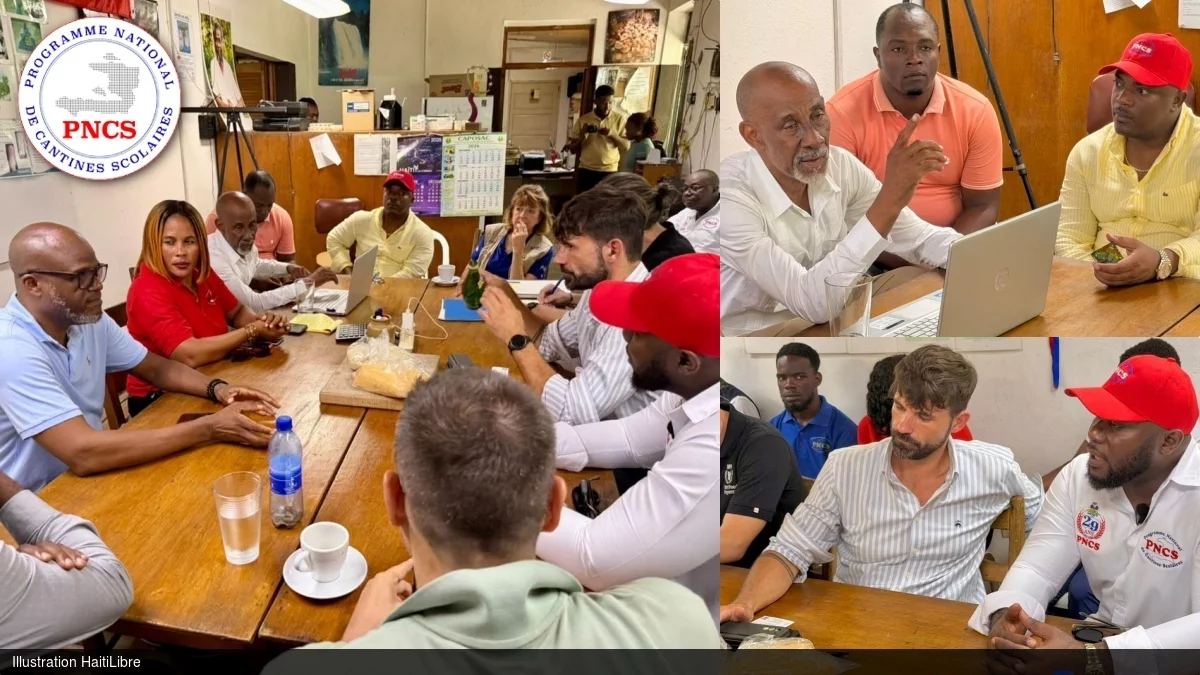
On October 23, 2026, a high-level multi-stakeholder delegation led by Lucson Philemond, General Coordinator of Haiti’s National School Canteen Program (PNCS), conducted an official working tour of the Organization for the Rehabilitation of the Environment (ORE) headquarters in Camp-Perrin. The delegation included French Ambassador to Haiti Gauthier Lekens, World Food Programme (WFP) Haiti Country Director Lauren Landis, alongside representatives from the French Embassy, international technical agency Expertise France, and core PNCS operational teams. The visit follows the landmark in-kind partnership agreement formalized between PNCS and the French Embassy on September 15, 2026, which lays the groundwork for integrating local Haitian agricultural producers into the national school feeding supply chain. Welcoming the visiting group was ORE Director General and veteran agronomist Patrick Condé, who walked the delegation through a full showcase of the NGO’s decades-long operations, on-site production facilities, and specialized processing equipment designed to transform locally harvested staple crops, with a primary focus on corn value addition. Established in 1985, ORE is a homegrown Haitian non-governmental organization with three decades of expertise spanning sustainable agriculture, ecological conservation, and targeted rural community development. Under the newly launched 2026–2027 academic year partnership, the organization serves as an authorized supplier for the French Embassy’s expanded school feeding initiative, a program with a total allocated budget exceeding $700,000 that will deliver nutritious, locally sourced meals to educational institutions across four priority regions: Nippes, Sud, Grande-Anse, and Les Palmes. During closed-door discussions following the facility tour, participating stakeholders emphasized that robust local food processing infrastructure plays a critical dual role: it raises the market value of smallholder farmers’ harvests, while also building long-term operational and technical capacity for domestic food suppliers. The trip was framed as a tangible demonstration of PNCS’s transformative policy framework, which rejects the long-prevailing narrow view of school feeding as a purely charitable meal distribution service. Instead, the program positions school canteens as a powerful, cross-cutting catalyst for inclusive national development: opening formal, consistent market opportunities for small-scale agricultural producers, spurring growth in Haiti’s underdeveloped domestic agrifood processing sector, and driving broad, equitable improvements in quality of life for underserved rural communities.