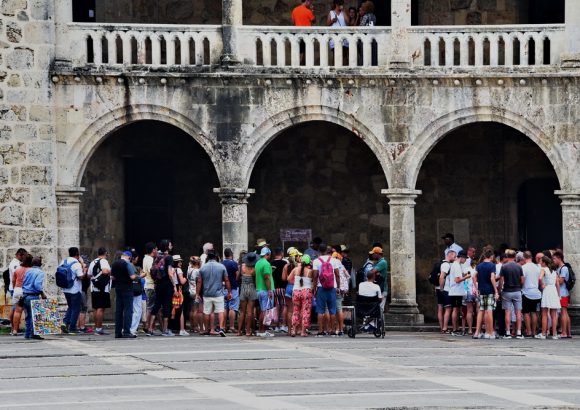
The Colonial City of Santo Domingo, one of the Dominican Republic’s most cherished historic landmarks, is experiencing a remarkable renaissance as a top international tourist destination. According to Tourism Minister David Collado, the district now draws roughly 14 percent of all tourists who arrive in the country each month — a significant jump from just a few years ago, when that number hovered around 7 percent. This means the share of national tourist arrivals to the Colonial City has effectively doubled, a clear indicator of its growing appeal among domestic and international travelers alike.
The surge in popularity comes as the Dominican government wraps up a comprehensive, multi-million-dollar rehabilitation and improvement project across the historic district. Minister Collado confirmed this week that two key streets in the heart of the Colonial City have now been fully restored, part of a broader initiative to upgrade the area’s cultural and urban infrastructure. Ongoing projects across the district are scheduled for completion by December, with efforts underway to minimize disruption to local businesses and visitors amid the construction work. Collado noted that authorities have prioritized efficient coordination across all project stakeholders to limit inconvenience while delivering high-quality improvements.
The upgrades extend far beyond street rehabilitation. The Ministry of Tourism has already completed RD$468 million worth of projects at major cultural sites across the Colonial City, including restoration work on the iconic Gate of Mercy, the historic Alcázar de Colón, more than 12 church facades, and the National Pantheon. An additional RD$250 million has been invested in upgrading sidewalks, curbs, and street paving throughout the district. The full rehabilitation program is backed by total funding of RD$500 million from the Dominican Ministry of Tourism, alongside a $90 million investment from the Inter-American Development Bank (IDB).
Looking ahead, the government has plans to further expand the Colonial City’s tourism reach by integrating the district into global cruise tourism itineraries, opening the historic district up to even larger volumes of international visitors. New infrastructure and upgraded urban amenities are expected to cement the Colonial City’s status as a must-visit stop for anyone traveling to the Dominican Republic, boosting both local economic activity and the country’s reputation as a diverse, culturally rich Caribbean destination.