The Caribbean nation of the Dominican Republic has made history this week as it plays host to the fourth iteration of the Latin American and Caribbean Congress of Tourism Pastoral Care, a landmark collaborative event organized by the country’s Ministry of Tourism (Mitur) and the Dominican Episcopal Conference. For the first time since the congress’ founding, roughly 40 international delegates from across the region gathered on Dominican soil to advance collective work at the intersection of faith, tourism and sustainable development.
Centered on the guiding theme “Towards an ordinary and organic tourism pastoral care,” this year’s congress was built around two core goals: reinforcing the Catholic Church’s active role in shaping the regional tourism ecosystem, and elevating the Dominican Republic’s unique religious, historical and cultural heritage as a premier destination for travelers seeking faith-based experiences. In a break from traditional static conference formats, the event adopted an itinerant model that brought delegates directly to five distinct ecclesiastical territories across the country: the dioceses of Puerto Plata, La Vega, La Altagracia, and Stella Maris, as well as the Archdiocese of Santo Domingo. This on-the-ground structure allowed participants not only to engage in structured conferences and working meetings, but also to experience first-hand the local religious tourism offerings that each region has to offer, while facilitating open dialogue around shared challenges, successful initiatives and hands-on experience exchange.
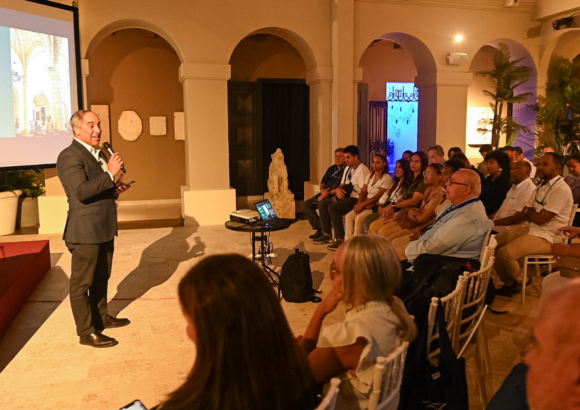
One of the most talked-about sessions of the congress featured a keynote address from José Armando Tavares, the founding former rector of the Technological Institute of the Americas (ITLA). Tavares turned the conversation to one of the most pressing issues reshaping modern tourism: the growing influence of artificial intelligence and the ethical questions that accompany widespread digital transformation across the sector. While Tavares acknowledged that AI integration can deliver meaningful enhancements to the overall travel experience for visitors, he issued a clear warning against overreliance on technology. He emphasized that technological innovation should never replace the human connection and personalized attention that lie at the heart of hospitality, nor should it create barriers that exclude travelers who face challenges accessing or using digital tools. Closing his remarks, Tavares called for a reorientation of the tourism sector toward a sustainable, accessible, people-centered model guided by a clear ethical and humanistic framework.
Beyond dialogue and capacity building, the congress also served as a platform to amplify an ongoing religious tourism initiative developed by Mitur in partnership with the Catholic Church and the Dominican Episcopal Conference: the Paths of Faith program, which aims to connect visitors to the country’s extensive network of religious heritage sites and communities.
Looking ahead, the momentum from this congress will carry forward to the next major industry event. The fourth Religious Tourism Meeting is scheduled to take place on October 24 as an official part of the upcoming Caribbean Tourism Exchange. This follow-up event will continue the work of strengthening cross-sector collaboration between the tourism industry and religious institutions, with the ultimate goal of diversifying the Dominican Republic’s tourism product offerings and tapping into the fast-growing global market for faith-based travel.